Waterfall vs Agile Methodology: The Complete Guide to Choosing the Right Framework in 2026
A comprehensive comparison of Waterfall and Agile methodologies that breaks down the strengths, weaknesses, and ideal use cases for each framework. This guide helps project managers, development teams, and business leaders choose the right approach based on their specific project requirements, team structure, and business goals.
 Hassan Baig8 min read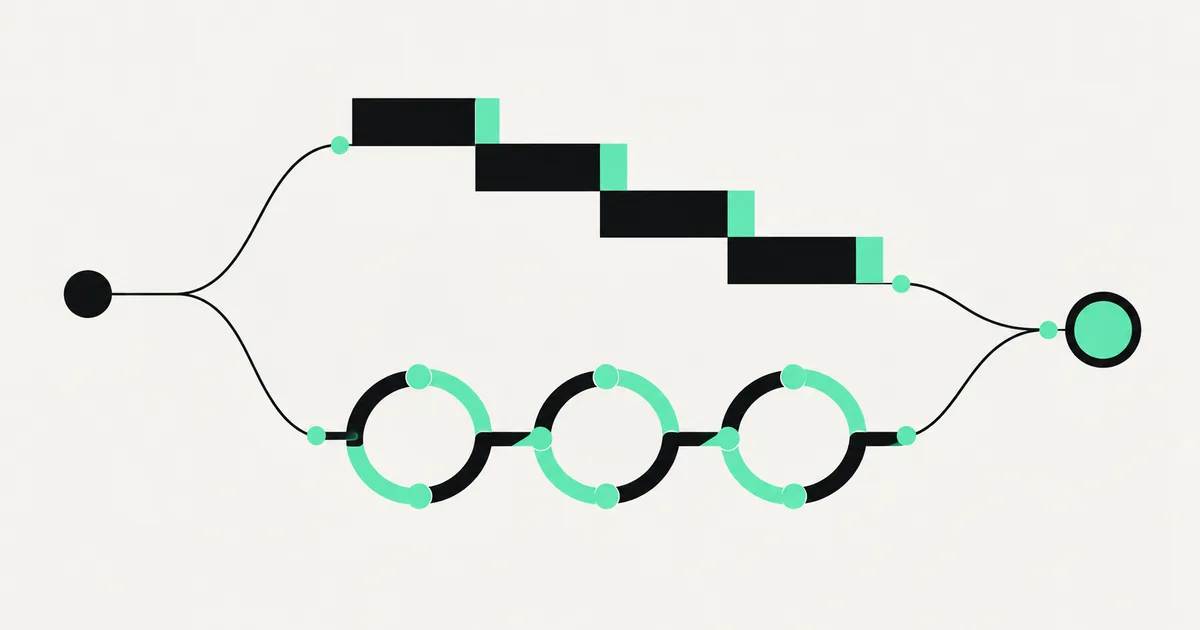
I spent three years watching companies burn through millions of dollars because they picked the wrong project management methodology.
The worst part? They knew something was broken. Their teams were frustrated. Deadlines kept slipping. And the final product barely resembled what customers actually wanted.
Here's what nobody tells you about Waterfall and Agile methodologies: choosing the wrong one doesn't just slow down your project. It kills team morale, destroys your budget, and ships products that miss the market entirely.
Let me show you exactly how to avoid that mistake.
What Makes Waterfall Methodology Different
Think of Waterfall like building a house. You don't start framing walls before the foundation is poured. Everything happens in a specific order, and you can't move backward without major consequences.
Waterfall follows five distinct phases that flow in one direction.
Phase One: Planning and Requirements Gathering
Every detail gets locked down upfront. Your team documents every feature, every user need, every technical requirement before writing a single line of code. This phase creates your project bible.
Phase Two: Design and Architecture
Engineers create blueprints showing exactly how the software will function. Database schemas get mapped. User interfaces get designed. System architecture gets documented down to the smallest component.
Phase Three: Development and Coding
Developers build the entire product based on those detailed specifications. No surprises. No pivots. Just pure execution of the plan created in phases one and two.
Phase Four: Testing and Quality Assurance
QA teams run the completed software through rigorous testing protocols. They hunt for bugs, verify functionality, and ensure everything matches the original requirements.
Phase Five: Deployment and Release
The finished product ships to users. Training materials get distributed. Support teams prepare to handle incoming questions.
The Real Advantages of Waterfall
You Know Exactly Where You Stand
Waterfall gives you crystal clear visibility into project progress. When development starts, you know requirements are locked. When testing begins, you know coding is complete. No ambiguity about what phase you're in or what comes next.
Budget Predictability That Finance Teams Love
Because everything gets planned upfront, you can estimate costs with remarkable accuracy. Finance gets hard numbers. Stakeholders get realistic timelines. Nobody gets surprised by scope creep eating into reserves.
Documentation That Actually Helps
Each phase produces detailed documentation that becomes invaluable for maintenance, training, and future updates. New team members can read comprehensive specs and understand the system architecture without bothering senior developers.
Smaller Teams Can Execute Without Chaos
When you have limited resources, Waterfall prevents the coordination overhead that kills productivity. Everyone knows their role, their timeline, and their deliverables without constant meetings and status updates.
The Hidden Costs of Waterfall
Here's where Waterfall breaks down in the real world.
Change Becomes Your Worst Enemy
Market conditions shift. Competitors launch new features. Customer preferences evolve. But with Waterfall, adapting means going back to square one. That requirements document you spent weeks perfecting? Now it's outdated. The design phase you completed? Time to redo major portions.
One enterprise client learned this the hard way. Six months into a twelve-month project, their biggest competitor launched a feature that made their planned product obsolete. Going back to redesign cost them four additional months and doubled their budget.
Customers Get Ignored Until It's Too Late
You gather requirements at the beginning, then disappear into development for months. When you finally show customers the finished product, you discover they either described their needs poorly or their needs changed during development.
The disconnect between what you built and what customers actually want only becomes apparent after you've invested everything.
Testing Happens When Problems Cost the Most
Discovering fundamental issues during the testing phase means massive rework. You can't just tweak a few lines of code. You might need to redesign core functionality, which cascades through the entire system.
Teams Get Stuck in Their Lane
Developers can't suggest improvements during the design phase because design is already done. Designers can't incorporate technical realities because they've already moved to the next project. This rigid separation creates products that work on paper but struggle in reality.
How Agile Methodology Actually Works
Agile abandons the one-way flow entirely. Instead, it breaks work into short cycles called sprints that typically last two weeks.
Sprint Planning Sets the Stage
Teams select a small set of features to build during the upcoming sprint. Not the entire project. Just what can be completed in two weeks with high quality.
Daily Standups Maintain Momentum
Every morning, the team spends fifteen minutes sharing progress, identifying roadblocks, and coordinating efforts. These aren't status meetings. They're tactical problem-solving sessions.
Sprint Reviews Show Real Progress
At the end of each sprint, teams demonstrate working software to stakeholders. Not documentation. Not plans. Actual functioning features that people can test and provide feedback on.
Sprint Retrospectives Drive Improvement
Teams analyze what went well and what needs adjustment. Then they immediately apply those lessons to the next sprint. Continuous improvement becomes embedded in the process itself.
Backlog Grooming Keeps Priorities Current
The product backlog constantly evolves based on user feedback, market changes, and new insights. High-priority items float to the top. Obsolete features get removed before resources get wasted.
Why Agile Wins in Modern Development
You Ship Value Faster
Instead of waiting months for a complete product, you deliver working features every two weeks. Customers start getting value immediately. Revenue can begin flowing before the entire product is finished.
Feedback Loops Prevent Expensive Mistakes
When stakeholders see working software every sprint, misalignments get caught early. That feature everyone thought was critical? Turns out users don't care. Better to learn that after two weeks of work instead of six months.
Teams Own Their Success
Agile teams self-organize around problems instead of waiting for management directives. This autonomy increases engagement and unleashes creativity that rigid structures suppress.
Sustainable Pace Prevents Burnout
Unlike Waterfall death marches that ramp up intensity as deadlines approach, Agile maintains a steady rhythm. Teams can sustain high performance indefinitely without sacrificing personal lives.
The Challenges Agile Creates
Agile isn't a magic solution. It introduces its own set of problems.
Predictability Takes a Hit
Finance hates Agile because costs and timelines remain fluid. When requirements evolve every sprint, creating accurate long-term estimates becomes nearly impossible. Leadership teams comfortable with traditional planning struggle with this ambiguity.
Communication Overhead Multiplies
Daily standups. Sprint planning. Sprint reviews. Retrospectives. Backlog grooming. Agile demands significantly more team interaction than Waterfall. For distributed teams or larger groups, this coordination becomes a serious time sink.
Scope Creep Becomes Constant Temptation
The flexibility that makes Agile powerful also makes it easy to continuously add features without considering the cumulative impact. Before you know it, your two-month MVP has morphed into a six-month feature bloat nightmare.
Junior Teams Struggle Without Structure
Agile requires mature teams comfortable with ambiguity and self-direction. New developers or teams transitioning from traditional management often flounder without explicit guidance and rigid processes.
Making the Right Choice for Your Project
Stop asking which methodology is better. Start asking which methodology fits your specific situation.
Choose Waterfall When:
Your requirements are rock solid and unlikely to change. Government contracts, regulatory compliance projects, and systems integrating with legacy infrastructure often fit this profile.
Your stakeholders demand detailed upfront planning and fixed budgets. Some organizations operate in environments where budget flexibility doesn't exist.
Comprehensive documentation matters more than speed to market. Industries with heavy regulatory requirements or long product lifecycles benefit from Waterfall's documentation emphasis.
Choose Agile When:
Requirements will evolve as you learn more about user needs. Consumer software, mobile apps, and innovative products typically require this flexibility.
Getting to market quickly trumps getting everything perfect. Competitive markets reward speed, and Agile's iterative approach ships value faster.
You have experienced teams capable of self-organization. Agile requires professional maturity that not all teams possess initially.
The Hybrid Approach That Actually Works
Many successful teams combine elements from both methodologies.
Use Waterfall for infrastructure and architecture decisions that are expensive to change. Lock down your database schema, API structure, and core technical decisions upfront.
Use Agile for feature development and user-facing functionality. This allows rapid iteration based on feedback while maintaining architectural stability.
Document critical decisions thoroughly but avoid documentation for its own sake. Find the balance between Waterfall's comprehensive documentation and Agile's preference for working software over documentation.
What This Means for Your Next Project
Here's your action plan.
First, honestly assess your requirements stability. If you can clearly define ninety percent of requirements upfront and they won't change, Waterfall might work. If requirements will evolve as you learn, choose Agile.
Second, evaluate your team's experience level. Junior teams benefit from Waterfall's structure until they develop the skills for Agile's autonomy.
Third, consider your stakeholder expectations. Organizations accustomed to traditional project management may resist Agile's fluid approach regardless of its benefits.
Fourth, examine your competitive environment. Markets rewarding speed favor Agile. Markets penalizing mistakes favor Waterfall's thorough planning.
The methodology you choose matters less than choosing deliberately based on your specific context. Too many teams default to whatever they've always used without questioning if it still fits their current reality.
Project methodology isn't about following trends. It's about matching your approach to your constraints, capabilities, and objectives.
Pick the framework that sets your team up for success, then execute it with discipline. That decision alone will put you ahead of most organizations still debating theoretical advantages while their projects drift further off course.
Engineering and operations
Once it’s live, we keep it healthy.
Monitoring, backups, security updates and a monthly health report you can read in ten minutes.
Keep reading.
More on engineering and operations
Engineering and operations · 14 Aug 2026 · 8 min read
Load Testing Before You Get the Traffic You Wanted
A launch that works is the most expensive way to discover your connection pool holds twenty. Here is how to find your breaking point on purpose, first.
Engineering and operations · 14 Aug 2026 · 8 min read
Incident Response When You Are the Whole Team
Nobody to escalate to, no runbook, and the app is down. Here is the process that keeps a one-person outage from turning into a one-person disaster.
Engineering and operations · 14 Aug 2026 · 8 min read
Documenting a Codebase So the Next Engineer Can Take Over
Not a wiki nobody reads — the specific short documents that decide whether your next engineer ships in week one or spends a month reverse-engineering.