
Case study · Manufacturing
Fly Screen.
A custom production management dashboard for a manufacturing company whose orders come from multiple international Shopify stores.
- What we built
- Production management dashboard integrated with Shopify
- Stack
- Next.js, PostgreSQL
- Services
- Web dashboardShopify integrationRole-based dashboardsExcel and PDF exports
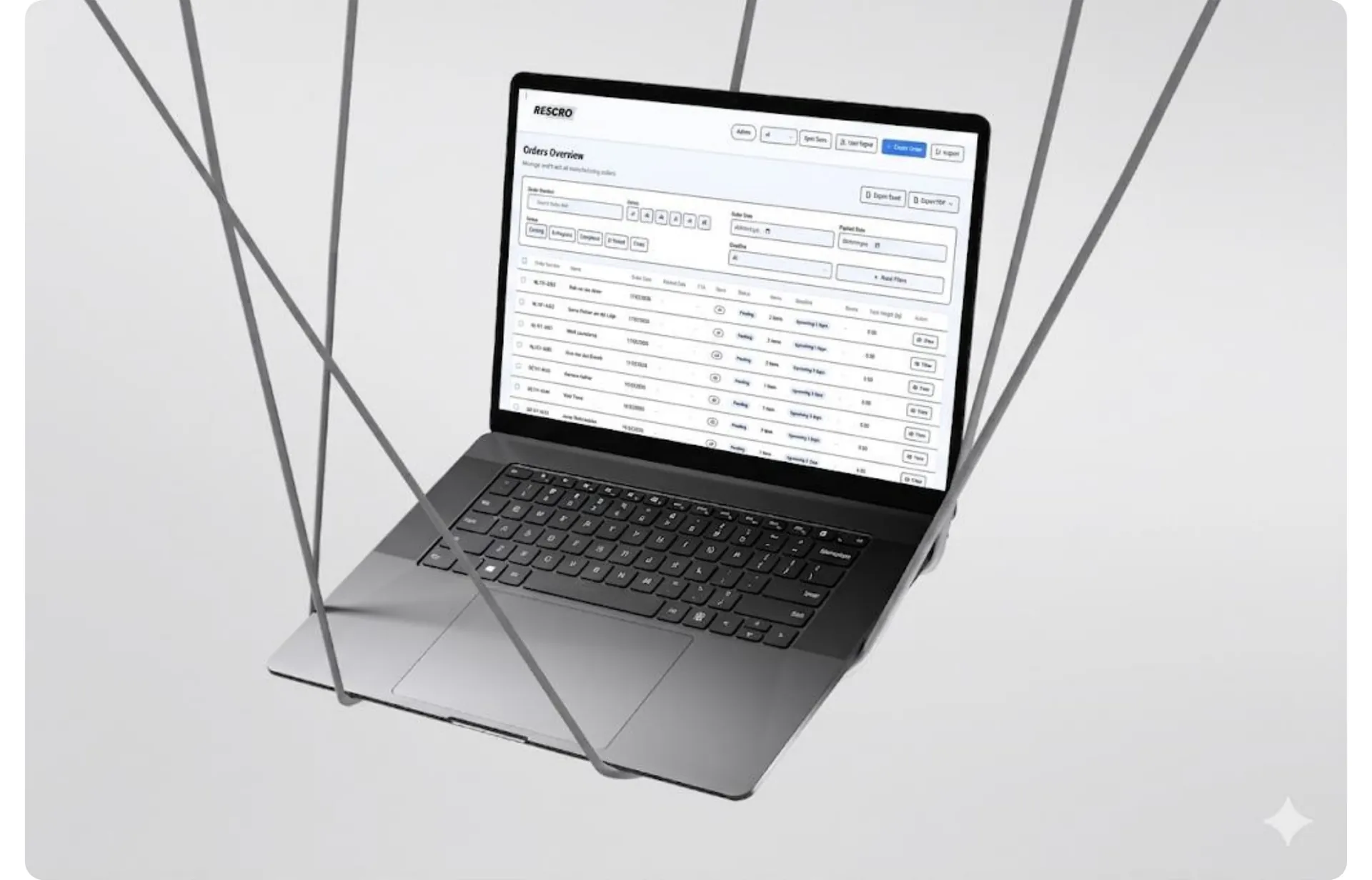
About the project
What is Fly Screen?
This project involved building a custom production management dashboard for a manufacturing company producing custom flyscreens sold through multiple international Shopify stores. The company operates five Shopify stores (Dutch, German, English, French, and Danish). Orders from these stores contain multiple customization options such as dimensions, installation type, mesh type, and frame color. Since all production happens in Turkey, this multilingual order data must be transformed into clear production instructions in Turkish for factory teams.
Goal
The goal was to develop a centralized system that automatically retrieves Shopify orders, converts multilingual product options into standardized production data, and distributes the relevant information to each department involved in manufacturing.
The problem
What was slowing them down.
- 01
Unstable earlier implementation
The client previously attempted to build a production dashboard, but the earlier implementation was unstable, incomplete, and poorly optimized. This created several operational challenges.
- 02
Orders in five languages
Orders were coming from five stores in different languages, forcing production workers to manually interpret product options. This increased the risk of manufacturing errors and slowed down the production process.
- 03
No department-specific views
Different departments required different information, but the existing system did not provide department-specific views. Workers often had to sort through unnecessary data to find the details they needed.
- 04
Packaging management was missing
Orders containing multiple products needed to be packed into different boxes, but there was no structured way to track box dimensions or which items were placed inside each package.
- 05
Need for a reliable dashboard
The client needed a reliable production dashboard that could automate data transformation, streamline department workflows, and provide clear production instructions.
The solution
What we built.
Multi-Store Shopify Integration
We developed a custom Next.js dashboard that connects directly to multiple Shopify stores and converts raw order data into department-specific production instructions. The platform acts as a bridge between the company's eCommerce stores and the manufacturing floor.
- The system integrates with five Shopify stores using the Shopify Admin API.
- Orders are automatically fetched in read-only mode to ensure store data remains unchanged.
- Although each store uses a different language, the dashboard standardizes all incoming order data before processing.
Role-Based Department Dashboards
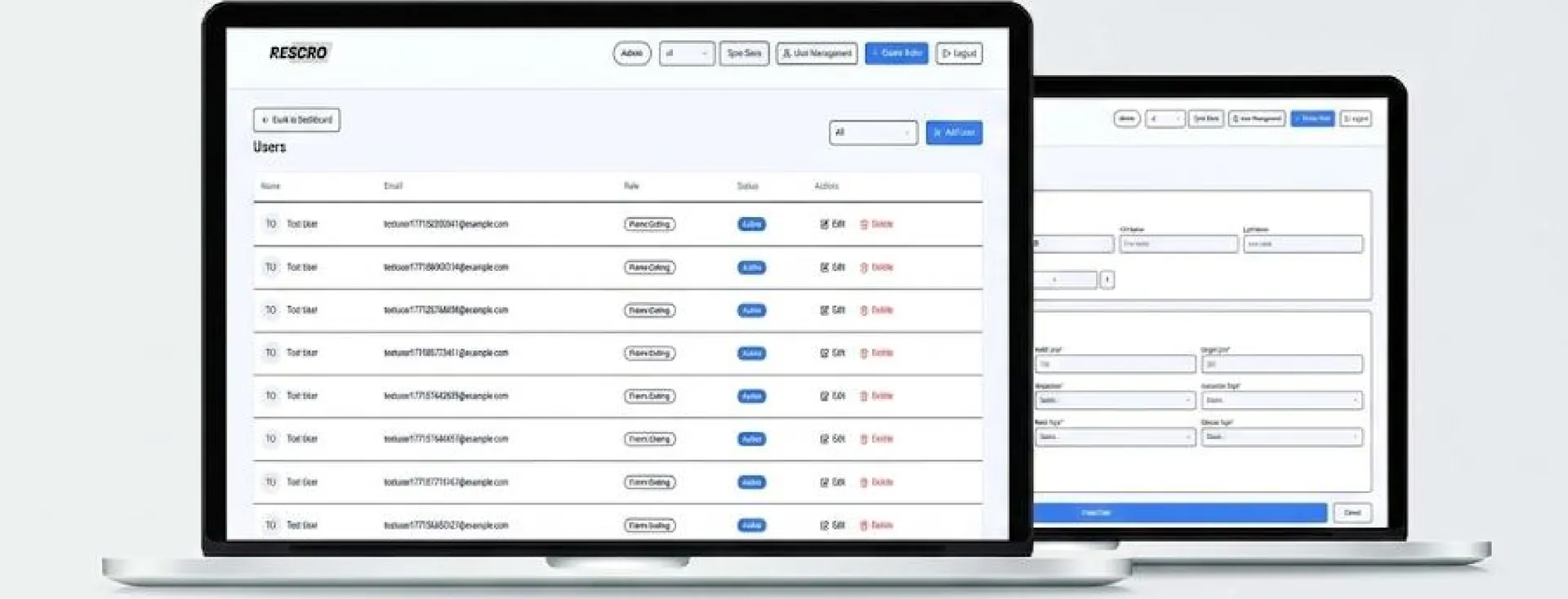
Each department uses a shared login credential, allowing multiple workers to access the system from production floor displays.
- Admin: has full system access and can view all orders, departments, and system settings. Admins can also create manual orders when needed.
- Frame Cutting Department: sees only frame cutting data and updates the production status of frame components.
- Mesh Cutting Department: sees mesh-related production information and tracks progress for mesh preparation.
- Quality Control & Packaging: has visibility of all order data and manages packaging and final quality checks.
Automated Data Transformation
Orders from Shopify include product options written in multiple languages. These values must be converted into standardized production instructions.
- A data transformation system maps multilingual fields and applies production formulas, so all departments receive consistent and accurate production measurements.
- Examples include converting width and height values into adjusted production dimensions, translating orientation values into Turkish, and mapping product options to the correct manufacturing fields.
Packaging Management
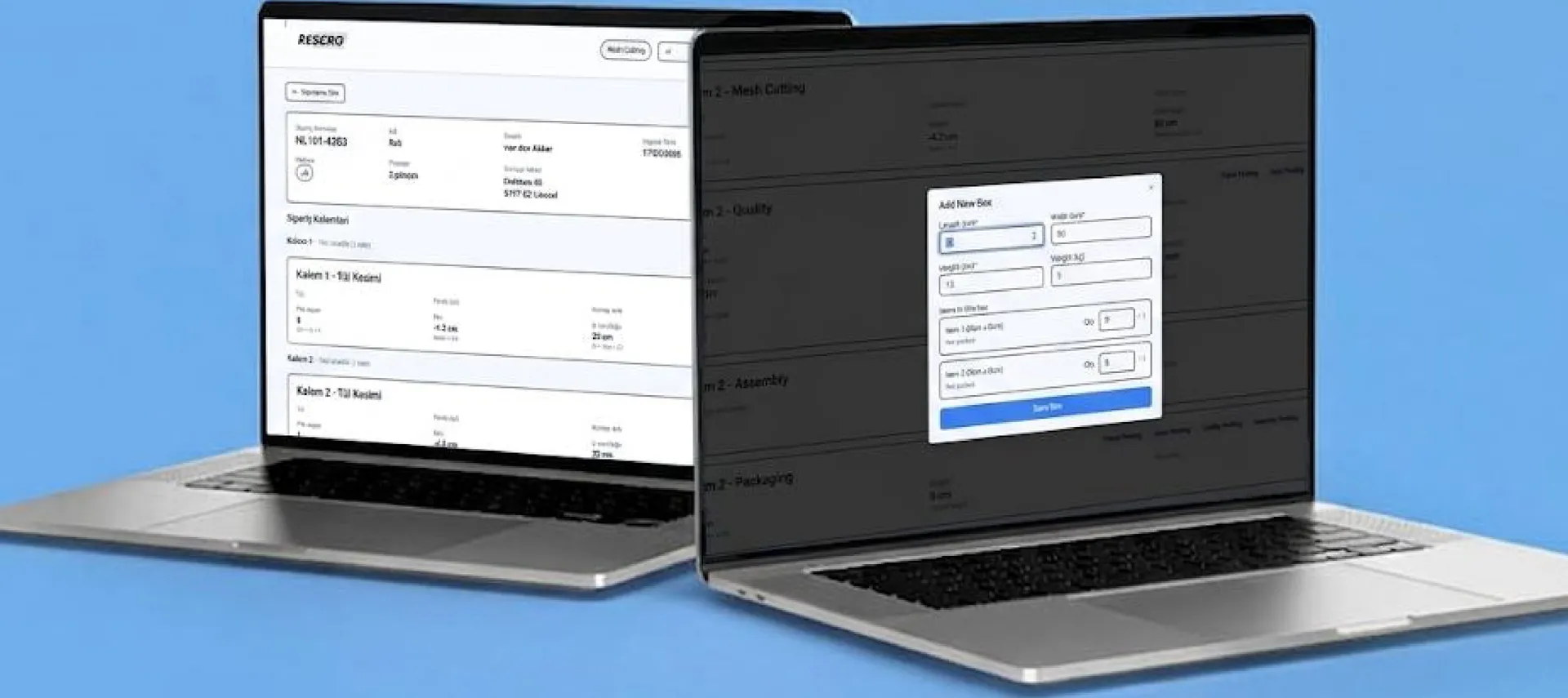
The packaging department can create multiple shipping boxes per order and assign items to each box.
- Workers can enter box length, width, and height, box weight, and items included in each package.
- This allows accurate shipment preparation and ensures packaging data can be exported for logistics and customs requirements.
Order and Status Management
A centralized order management system allows teams to track production progress.
- Order list view with filtering
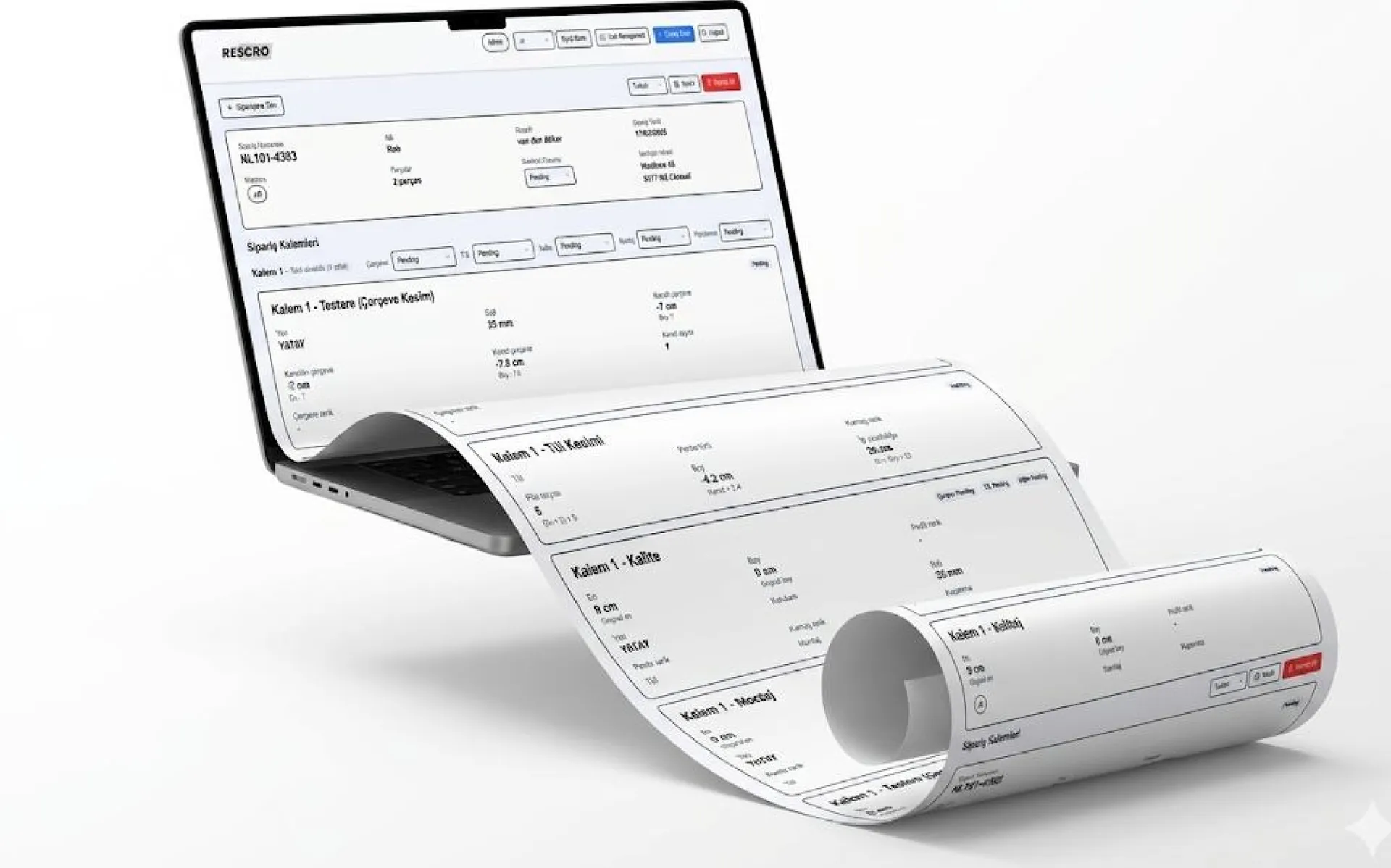
- Detailed order view with multiple line items
- Status updates for each department
- Production deadline tracking
- Each item in an order can move through different production stages as departments complete their tasks.
Export & Reporting
The dashboard provides export capabilities for operational and logistics purposes.
- Excel export: allows teams to export filtered order data including packaging box information and required shipping fields.
- PDF export: generates printable reports suitable for production tracking or operational documentation.
Results
What changed.
Production teams and managers
Clear department-specific instructions
Production workers now receive clear department-specific instructions, eliminating the need to manually interpret Shopify order data.
Visibility across departments
Managers can track order progress across departments, improving visibility and coordination throughout the production process.
Fewer manufacturing errors
Automated data transformation ensures measurements and production details are calculated correctly, reducing manufacturing errors.
Scalable operational system
The dashboard also provides a scalable operational system that can support future features and growing order volumes.
Key challenges
The hard parts, and how we solved them.
Multilingual product data: orders arrived in five languages with different field names.
We created a centralized mapping system that standardizes all fields before processing.
Complex production calculations: manufacturing requires precise dimension adjustments.
We implemented automated formulas to generate accurate production measurements.
Department-specific data needs: each production team required different information.
Role-based dashboards ensured each department only sees the data relevant to their work.
Flexible packaging: orders could require multiple boxes with different item combinations.
A packaging management system was developed to handle this scenario.
Tech stack
What it runs on.
- Framework
- Next.js
- Database
- PostgreSQL
- ORM
- Prisma
- Hosting
- Vercel
- API Integration
- Shopify Admin API (REST / GraphQL)
- Authentication
- JWT-based authentication
- Exports
- Excel and PDF generation
Process
How we got there.
01Orders are automatically retrieved from five Shopify stores
02The system standardizes and transforms multilingual order data
03Department dashboards display relevant production information
04Frame cutting and mesh cutting departments process their tasks
05Status updates track production progress
06Once production is complete, the packaging team prepares shipment boxes
07Packaging details are recorded in the dashboard
08Data can be exported for reporting or logistics
More work.
All projects
True Motion AI Chat Bot
AI-powered platform generating consistent, print-ready corrective exercise programs from assessments, enabling customization, automation, and efficient workflows for fitness professionals.
Custom Meal Planner AI Chat BOT
AI-powered chatbot delivering personalized, GLP-1-friendly meal plans with adaptive nutrition logic, automated grocery lists, and subscription-based access control system.
Building something like Fly Screen?