
Case study · Healthcare (ophthalmology)
Iris.
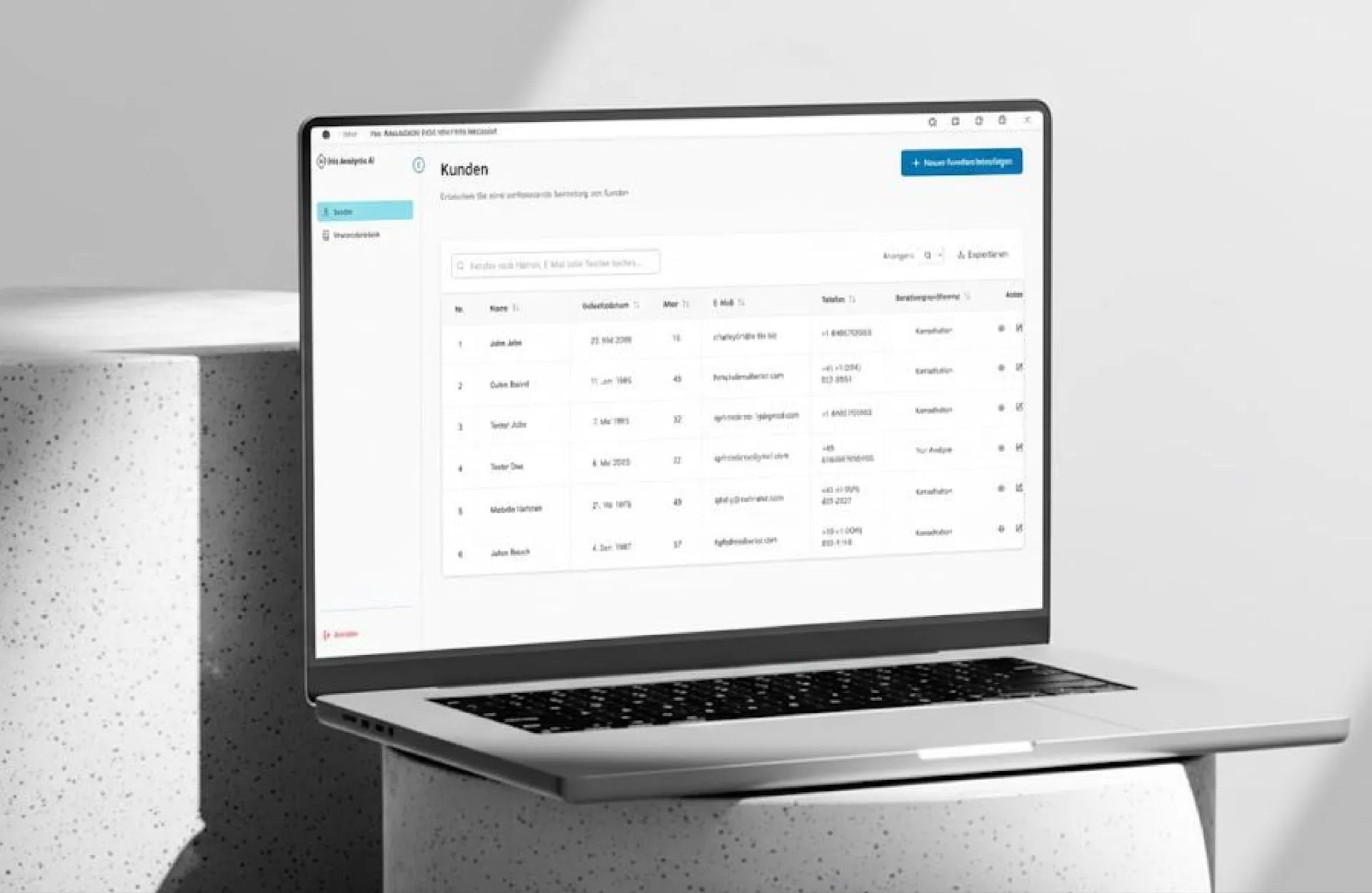
This project involved building a custom AI automation system for medical report generation tailored specifically for ophthalmologists.
- What we built
- AI medical report generation web app
- Stack
- Next.js, Vercel
- Services
- AI report generationWeb appKnowledge base and semantic search
About the project
What is Iris?
This project involved building a custom AI automation system for medical report generation tailored specifically for ophthalmologists. The system uses advanced AI models, image analysis, and natural language generation to produce detailed, patient-specific diagnostic reports. The client, an ophthalmologist, previously spent hours creating detailed medical reports that often extended up to 40 pages per patient. Our goal was to automate this process using AI report generation, enabling faster, more accurate, and personalized documentation, without compromising medical precision or professional standards.
The problem
What was slowing them down.
- 01
Time-consuming process
Each report took several hours to compile manually.
- 02
Inconsistent formatting
Reports varied in tone, structure, and completeness.
- 03
Limited scalability
Handling multiple patients per day made manual reporting impractical.
- 04
Need for personalization
The doctor wanted AI-generated reports that incorporated custom instructions, patient information, and references from her own medical literature and research notes.
The solution
What we built.
Custom AI automation platform
We developed a custom AI automation platform that generates detailed eye health reports based on patient images, doctor notes, and a pre-defined medical knowledge base.
Results
What changed.
Ophthalmologist and patients
90% Reduction in Report Preparation Time
From hours to minutes.
Consistent and High-Quality Reports
Standardized format with clinical accuracy.
Enhanced Productivity
Enabled the ophthalmologist to focus more on patient care than documentation.
Scalable Solution
Easily adaptable for other medical specialties.
Improved Patient Experience
Faster turnaround time for diagnostic reports.
Key challenges
The hard parts, and how we solved them.
Ensuring medical accuracy from AI outputs
Incorporated a structured knowledge base with the ophthalmologist’s verified documents to train contextual understanding.
Handling sensitive medical data securely
Implemented Supabase for authentication and encrypted data storage, ensuring HIPAA-aligned practices.
Managing large and complex report content
Integrated Markdown editor with section-based rendering for smooth report handling.
Integrating AI with a dynamic frontend
Utilized Next.js for a responsive, fast, and maintainable user interface.
Processing and comparing high-resolution eye images
Optimized image upload and analysis workflow while maintaining AI response time and accuracy.

Tech stack
What it runs on.
- Frontend
- Next.js
- Backend
- Vercel
- AI Engine
- OpenAI API (custom prompt engineering for medical context)
- Database
- Supabase (authentication, patient data)
- Vector Database
- NeonDB (for semantic search and knowledge retrieval)
- File Storage
- Google Drive (knowledge base and resource files)
- Editor
- Markdown-based dynamic report editor
Process
How we got there.
01Knowledge Base Setup
The ophthalmologist uploads medical books, articles, and custom notes to Google Drive · These serve as the foundational dataset for the AI
02Patient Data Input
For each new report, the doctor enters patient details, adds personal notes, and uploads left and right eye images
03AI Report Generation
The system processes the data using OpenAI’s large language model to generate a structured, detailed, and medically aligned report
04Review and Edit
The generated report appears in Markdown format, where the ophthalmologist can make manual adjustments or add annotations
05Export and Archive
Once finalized, the report can be downloaded as a PDF and automatically saved to patient history for future reference
More work.
All projects
Clear Chronic Care
AI-powered SaaS platform that generates personalized, multilingual chronic care plans with automated PDFs for clinics and healthcare providers.
Legal Innovators
Comprehensive legal talent marketplace SaaS with three-tier RBAC: attorney profiles, client-specific dashboards, admin pipeline oversight, and dynamic search.
Building something like Iris?