
Case study · Higher education
Redraw University Dashboard.
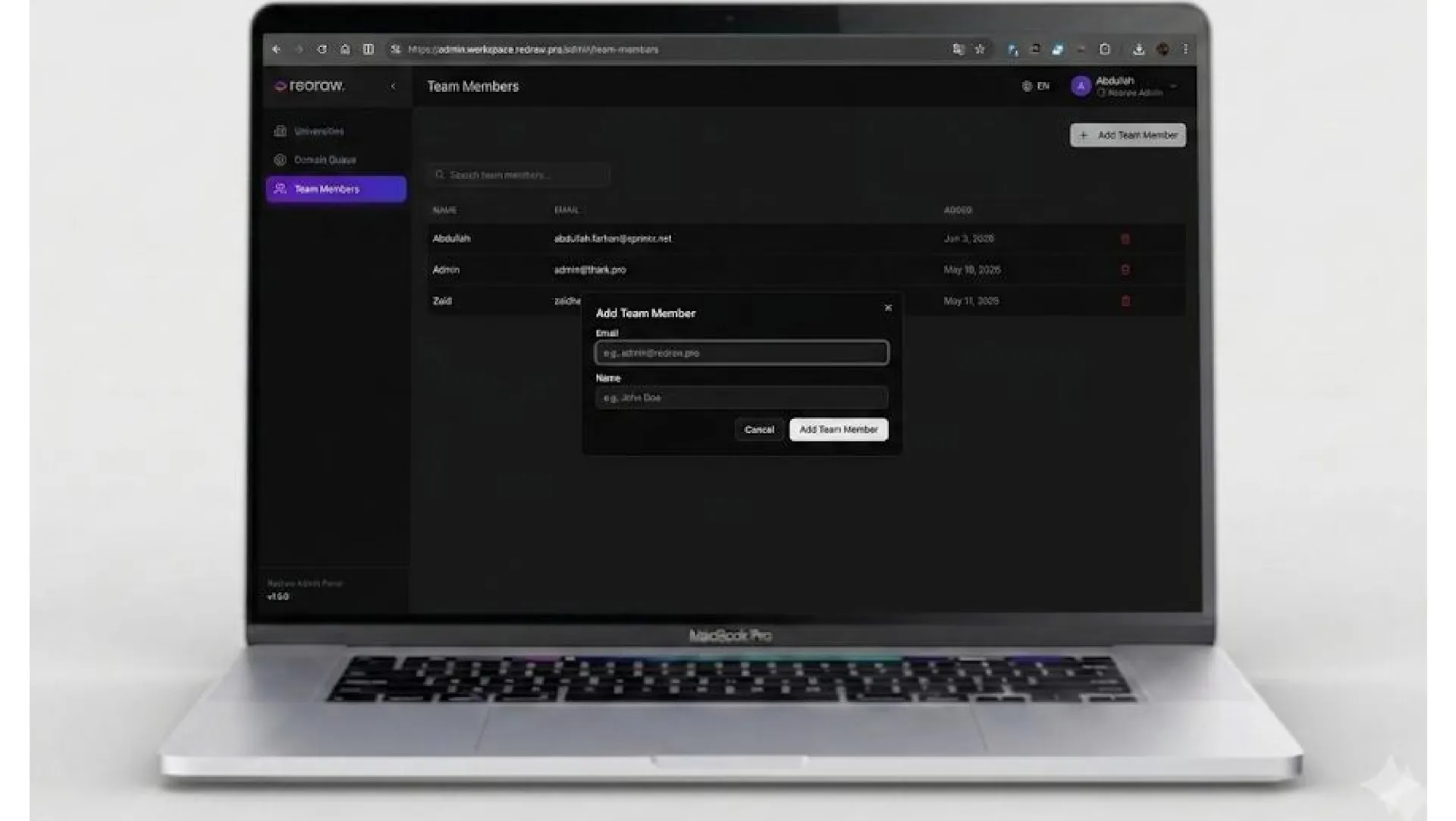
A standalone B2B system that allows universities to manage student access to an existing SaaS product through structured roles and API integration.
- What we built
- B2B university dashboard integrated with an existing SaaS product
- Stack
- Next.js, TypeScript, NestJS (Node.js), TypeScript
- Services
- Web dashboardAPI integrationRole-based access control
About the project
What is Redraw University Dashboard?
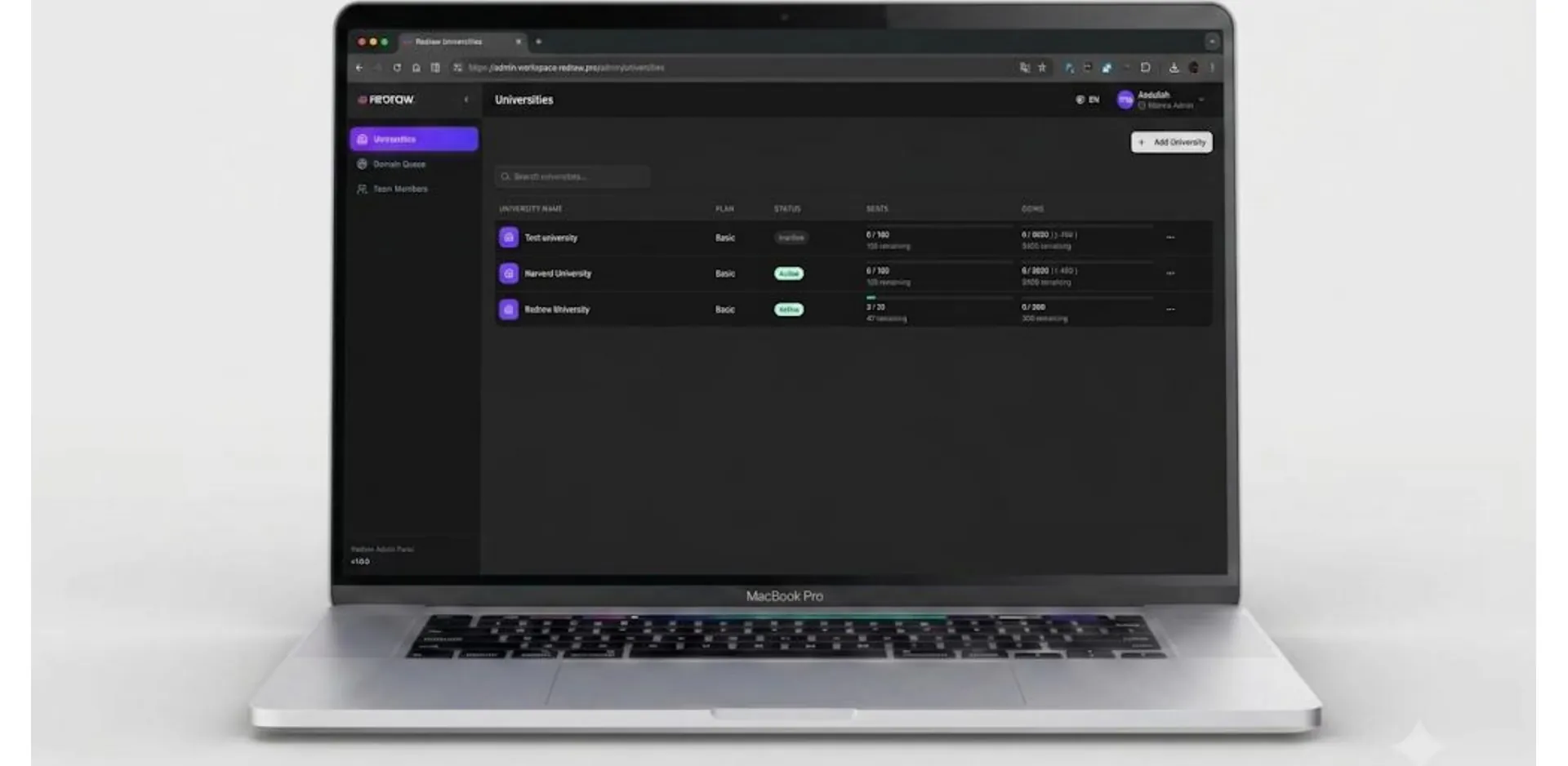
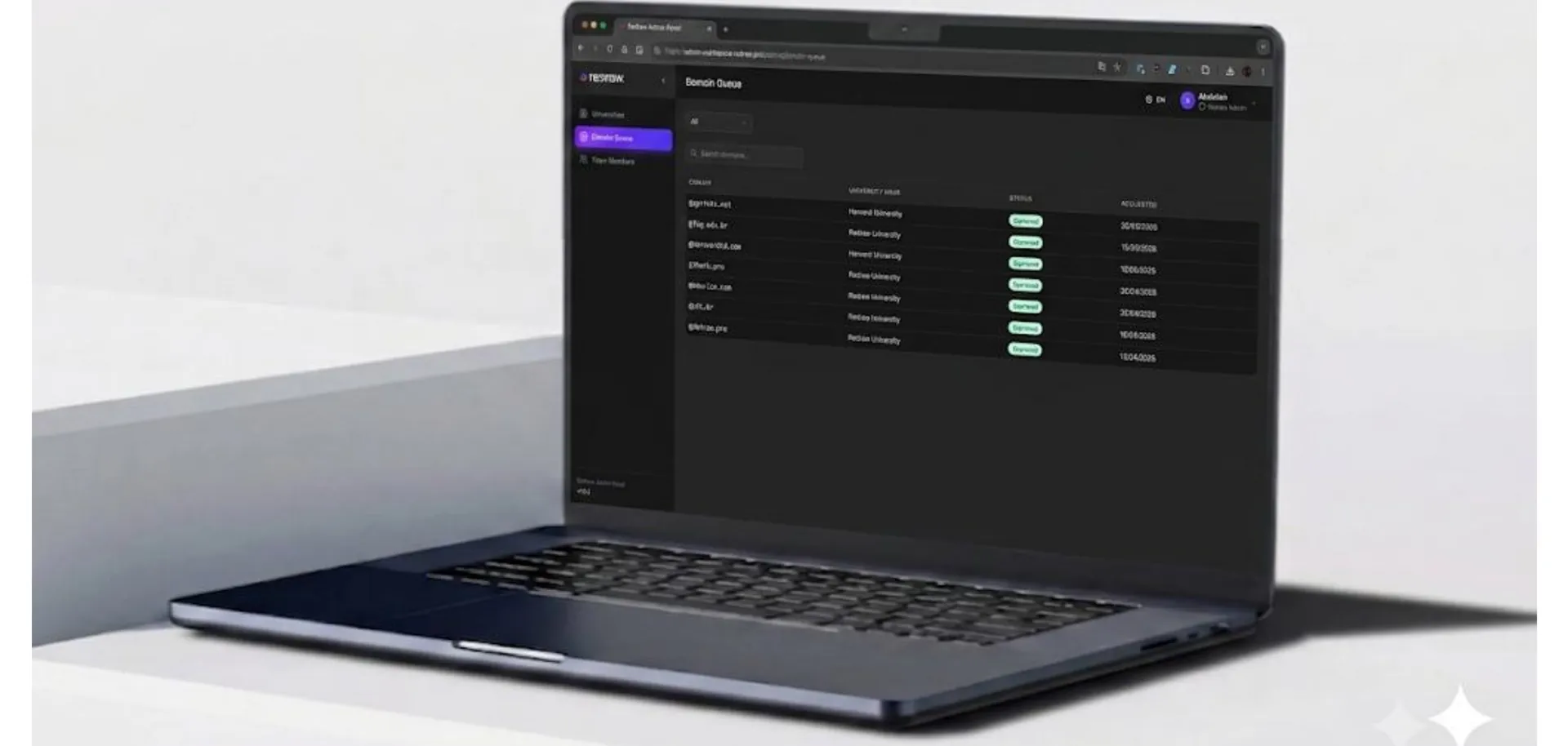
This dashboard platform was developed as a standalone B2B system that allows universities to manage student access to an existing SaaS product through structured roles and API integration. The platform operates independently with its own database, authentication, and access control, while connecting to the main SaaS application via secure APIs. It enables institutional subscription management, professor oversight, and controlled student onboarding using verified university email domains. The objective was to build a scalable, secure academic dashboard that supports university partnerships without requiring access to the main product's codebase or database.
Conclusion
By separating institutional management from the core SaaS system, implementing structured role-based controls, and automating domain validation and subscription management, the solution created an academic management layer without modifying the original product. The result is a scalable, enterprise-ready university dashboard built for long-term growth and institutional partnerships.
The problem
What was slowing them down.
- 01
No centralized system
No centralized system for universities to manage students.
- 02
Manual onboarding
Manual and unstructured onboarding.
- 03
No automated domain validation
No automated domain validation for academic emails.
- 04
No student-level access settings
No way to configure student-level access (coins, hours, expiration).
- 05
API-only integration
Integration limited strictly to APIs (no database access).
The solution
What we built.
Architecture
We built a standalone university dashboard platform with role-based access control and API-driven synchronization.
- Independent frontend and backend
- Dedicated Supabase database
- Supabase authentication (RBAC)
- Secure REST API integration
- No direct access to core SaaS database
User Roles
- University Admin: manage professors, configure approved university domains, view university statistics
- Professor: create classes and subjects, enroll students, define access settings (coins, hours, expiration date)
- Student: registers directly on the main SaaS platform and gains access after domain verification
Core Features
- University management: multiple email domains per university, blocked public email providers, active/inactive contract status
- Professor & class management: professor CRUD, class and semester creation, subject association, student enrollment
Student Access Control
Professors configure coins allocation, allowed usage hours and subscription expiration. When a student registers:
- Email domain is verified via API
- Eligibility is confirmed
- Account is created in main system
- Subscription parameters are applied
API Integration
The dashboard integrates with the main SaaS system via the following. All communication follows strict API-only architecture.
- Student Registration API
- Subscription Management API
- Domain Verification API
- Student Status Webhook
Results
What changed.
Business Impact
Large institutional subscriptions
Supports large institutional subscriptions (500+ students).
Predictable recurring revenue
Predictable recurring revenue per university.
Automated eligibility validation
Automated eligibility validation.
Less manual onboarding
Reduced manual onboarding workload.
Operational Impact
Clear academic hierarchy
Clear academic hierarchy (admin → professor → student).
Controlled subscription allocation
Controlled subscription allocation.
Secure domain-based access
Secure domain-based access.
Multi-university scalability
Multi-university scalability. The system allows enterprise growth without altering the existing SaaS infrastructure.
Key challenges
The hard parts, and how we solved them.
API-only integration: no access to main codebase.
Designed a fully independent architecture with documented API contracts.
Domain validation complexity: preventing misuse via public emails.
Implemented strict domain filtering and verification endpoints.
Role-based permissions: ensuring secure separation between admins and professors.
Supabase Auth with RBAC policies.
Scalability: supporting multiple universities with hundreds of students.
Structured relational schema with university-level isolation.
Tech stack
What it runs on.
- Frontend
- Next.jsTypeScript
- Backend
- NestJS (Node.js)TypeScript
- Database
- Supabase (PostgreSQL)
- Authentication
- Supabase Auth (RBAC)
- Integration
- Secure REST APIsWebhook validation
Process
How we got there.
01University is registered in database
02Admin logs in and adds professors
03Professors create classes and subjects
04Access parameters are configured
05Student registers using university email
06Domain verification confirms eligibility
07Subscription settings are applied via API
More work.
All projects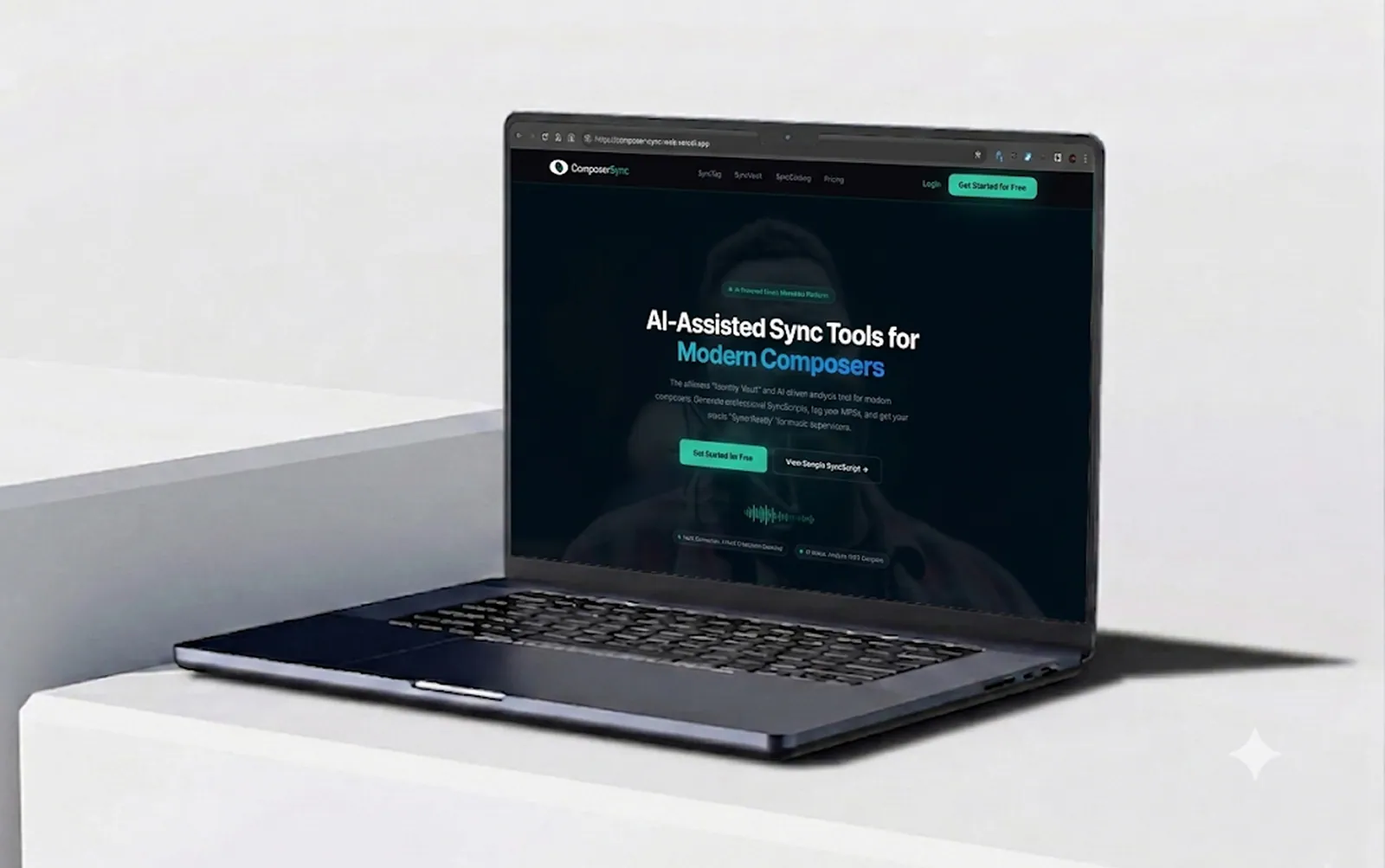
Composer Sync
Built an AI-powered platform that analyzes audio assets, extracts metadata, and generates professional reports through secure cloud-based workflows and automation.

Dream - Multi Tenant SaaS Platform
Built a multi-tenant AI SaaS platform helping event organizers create meaningful attendee connections through intelligent matchmaking and guided networking workflows.
Building something like Redraw University Dashboard?