How Much Does an AI Chatbot Cost in 2026? (Full Pricing Breakdown)
A transparent 2026 AI chatbot cost model with build ranges, recurring expenses, and a worked monthly example you can recalculate.
 SprintX Team10 min read
You need a chatbot to answer product questions and book demos. One quote is $800. Another is $12,000. A software platform promises to do it for $99 a month.
Those numbers are not automatically dishonest. They probably describe different products.
The useful question is not “What does a chatbot cost?” It is: What will this chatbot do, how reliably must it do it, and what will it cost at your actual message volume?
Quick answer: In 2026, a narrow do-it-yourself chatbot can cost $0–$300 to set up, excluding your time. A lean custom website assistant is a reasonable planning estimate at $800–$3,500 to build. A production system with private knowledge, integrations, security controls, and support can start around $5,000 and pass $25,000. Recurring costs can be under $100 for a small, simple bot or reach thousands when usage, managed retrieval, channels, monitoring, and support grow.
These are planning ranges, not claimed market averages. The assumptions behind them matter more than the endpoints.
First, separate build cost from running cost
A chatbot budget has two ledgers.
One-time implementation covers conversation design, the chat interface, model integration, data preparation, business-system connections, testing, launch, and documentation.
Recurring operation covers model tokens, hosting, retrieval or database services, third-party platforms, monitoring, and human maintenance.
That separation prevents a common budgeting error: choosing the cheapest build without asking whether it creates an expensive or fragile system to operate.
Which budget matches your project?
| Route | One-time planning estimate | Typical recurring budget | Assumptions | Best fit |
|---|---|---|---|---|
| DIY or software-only | $0–$300, excluding your time | $0–$100/month | One website, a template or hosted builder, small FAQ set, no custom integration | Testing demand or answering a few low-risk questions |
| Lean custom implementation | $800–$3,500 | $50–$300/month | One website, one focused job, clean source content, one simple integration, basic analytics and handoff | A small business that needs more control than a template offers |
| Production implementation | $5,000–$25,000+ | $300–$2,500+/month | Private knowledge, several integrations, permissions, evaluations, monitoring, fallback paths, and deployment environments | A chatbot that affects support, sales, or internal operations |
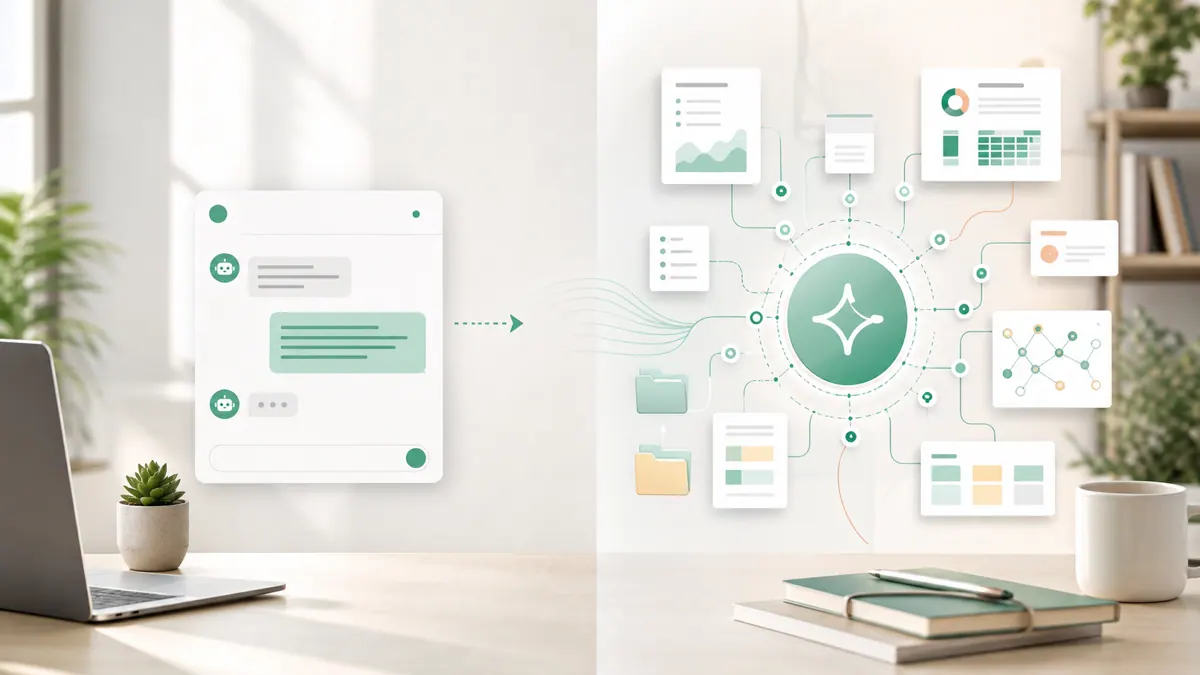
The lean range assumes a small team or freelancer can reuse established components. It does not include a new CRM, content cleanup across thousands of documents, regulated-data review, multilingual evaluation, voice, or around-the-clock support.
The production range becomes larger when the bot can change records, take payments, expose sensitive information, or block a customer from reaching a human. In those cases, reliability work is part of the product—not optional polish.
A worked monthly chatbot cost
Here is an example you can recalculate. It is not a universal benchmark.
Assume a website support bot handles 10,000 conversations per month, with an average of four user messages per conversation. That is 40,000 model responses. After including the system instructions, relevant conversation history, and retrieved context, each response averages:
- 3,000 input tokens
- 500 output tokens
The example uses GPT-5 mini. On July 11, 2026, OpenAI lists standard text pricing at $0.25 per million input tokens, $0.025 per million cached input tokens, and $2 per million output tokens.
Without any cache discount:
| Model usage | Calculation | Monthly cost |
|---|---|---|
| Input | 40,000 × 3,000 = 120M tokens; 120 × $0.25 | $30 |
| Output | 40,000 × 500 = 20M tokens; 20 × $2.00 | $40 |
| Model subtotal | $70 |
Now add a concrete hosting assumption. Vercel Pro is listed at $20 per month, including $20 of usage credit, as of the same date. If this bot stays inside the included resource allowance, the example becomes:
- Model usage: $70
- Hosting platform fee: $20
- Logging and error monitoring allowance: $15 (planning assumption)
- Maintenance allowance: $100 (two hours at an assumed $50/hour)
- Worked monthly total: $205
Remove the maintenance allowance and the software/infrastructure total is $105. Add a managed chat platform, extra database capacity, messaging channel, or premium support and the total changes again.
What prompt caching changes
OpenAI prompt caching is automatically available for prompts of at least 1,024 tokens. Cache hits require an exact shared prefix, so stable instructions and examples should come before user-specific content.
Suppose 80 million of the example’s 120 million input tokens qualify for GPT-5 mini’s cached-input rate:
- 40M uncached input tokens × $0.25/M = $10
- 80M cached input tokens × $0.025/M = $2
- 20M output tokens × $2/M = $40
- Revised model subtotal = $52, not $70
That is useful, but it does not justify promising a fixed percentage saving. Cache hits depend on prompt length, exact prefix reuse, request patterns, and model behavior. Measure the cached-token fields in production rather than assuming every request will qualify.
Where the rest of the monthly bill comes from
Model tokens are only one line item.
Retrieval and vector storage
Retrieval-augmented generation (RAG) means finding relevant passages in your own content and giving them to the model with the question. It can improve grounding, but it adds ingestion, storage, retrieval, and evaluation work.
OpenAI’s hosted File Search currently lists vector-store storage at $0.10 per GB per day after the first free GB. At that rate, 5 GB of stored vectors means 4 billable GB, or roughly $12 over a 30-day month. File-search tool calls are another possible charge; check the current API pricing before launch. A separate vector database has its own plan and usage rules.
Do not estimate storage from the size of the original PDFs alone. Parsed text, chunks, overlap, metadata, and embeddings determine the stored vector size.
Integrations and channels
A website widget is one surface. WhatsApp, SMS, mobile apps, Slack, or voice introduce their own provider fees and operational failure modes.
Integrations also add recurring work even when the API itself is inexpensive. CRM fields change. OAuth tokens expire. Booking rules evolve. Webhooks fail. Budget for someone to notice and repair those failures.
Monitoring and support
A demo can survive with console logs. A production bot needs enough visibility to answer:
- How many conversations fail or fall back?
- Which sources produced an answer?
- Which actions were attempted, and did they complete?
- How much did each conversation cost?
- Can an operator disable a broken tool quickly?
Support may be occasional pay-as-you-go work, a fixed monthly retainer, or an internal owner’s time. Put it in the budget even if no cash changes hands.
What makes the build expensive?
1. The bot is allowed to take action
Answering “What is your return policy?” is cheaper to test than issuing a refund. Actions need authentication, permission checks, confirmation steps, idempotency to prevent duplicate operations, and an audit trail.
2. The source material is messy
RAG does not repair contradictory policies. If pricing lives in old PDFs, staff notes, and an outdated help center, content cleanup may cost more than the chat interface.
3. The consequence of a wrong answer is high
Medical, legal, financial, employment, and regulated workflows need domain review, strict access boundaries, refusal behavior, and reliable escalation. A model can still produce an incorrect answer even when retrieval finds relevant text. Citation and human review reduce risk; they do not erase it.
4. You need several systems and audiences
A public customer bot and an employee assistant should not share identical permissions. Multiple roles, data sources, languages, brands, and regions multiply test cases.
5. Reliability has a real target
“Usually works” is acceptable for a prototype. A customer-support channel needs timeouts, retries, rate limits, abuse controls, fallbacks, alerts, and a human handoff. Ask vendors what happens when the model, database, or CRM is unavailable.
Common chatbot budget mistakes
Pricing only the model. A $52 model bill does not make the complete system a $52 product. Hosting, retrieval, channels, monitoring, and ownership still exist.
Using message count without token assumptions. Two thousand one-line FAQ questions and two thousand long document-analysis requests have very different costs. Record input and output tokens per response.
Sending the whole knowledge base every time. Retrieve a small, relevant set of passages. Longer prompts increase cost and can make it harder for the model to focus.
Buying integrations before proving the conversation. First test whether users ask questions the bot can answer usefully. Then add actions one at a time.
Skipping evaluation and handoff. A launch checklist should include representative questions, expected answers, unsafe requests, missing-information cases, and a clear route to a person.
Assuming custom always beats a platform. A hosted chatbot builder can be the better choice when speed matters, its workflow fits, and its monthly price is acceptable. Custom development makes sense when you need control, unusual integrations, specific security boundaries, or ownership of the experience. Compare total cost over the period you realistically expect to use it; there is no automatic one-year break-even point.
A practical way to request a quote
Give every vendor the same short brief:
- Monthly conversations and average messages per conversation
- The single job the bot must complete
- Source content, including its size and condition
- Systems the bot may read from or write to
- User roles and sensitive-data constraints
- Required channels, languages, and human handoff
- Reliability, monitoring, and support expectations
- What you must own at handover: code, prompts, accounts, data, and documentation
Then ask for build cost, monthly fixed fees, usage-based fees, and maintenance as separate lines. A quote that cannot show those four numbers is difficult to compare.
If you have a focused chatbot idea and want the assumptions challenged before implementation, contact SprintX about a scoped chatbot estimate. Bring your expected volume, knowledge sources, and required integrations; the first useful outcome should be a cost model, not a sales promise.
AI agents and automation
AI agents that do the work.
We build agents and automations for the repetitive work your team does by hand, and measure what they save.
Keep reading.
More on ai agents and automation
AI agents and automation · 18 Jul 2026 · 9 min read
Chatbot Development Cost in 2026: RAG, Voice and Beyond
A practical, no-hype guide to chatbot development cost in 2026 — build ranges, running costs, and what pushes a RAG or voice bot up or down in price.
AI agents and automation · 11 Jul 2026 · 8 min read
What Does a Custom GPT Cost to Build for Your Business?
A practical breakdown of what a custom GPT costs to build for your business in 2026 — from a quick no-code GPT to a document-grounded custom assistant.
AI agents and automation · 18 Jul 2026 · 9 min read
7 Intercom Alternatives in 2026 (And When a Custom Bot Wins)
A no-hype look at seven Intercom alternatives in 2026, what each is good for, and the point where a custom-built support bot becomes the smarter buy.