
Case study · Public-sector emergency management
CardinalEM (Opcenter 360).
A public-sector emergency management platform for EOC and incident command, serving cities, counties, and regional coalitions.
- What we built
- EOC/incident command SaaS platform, with brand and design retainer
- Stack
- AWS (migrated from Vercel), Cloudflare, Wix DNS
- Services
- Web app developmentInfrastructure migrationBrand identityUI/UX designCompliance readiness
About the project
What is CardinalEM (Opcenter 360)?
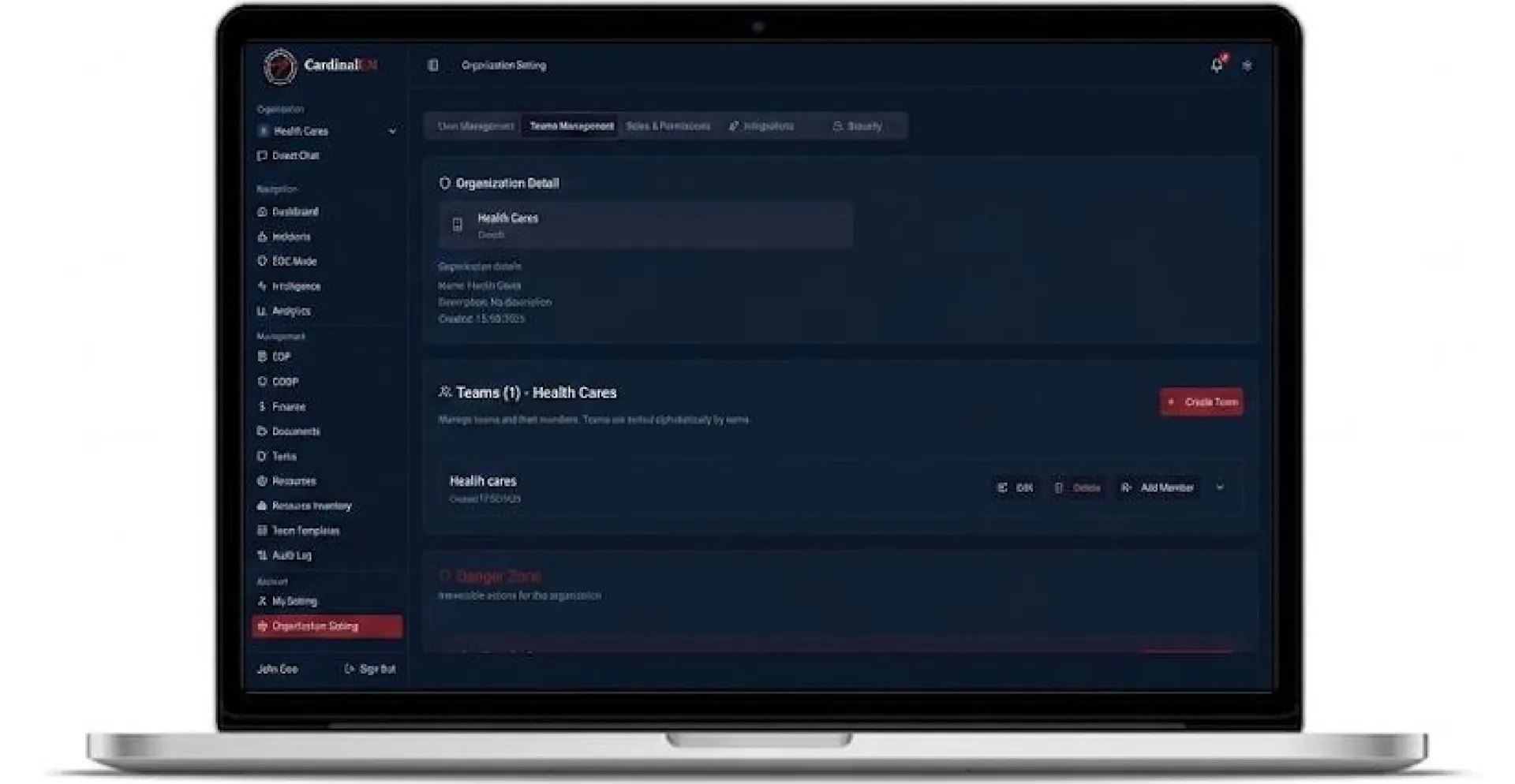
The client is a public-sector emergency management brand whose flagship product is an EOC and incident command platform serving cities, counties, and regional coalitions. The platform digitizes ICS (Incident Command System) workflows: Incident Action Plans (IAPs), resource requests, organization charts, staff messaging, and — critically — financial tracking for incident-related expenses that agencies must document for government and FEMA reimbursement. SprintX partnered with the team as an embedded, weekly-retainer technical and design team — handling everything from infrastructure migration and feature development to full brand identity, UI/UX direction, and compliance readiness, as the product evolved from a single tool into the encompassing brand for a suite of products.
The problem
What was slowing them down.
- 01
Infrastructure fragility
The application needed to be migrated from Vercel to AWS, with DNS/domain records reconfigured across Wix and Cloudflare — a process complicated by inconsistent DNS interfaces and propagation issues.
- 02
Incomplete core modules
Key incident-command features were partially built or missing entirely — resource request approvals had no "deny" pathway, IAP forms didn't pre-populate correctly, and a finance/budget module (essential for FEMA/government expense reimbursement) was not functional.
- 03
No cohesive brand identity
The product had outgrown its original single-tool identity. As it evolved into a multi-product family (the "radar" brand housing the incident product and future modules), there was no logo system, typography, color system, or visual direction to represent that architecture.
- 04
Compliance pressure
As a platform serving government agencies, it needed to move toward SOC 2 compliance, including penetration testing and security documentation, to be credible for enterprise/government procurement.
- 05
No dedicated design or development bandwidth
The client needed a reliable, ongoing team that could operate independently week over week rather than a one-off project engagement.
The solution
What we built.
A hybrid retainer
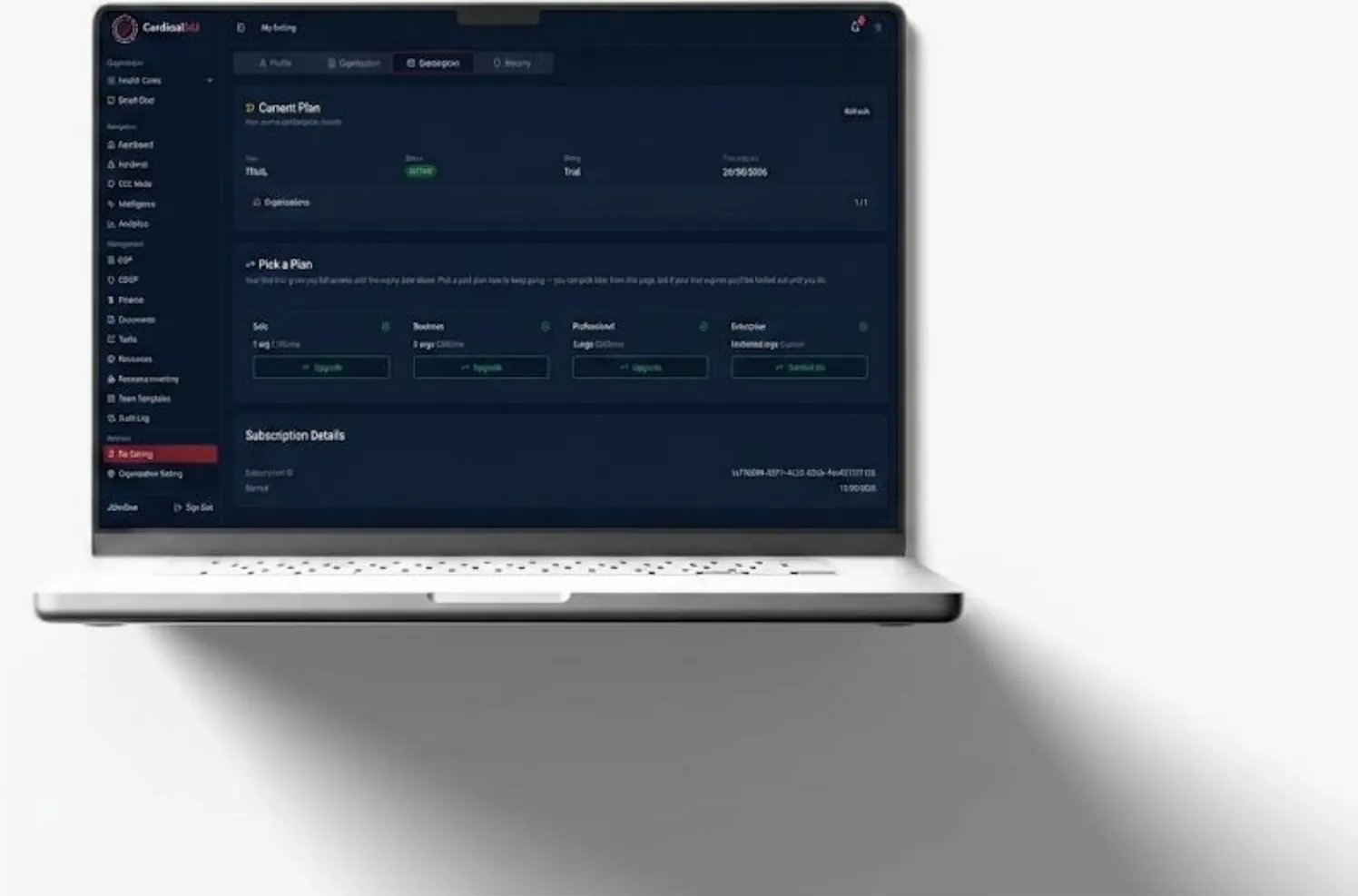
SprintX structured the engagement as a hybrid retainer: a standing weekly development block (40 hrs/week) combined with a "Design as a Service" subscription for continuous UI/UX and brand work. This let SprintX act as the client's de facto product and design team rather than a vendor delivering discrete milestones.
- Infrastructure stabilization: migrated the application to AWS, resolved CNAME/A-record and domain-pointing issues across Wix, Cloudflare, and the client's registrar, and validated go-live connectivity.
- Core feature completion: fixed IAP data population bugs, added resource request denial workflows with reason capture, implemented a full budget and expense-tracking module (yearly/period-based budgets, category allocation, expense approval flows) purpose-built for incident cost reimbursement use cases, and removed a deprecated planning module per client direction, including backend code cleanup.
- Brand identity & visual direction: delivered a complete brand system as a "radar" master brand — logo refinement, a color system anchored in a dark blue direction the client favored, typography direction, a product naming/identity framework for the growing product family, product interface visual direction, landing page design, and a simplified brand guideline document — plus an icon system for sub-brands designed to visually "pulse" on the radar UI when active.
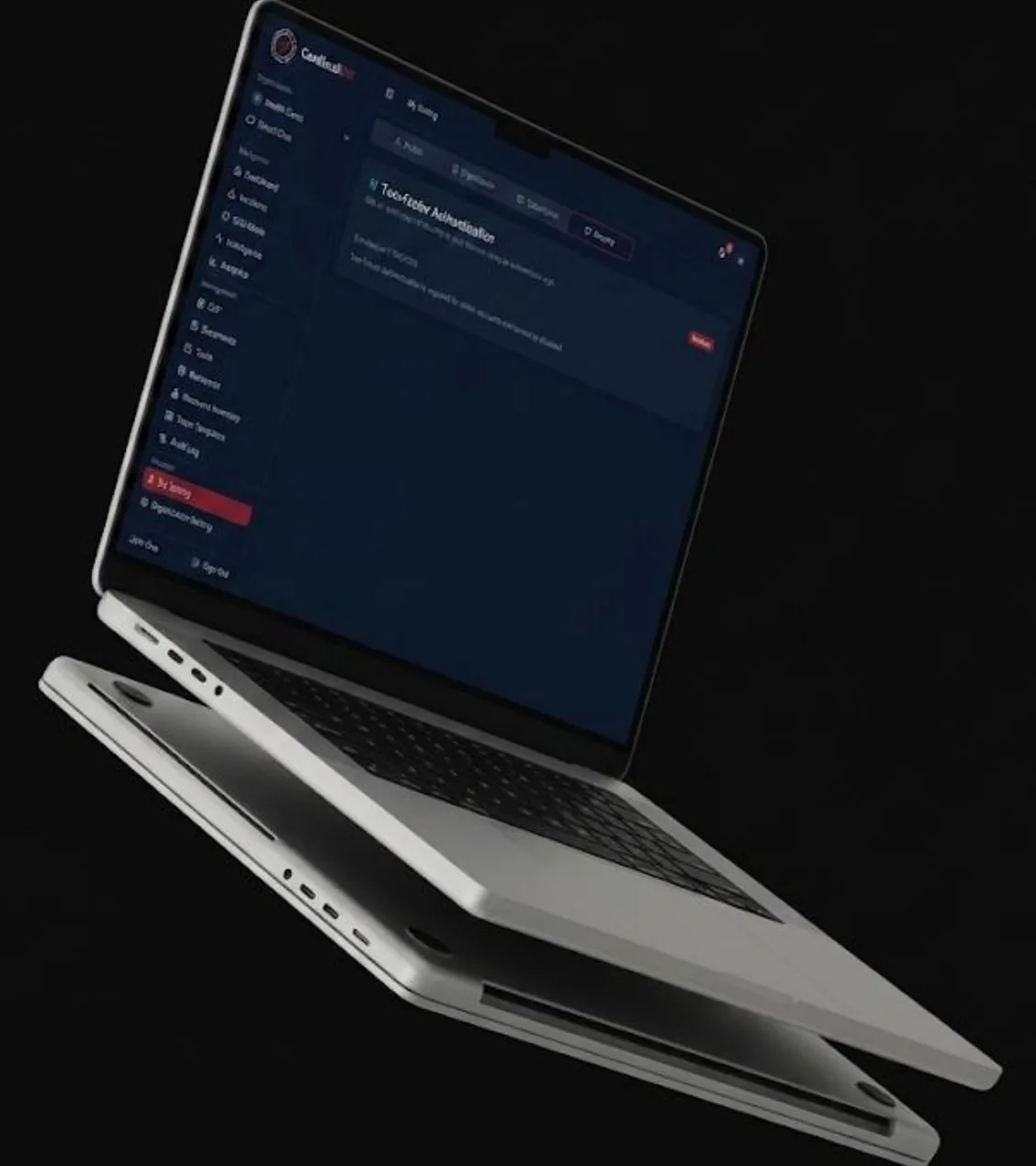
- Compliance groundwork: began SOC 2 readiness work, including a master compliance checklist, to prepare the platform for government-grade procurement standards.
- Continuous weekly delivery: ran the engagement as a rolling cadence of weekly sprints (43+ tracked deliverables to date) with regular client video calls to review progress, re-scope, and course-correct in near real time.
Results
What changed.
Results and business value
Zero-downtime infrastructure migration
From Vercel to AWS with domain continuity maintained throughout.
Government-reimbursable finance tracking
The new budget/expense module directly supports the real-world need of cities and counties to document spend against FEMA and government reimbursement claims — a feature that materially increases the platform's value to its target market.
A scalable brand system
Rather than a one-off logo, the client now has a brand architecture that can absorb new product modules without a redesign each time — supporting the client's stated go-to-market plan of expanding the product family.
Stronger enterprise/government credibility
SOC 2 compliance groundwork positions the platform to compete for larger public-sector contracts where security certification is a procurement gate.
Operational continuity
A near year-long, uninterrupted weekly retainer relationship — evidence of sustained trust and a working model that scales with the client's evolving roadmap rather than requiring re-negotiation for every new feature.
Key challenges
The hard parts, and how we solved them.
DNS/domain migration friction
Wix's DNS interface behaved inconsistently with standard CNAME/A record conventions, causing repeated validation errors during the AWS cutover. The team worked through it live with the client, iteratively testing record values and formats until propagation succeeded.
Ambiguous, evolving product scope
As the product was actively being renamed and re-architected into a new brand family mid-engagement, requirements shifted in real time. SprintX adapted by treating brand and naming conversations as first-class scoping sessions rather than side discussions, ensuring design work stayed aligned with the client's evolving product strategy.
Complex, domain-specific finance logic
Government budget tracking (multi-period budgets, category allocation, incident-level vs. global expense tracking) required back-and-forth to correctly model how emergency management agencies actually track and report costs. The team used structured clarifying questions on calls to align the data model with real reimbursement workflows before building.
Balancing a long-running retainer against feature depth
With 40+ consecutive weekly cycles, maintaining momentum and avoiding scope creep required disciplined weekly re-prioritization directly with the client rather than a fixed static roadmap.
Legacy feature cleanup without regressions
Removing the deprecated planning module required full backend code removal (not just UI hiding) to keep the codebase clean — handled carefully to avoid breaking dependent modules.
Tech stack
What it runs on.
- Hosting/infrastructure
- AWS (migrated from Vercel)
- Domain/DNS management
- CloudflareWix DNS
- Compliance
- SOC 2 readiness documentation and checklist
- Design & branding
- Logo systemsBrand color/typography systemsProduct interface visual directionLanding page design
- Application domain
- EOC/Incident Command SaaS platform (ICS-aligned)IAP formsOrg chartsResource managementMessagingFinance/budget modules
Process
How we got there.
01Weekly sync calls
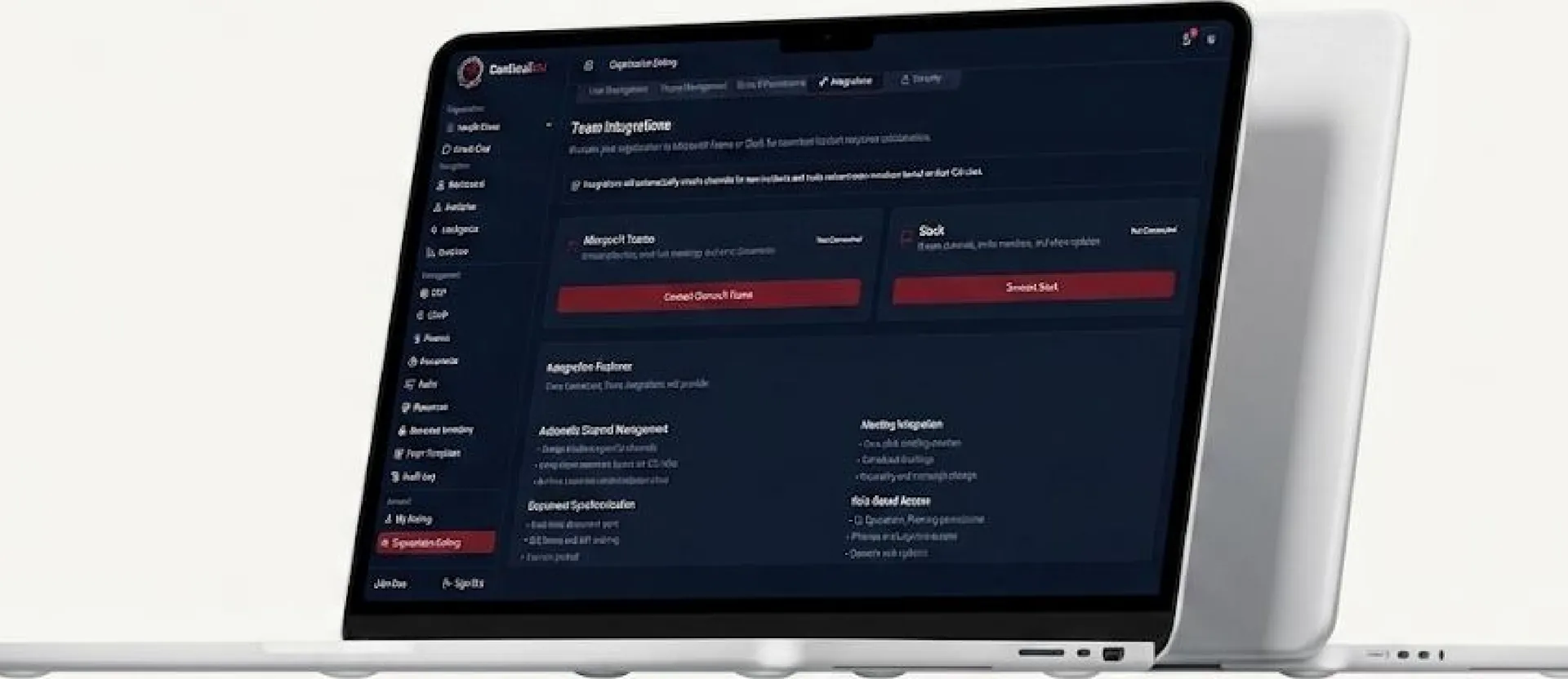
Via Zoom between the client and the SprintX team to review the prior week's work, walk through the live application, and capture new requirements directly from client feedback.
02Same-call scoping
Rather than lengthy requirement documents, most new features (e.g., the finance module, resource denial flow) were scoped conversationally on calls and immediately translated into actionable tasks.
03Weekly deliverable cycles
Each week was tracked as its own deliverable (e.g., "Week 34," "Week 35") with a 40-hour budget, giving both sides a transparent, auditable cadence of what was shipped.
04Parallel design subscription track
Brand and UI/UX work ran as a separate, ongoing "Design as a Service" subscription stream alongside the core development retainer. · Visual identity work didn't block feature development and vice versa.
05Direct client demoing
The team walked the client through live, in-progress features on shared screens during calls. · This allowed immediate validation or correction (e.g., catching that objectives weren't populating correctly from the IAP form).
More work.
All projects
LIVA
Built an AI-powered conversational video sales platform that uses live AI avatars to engage property buyers, qualify leads, capture consent-based contact information, and automatically deliver structured lead insights to real estate agents.
Plant Style AI Chatbot
Built a private AI-powered business chatbot that centralizes company procedures, policies, templates, planners, and operational documents into a searchable knowledge system for secure and consistent management support.
Building something like CardinalEM (Opcenter 360)?