
Case study · Warehouse and inventory management
Heft IQ.
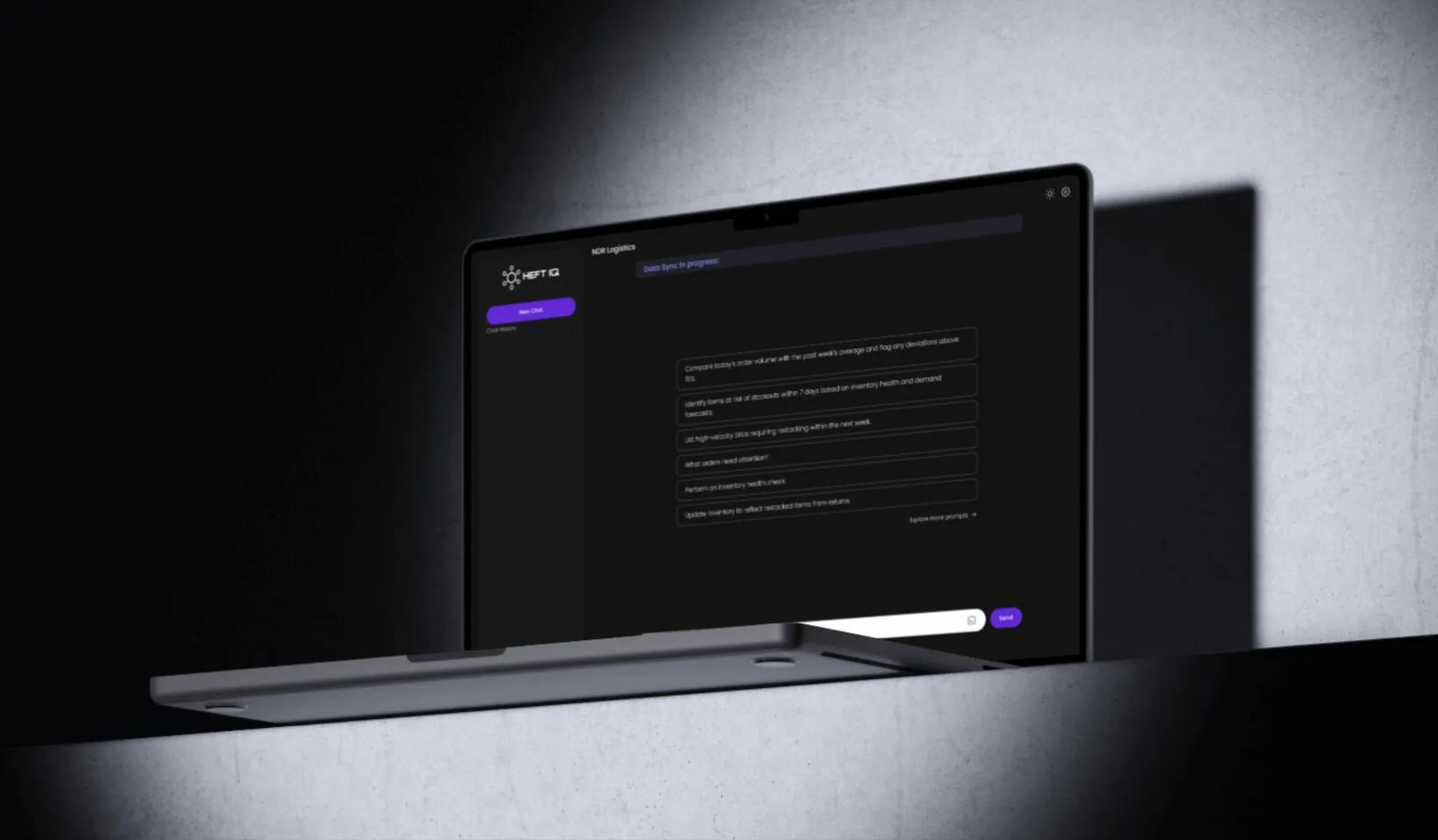
We built an advanced AI-powered SaaS chatbot designed to transform how businesses manage and interact with their inventory data.
- What we built
- AI chatbot SaaS platform
- Stack
- Next.js, Tailwind CSS, Next.js (with Vercel AI SDK)
- Services
- AI chatbotMulti-agent AIData integrationWeb app
About the project
What is Heft IQ?
We built an advanced AI-powered SaaS chatbot designed to transform how businesses manage and interact with their inventory data. The platform was created for 3PL providers, direct-to-consumer brands, and companies managing their own warehouses. By connecting to leading fulfillment and e-commerce platforms such as Amazon and other 3PLs, the chatbot acts as a central hub where businesses can access, analyze, and predict inventory insights. Unlike traditional dashboards, this solution uses a multi-agent AI architecture to process millions of records in real time, normalize cross-platform data, and deliver actionable insights through natural conversation.
The problem
What was slowing them down.
- 01
Fragmented data sources
Different platforms (Amazon, 3PLs, in-house systems) store data in inconsistent formats.
- 02
Complex manual analysis
Extracting data into spreadsheets or BI tools is time-consuming and prone to human error.
- 03
Limited real-time visibility
Teams struggle to track past orders, current stock, and predictive trends in one place.
- 04
Lack of accessibility
Non-technical teams often can’t run SQL queries or BI reports, leaving them reliant on analysts.
The solution
What we built.
Unified Data Integration
Middleware layer that normalizes APIs and raw data from top 3PLs, Amazon, and custom warehouse systems.
Conversational Analytics
Chatbot answers queries on past orders, sales, and stock levels using natural language.
Predictive Insights
AI-driven forecasting for inventory trends and demand planning.
Role-Based Access
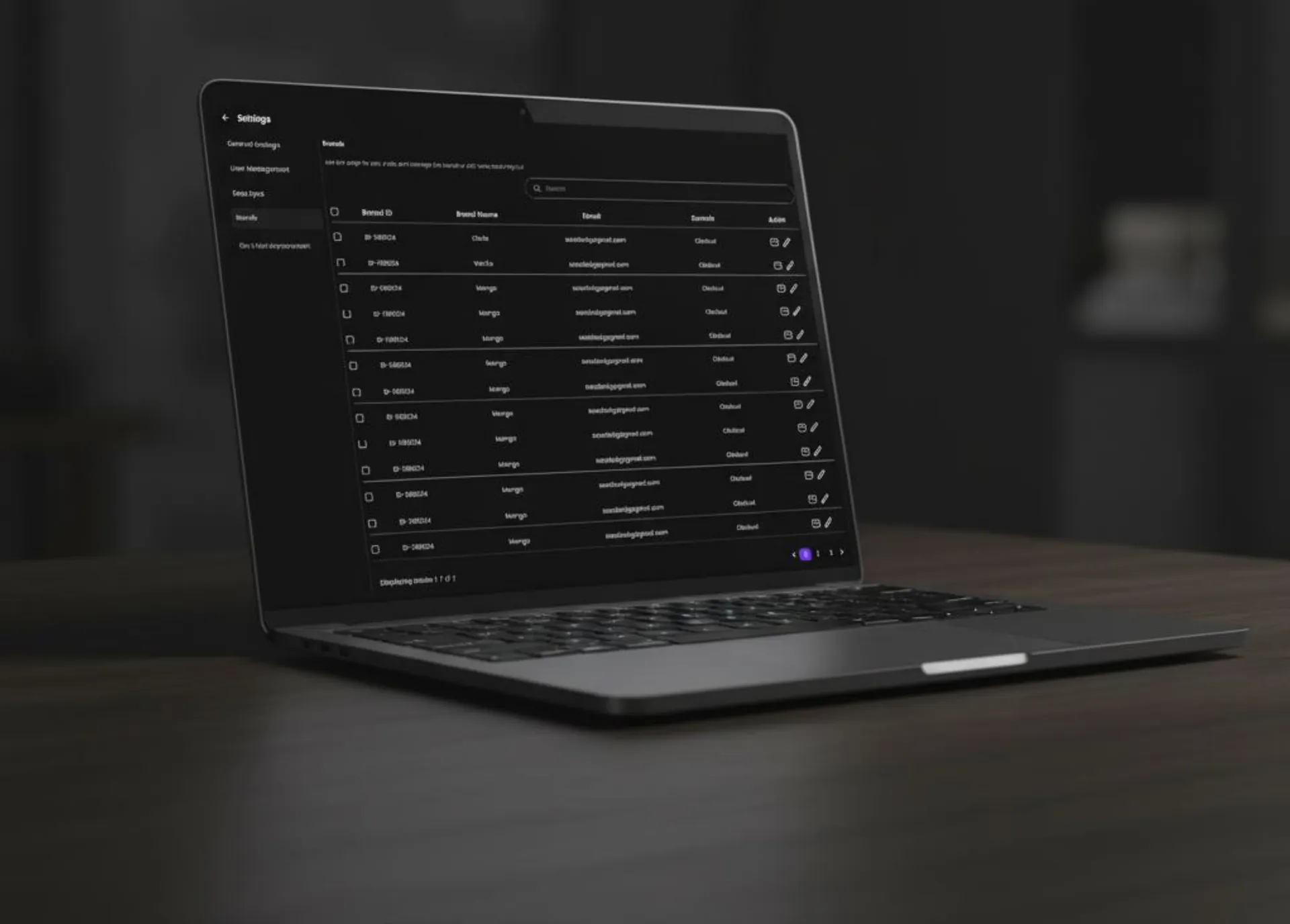
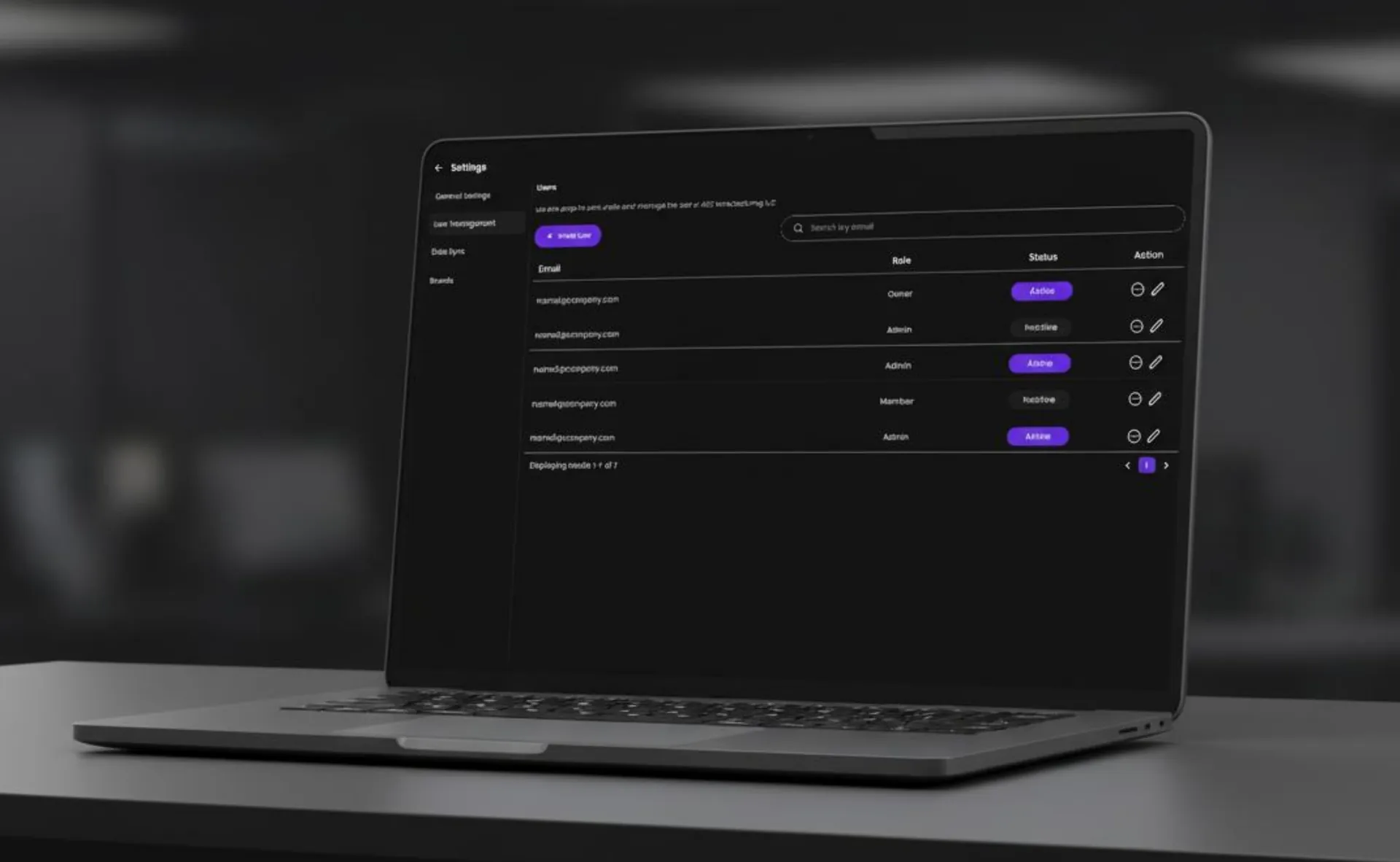
User management system ensuring brands only view their assigned warehouse data.
Advanced Visualization
On-demand generation of tables, charts, and line graphs to visualize data.
Scalable Infrastructure
Optimized to handle millions of inventory records with high performance.
Results
What changed.
Warehouse-dependent businesses
Speed
90% faster access to past order and inventory details compared to traditional BI dashboards.
Autonomy
Reduced operational dependency on analysts by enabling teams to self-serve insights through AI conversations.
Foresight
Improved decision-making with predictive analytics, helping businesses avoid stockouts and overstocking.
Efficiency
Cost savings by eliminating the need for multiple disconnected reporting systems.
Scalability
Enhanced scalability for brands managing warehouses across regions or 3PL networks.
Key challenges
The hard parts, and how we solved them.
Heterogeneous data formats across multiple 3PLs and warehouse systems.
Built a data normalization middleware to unify different APIs into a single standard.
Delivering accurate conversational responses for complex queries.
Designed a multi-agent AI workflow where different agents collaborate to interpret queries, fetch data, and generate correct answers.
Handling millions of inventory records efficiently.
Implemented scalable database design with optimized queries and AI agents for distributed computation.
Making advanced analytics accessible to non-technical users.
Integrated a chat-first interface with automatic visualization (charts, graphs, tables) for easier interpretation.
Tech stack
What it runs on.
- Frontend
- Next.jsTailwind CSS
- Backend
- Next.js (with Vercel AI SDK)
- AI
- OpenAI (with E2B for code interpretation)
- Observability & Tracing
- Langfuse
- Database
- MongoDB (user details)Tinybird (core/large-scale data)Trackstar (data fetching and pipelines)
- Session Management & Analytics
- PostHog
Process
How we got there.
01Data Ingestion
APIs connected to Amazon, 3PL providers, and custom warehouse systems
02Data Normalization Layer
Middleware standardizes raw data into a unified schema
03Multi-Agent Processing
Specialized AI agents handle query interpretation, data fetching, computation, and visualization
04Chatbot Interface
End-users interact with the AI chatbot to query and visualize insights
05Access Control
Each brand views only its assigned data through secure user management
More work.
All projects
Hodgdon
AI-powered chatbot that delivers real-time financial, sales, and inventory insights with predictive forecasts through simple conversations.

Rufus Labs
AI-powered warehouse system that analyzes wearable scanner data to track worker productivity, optimize item placement, and deliver real-time insights.
Building something like Heft IQ?