
Case study · Education and research
KI Agent.
A custom AI-powered web application that lets users create intelligent agents to automate research-based report writing.
- What we built
- AI web app
- Stack
- React, TypeScript (CRA), Express, MongoDB
- Services
- Web appAI agentsWeb scrapingDocument generation
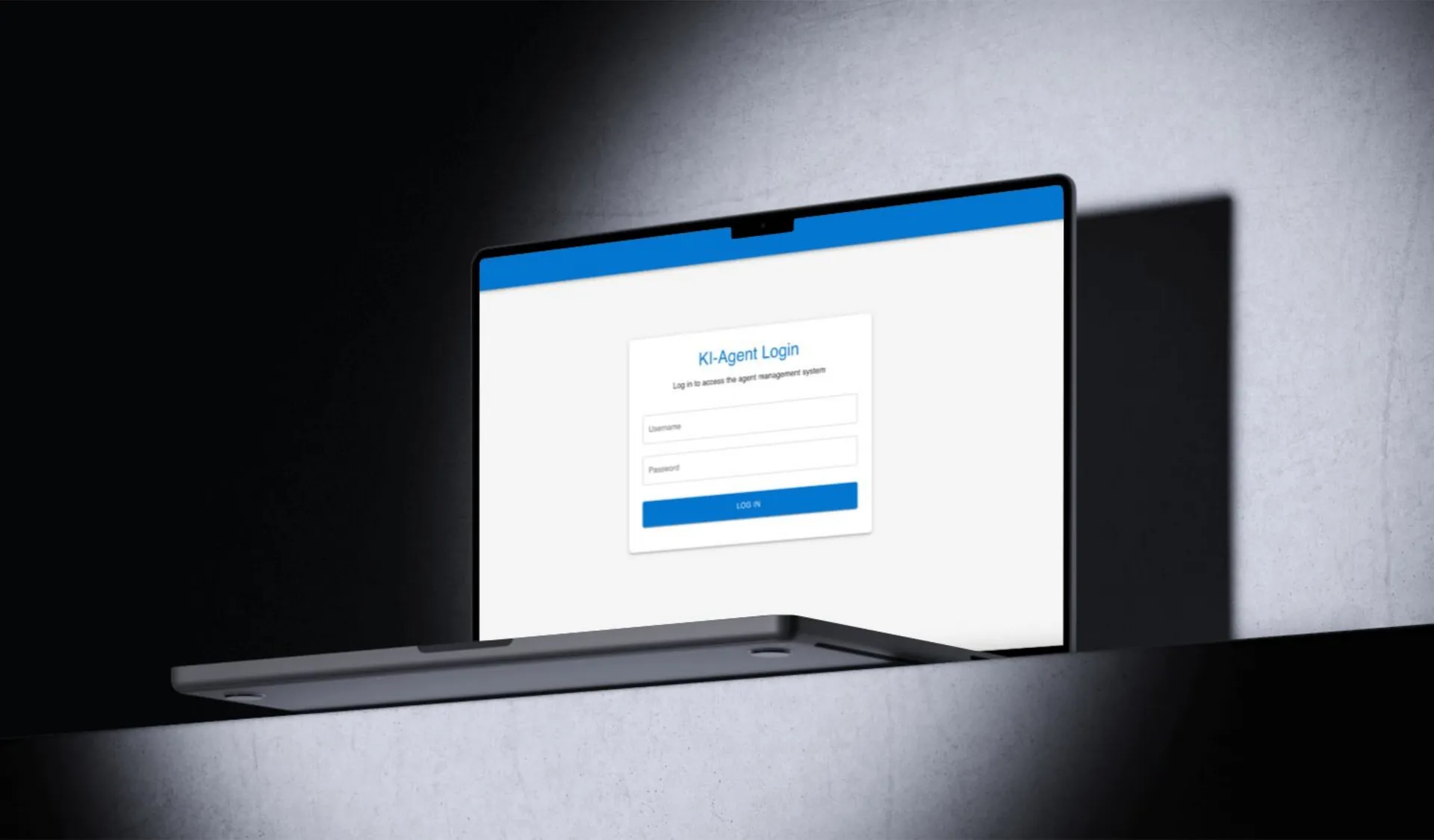
About the project
What is KI Agent?
The client, an education-focused professional, needed a smarter and faster way to produce research-based reports. Traditionally, this process required hours of manual searching, collecting references, structuring content, and formatting documents. To solve this, we developed a custom AI-powered web application that allows users to create intelligent agents capable of automating the entire workflow—from data collection to structured report generation. This platform streamlines the creation of detailed academic and professional reports (15–30 pages), helping the client save significant time and effort while ensuring higher accuracy, consistency, and professional formatting.
The problem
What was slowing them down.
- 01
Searching across multiple websites
Searching across multiple websites and articles for relevant information.
- 02
Organizing and filtering the data
Organizing and filtering the data into meaningful structures.
- 03
Building tables of contents manually
Building tables of contents manually and expanding them into comprehensive sections.
- 04
Formatting reports
Formatting reports into a professional layout.
- 05
Inefficient and time-consuming
This process was inefficient, time-consuming, and prone to human error, limiting productivity and delaying report delivery.
The solution
What we built.
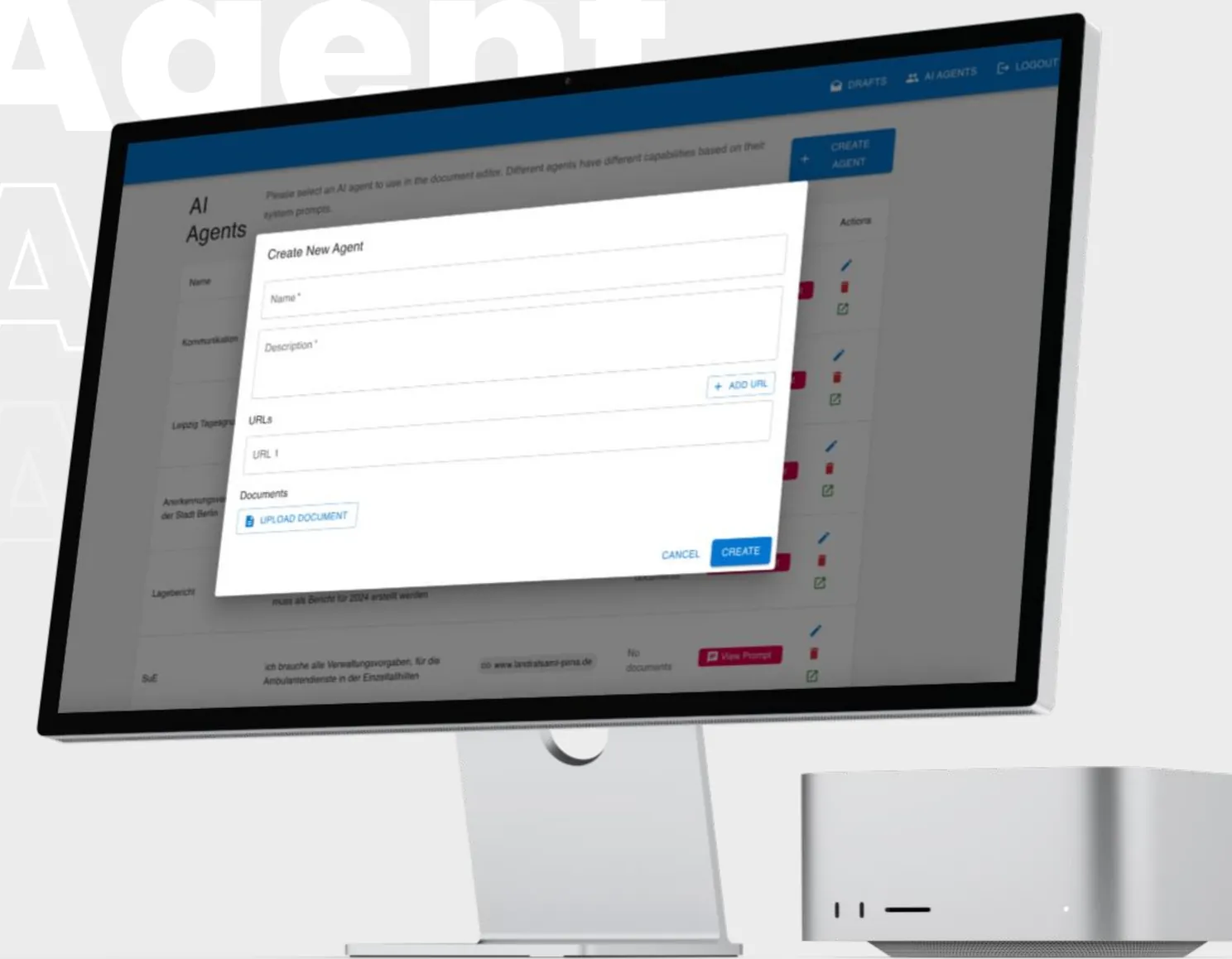
AI Agent Creation
We built a web application with customizable AI agents that automate the entire process of report generation.
- The user can create multiple AI agents, each dedicated to a specific report type.
Input Flexibility
Agents can work with either a URL (for direct scraping) or a draft report uploaded by the user.
Intelligent Research & Scraping
Agents scrape data from the web, filtering only relevant content.
Dynamic Table of Contents
When a topic is provided, the system generates a tailored table of contents based on relevant sources.
- Users can edit, add, or remove sections before proceeding.
Content Expansion
Each heading in the table of contents is individually researched and expanded into full sections.
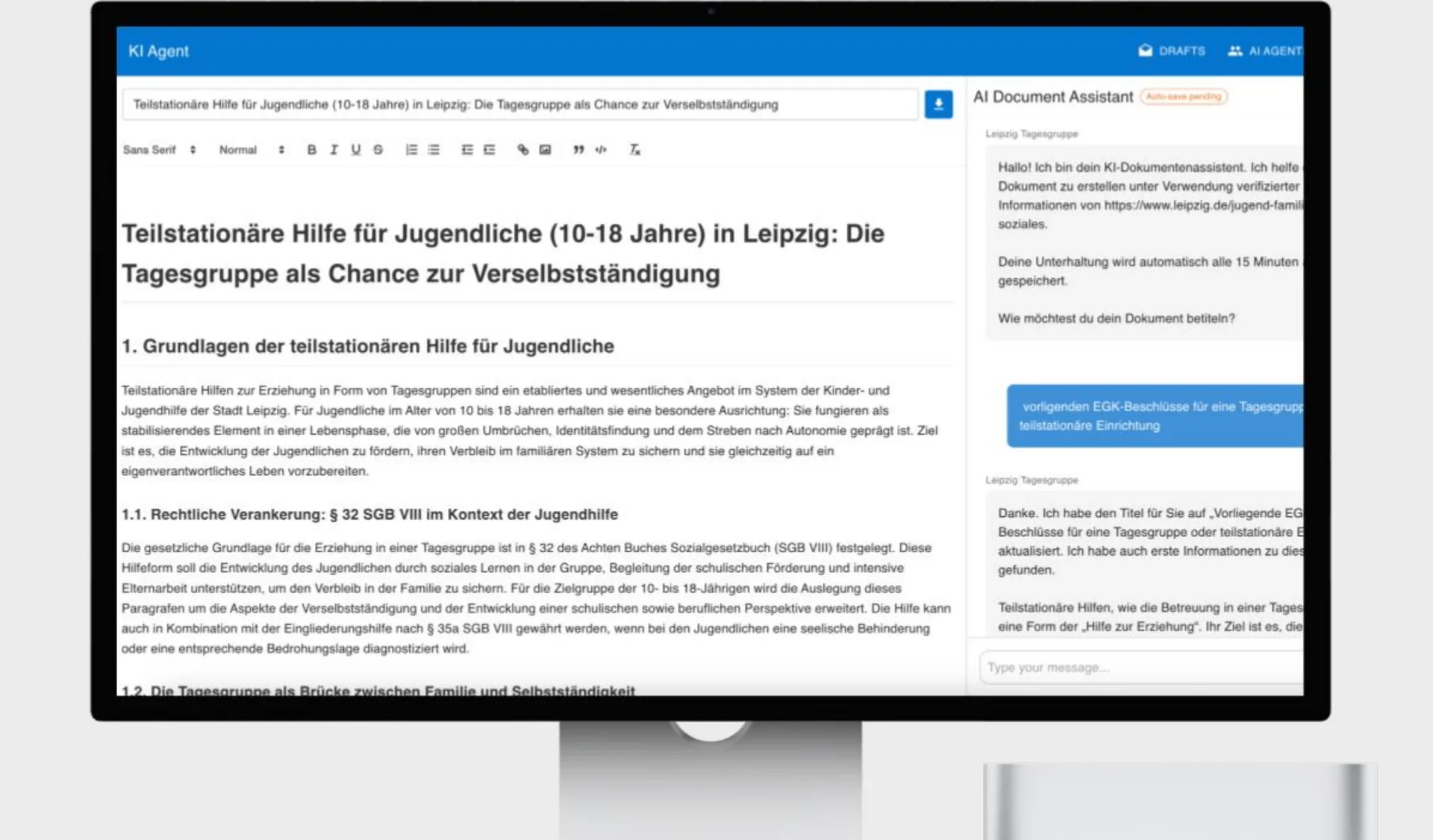
Interactive Sidebar Chatbot
Users can interact with the agent via chat to guide, refine, or customize the document.
Report Output
The system produces a formatted, editable, and professional-looking report, which can be saved, downloaded, or revised later.
Results
What changed.
Client
Speed
80% faster report creation compared to manual research and writing.
Quality
Consistent, professional-quality documents that require minimal editing.
Scalability
Ability to handle long reports (15–30 pages).
Efficiency
Reduced dependency on repetitive manual tasks, allowing the client to focus on higher-value analysis and insights.
Versatility
A scalable solution that can be expanded for other industries like market research, policy papers, whitepapers, and business reports.
Key challenges
The hard parts, and how we solved them.
Data Relevance Filtering: avoiding irrelevant or redundant content from scraped websites.
Implemented AI-powered filtering and keyword matching to ensure accuracy.
Customizable Structure: allowing flexibility in the report structure while maintaining consistency.
Designed an editable AI-generated table of contents, giving full control to the user.
Long-Form Document Handling: generating 15–30 page reports without losing structure or quality.
Optimized the AI pipeline for section-by-section expansion, ensuring coherence across the document.
User-Friendly Interface: making a complex AI system accessible to non-technical users.
Built an intuitive UI with a sidebar chatbot, drag-and-drop editing, and simple workflows.
Tech stack
What it runs on.
- Frontend
- ReactTypeScript (CRA)
- Backend
- ExpressMongoDBUpstash
- AI & Integrations
- OpenAIGoogle GenAI
- Web Scraping
- CheerioPlaywright
- Document Tooling
- Rich export libraries for formatted, editable, downloadable reports
Process
How we got there.
01Agent Setup
User creates a specialized agent for a report type.
02Input Data
User uploads a draft or provides URLs.
03Scraping & Research
Agent collects relevant content from trusted sources.
04Table of Contents
AI generates a TOC, user customizes it.
05Content Generation
Each section is expanded with data-backed content.
06Editing & Review
User interacts with the agent via chatbot for refinements.
07Final Report
Professionally formatted report ready for download, saving, or further edits.
More work.
All projects
Heft IQ
AI-powered SaaS chatbot that unifies warehouse and 3PL data, delivering real-time inventory insights and predictive analytics through conversation.

Hodgdon
AI-powered chatbot that delivers real-time financial, sales, and inventory insights with predictive forecasts through simple conversations.
Building something like KI Agent?