
Case study · Oil and gas
Oplii.
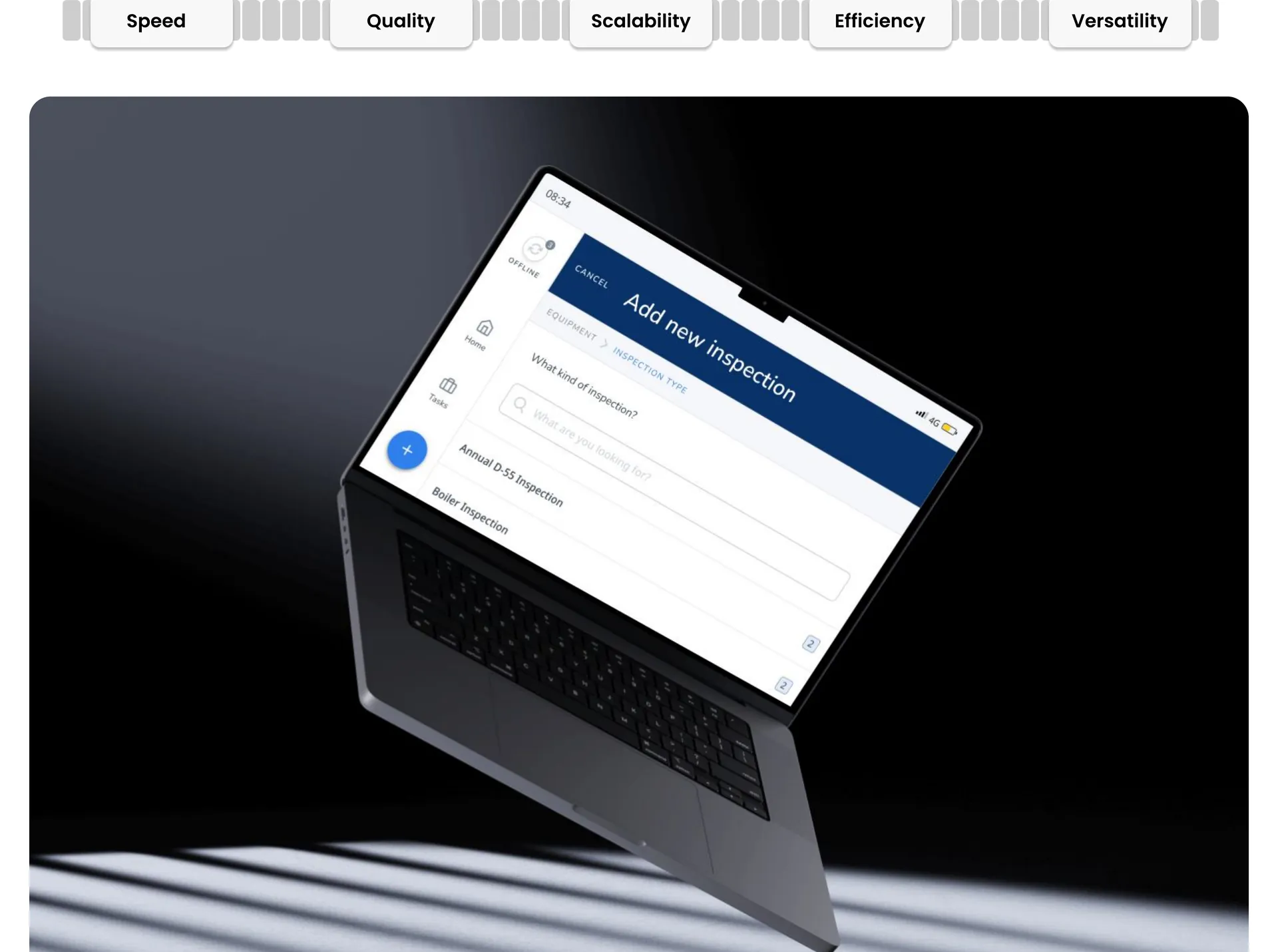
We developed a mobile-first progressive web application (PWA) designed to streamline inspection, maintenance, and operations management for oil and gas companies.
- What we built
- Mobile-first progressive web app with web admin interface
- Stack
- React 18, CSS Modules (styling), Axios (HTTP client), Redux
- Services
- Progressive web appOffline-first syncMobile app
About the project
What is Oplii?
We developed a mobile-first progressive web application (PWA) designed to streamline inspection, maintenance, and operations management for oil and gas companies. The platform enables field workers to perform site inspections, record data, manage maintenance tasks, and sync information between offline and online modes. This solution addressed the industry's need for reliable, mobile operations tools in environments with limited or unstable connectivity.
The problem
What was slowing them down.
- 01
Spreadsheets, paper forms, or fragmented digital tools
The oil and gas industry relies heavily on field inspections, asset tracking, and maintenance reporting. Traditionally, workers managed these processes with spreadsheets, paper forms, or fragmented digital tools, creating inefficiencies, delays, and data inaccuracies.
- 02
Connectivity
Many oil and gas sites operate in remote areas where internet access is unreliable. Companies required a solution that allowed workers to capture critical data in real time, regardless of connectivity, while maintaining security, compliance, and operational efficiency.
The solution
What we built.
Results
What changed.
Oil and gas companies
Reduced paperwork and manual errors
Reduced paperwork and manual errors by digitizing inspection and maintenance processes.
Automated data capture
Automated data capture ensures accuracy and adherence to industry standards.
Offline-first design
Offline-first design minimized downtime and ensured business continuity in low-connectivity zones.
Eliminated redundancy
Eliminated redundancy and reduced delays in syncing site data to central systems.
Supports expansion
The app supports expansion to multiple sites, equipment types, and organizational structures.
Key challenges
The hard parts, and how we solved them.
Connectivity Gaps
Solved through an offline-first architecture with secure background syncing.
Data Volume & Scalability
Built a backend optimized for large datasets across multiple oilfield sites.
User Adoption
Delivered a simple, mobile-first interface with customizable settings to align with worker needs.
Regulatory Compliance
Ensured secure data handling and accurate record-keeping to meet industry standards.
Cross-Device Consistency
Ensured a consistent experience across web and mobile for both field and office staff.
Tech stack
What it runs on.
- Frontend
- React 18CSS Modules (styling)Axios (HTTP client)Redux
- Utilities
- PWA service workerWeb worker
Process
How we got there.
01Onboarding & Setup
Workers configure their preferences, reminders, and required forms
02Field Data Capture
Inspections and maintenance logs are completed directly on mobile devices
03Offline Mode
Data is stored locally when internet access is unavailable
04Sync Process
Once connected, data is securely synced to central servers
05Management Oversight
Admins and managers review, approve, and analyze field data through the web interface
06Continuous Customization
Forms and workflows can be updated as business requirements evolve
More work.
All projects
Zealfit
AI-powered fitness SaaS platform connecting clients & trainers with OpenAI-generated personalized workout/meal plans, voice input via Deepgram, and dual-role dashboards.
EZ Serveys
Cloud-based SaaS survey platform for nonprofits: SurveyJS builder, real-time analytics dashboards with charts, team collaboration, and Stripe billing.
Building something like Oplii?