
Case study · Business education and coaching
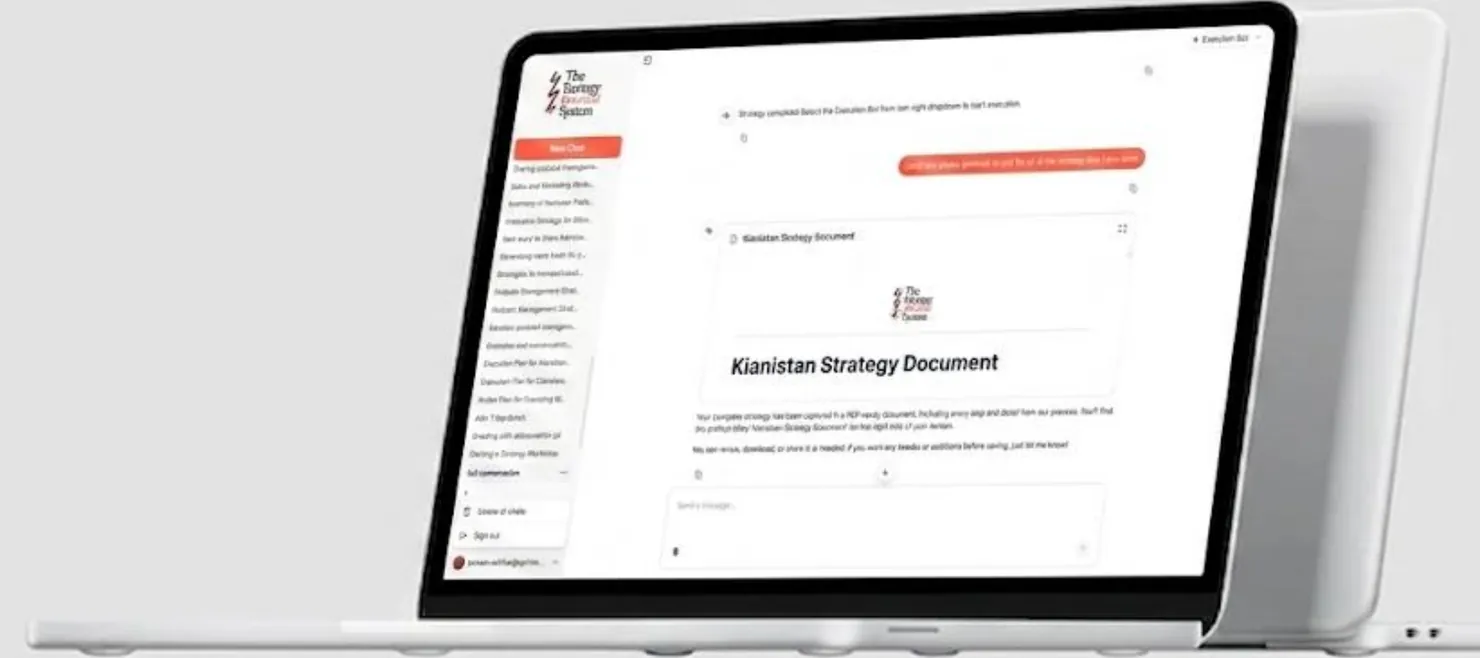
Strategy Shortcut System Chatbot.
A reliable multi-agent AI business coaching platform that helps small businesses create and execute clear, actionable strategies through structured, memory-persistent guidance.
- What we built
- Multi-agent AI coaching chatbot with payment-gated access
- Stack
- Custom chat UI with React (inspired by ChatGPT), Agent dropdown, Responsive design, Markdown rendering
- Services
- AI chatbotMulti-agent AIKnowledge basePayment-gated access

About the project
What is Strategy Shortcut System Chatbot?
This project entailed building a multi-agent AI chatbot system to replace unreliable custom GPT setups for an online course focused on streamlined business strategy creation and implementation. The platform features two interconnected agents within a unified interface: one for strategy formulation and another for execution planning. Designed for small businesses with 1-50 employees and consultants, the chatbot adheres to a proprietary methodology, ensuring precise, no-nonsense guidance. The solution integrates vector databases for accurate knowledge retrieval, Stripe for payment-gated access, and OpenAI models for intelligent interactions.
Conclusion
By rigidly adhering to proprietary methodologies while enabling seamless strategy-to-execution transitions, the solution empowers small business owners and consultants with differentiated, actionable insights. As digital tools continue to shape education, this foundation supports future enhancements.
The problem
What was slowing them down.
- 01
Custom GPTs became unreliable
The client, an educator in business strategy, previously relied on custom GPTs from OpenAI to deliver interactive guidance for their course. Recent changes in OpenAI's platform, such as altered file retrieval mechanisms, shifted model interpretations of instructions, and a preference for general training over uploaded documents, rendered these GPTs unreliable. What worked effectively eight months prior now produced inconsistent, hallucinated, or generic responses, deviating from the client's specific methodology.
- 02
Inefficiencies for users
Small business owners and consultants using the system faced vague strategy outputs, lack of enforcement on sequential processes, no safeguards against skipping critical steps, and absent memory across sessions.
- 03
No secure access control
There was no secure access control tied to payments, risking unauthorized use.
- 04
Fragmented experiences
The absence of agent switching with context transfer meant fragmented experiences, while the inability to challenge weak user inputs or rigidly follow proprietary workshops led to suboptimal strategies.
The solution
What we built.
Multi-Agent Architecture
We developed a multi-agent chatbot platform that encapsulates the client's proprietary business strategy methodology into two specialized agents: the Strategy Bot for foundational strategy building and the Execution Bot for implementation workshops. The system preserves context between agents, enforces rules, and uses a vector database for precise knowledge retrieval.
- Users interact via a unified chat interface with a dropdown selector to switch between agents.
- The Strategy Bot guides a 10-step process to create a differentiated strategy, outputting a document with key elements like category, unique belief, innovation, and value.
- The Execution Bot, accessible only post-strategy, conducts three workshops: Innovation (generating aligned ideas), Leadership (editing user-drafted visions and stories), and Sales & Marketing (a rigid 26-step process for plans and funnels).
Knowledge Base Integration
- A vector database stores embeddings from training PDFs, the client's book, and Notion documents, ensuring 70-80% of responses derive from this source to prevent hallucinations and maintain methodological fidelity.
Behavioral Safeguards
- The bots never decide for users, instead generating options for selection.
- They challenge weak answers and refuse execution without the four strategy elements.
- Tone is confident and casual, with motivational elements drawn from the client's writing style.
Authentication and Access
- Integrated Stripe API verifies payments by email and tier before granting magic link login, ensuring only premium subscribers access the system.
Memory and Persistence
- Chat history, including agent switches and step progress, persists across sessions, allowing users to resume seamlessly.
Output Formatting
The platform was deployed on the client's Vercel account, with testing across scenarios to validate fidelity to the methodology.
- Responses use markdown for tables (e.g., marketing plans), copyable text boxes for documents, and numbered lists for options.
Results
What changed.
Results & Business Value
Reliable, methodology-driven interactions
The multi-agent chatbot has revitalized the client's business strategy course, achieving high user satisfaction through reliable, methodology-driven interactions.
Faster strategy development
Post-launch, users reported a 40-60% reduction in time to develop actionable strategies, with the system's safeguards preventing generic outputs and ensuring differentiation.
More robust marketing plans
The Execution Bot's rigid workshop enforcement has led to more robust marketing plans, with feedback highlighting the value of challenged inputs for stronger business insights.
Retention and upsell opportunities
The client saw increased course retention and upsell opportunities, as the chatbot's premium-tier gating boosted revenue from subscriptions.
Improved outcomes for consultants
Consultants reselling the service noted improved client outcomes, enhancing the client's brand as a no-nonsense strategy expert.
Key challenges
The hard parts, and how we solved them.
Prerequisites: bots needed to rigidly follow processes without improvising.
Custom system prompts encoded behavioral rules (e.g., generate options only, refuse execution without elements), with testing scenarios validating enforcement and polite redirections.
Ensuring methodological fidelity and preventing hallucinations: OpenAI changes caused deviations; standard file retrieval was insufficient.
Implemented a vector database with embeddings from training PDFs as the "source of truth," configuring responses to prioritize it (70-80%) while allowing controlled internet access for real-world examples.
Context transfer and memory across agents/sessions: fragmented experiences in prior GPTs led to lost progress.
Built a backend database for persistent chat history and metadata (e.g., current step, agent); automated transfer of key strategy elements during switches.
Achieving client-specific tone and challenging interactions: generic AI responses lacked the confident, motivational voice.
Analyzed the client's book and posts to extract patterns; integrated into prompts with examples, ensuring direct challenges without alienating users.
Secure payment-gated access: no prior verification risked unauthorized use.
Integrated Stripe API for email/tier checks before magic link issuance, with webhooks for user database updates.

Tech stack
What it runs on.
- Frontend
- Custom chat UI with React (inspired by ChatGPT)Agent dropdownResponsive designMarkdown rendering
- Backend & AI
- Node.js APIOpenAI integration (GPT-4/GPT-4-Turbo)Vector database (e.g., Pinecone or similar)Session management
- Authentication
- Stripe API for payment verificationMagic links via email service (e.g., SendGrid)
- Database
- Vercel Postgres for user data, chat history and metadata
- Deployment
- Vercel hosting with subdomain integration
- Additional Tools
- OpenAI API for AI responsesVector embeddings for knowledge baseInternet access controls for research
Process
How we got there.
01User Onboarding Workflow
Purchase and verification: user buys the course via Circle/Stripe; system records email and tier · Login: user enters email on the chatbot site; Stripe API checks payment and, if valid, sends a magic link for session access · Initial setup: user lands in the Strategy Bot by default, with chat history loaded if returning
02Strategy Development Workflow (Strategy Bot)
Initiation: bot greets and gathers business basics (e.g., company info, competitors) · Sequential steps: guides through 10 steps (e.g., category determination, disagreement generation, option brainstorming), challenging weak responses and requiring user selections · Output generation: produces a strategy document in a copyable box; suggests switching to Execution Bot
03Execution Planning Workflow (Execution Bot)
Validation: checks for strategy elements; refuses if absent, redirecting to Strategy Bot · Workshop selection: user chooses from Innovation, Leadership, or Sales & Marketing · Process execution: for Sales & Marketing, follows 26 steps rigidly (e.g., problem testing, table creation) using lists from the knowledge base · User interaction: in Leadership, user drafts content and the bot edits; outputs formatted as tables or documents
04Agent Switching and Persistence Workflow
Switch: user selects agent via dropdown; context (e.g., strategy elements) transfers automatically · Resumption: on return, bot recalls step and history, prompting continuation · Revision: switching back allows strategy tweaks, with Execution Bot adapting to updates
More work.
All projects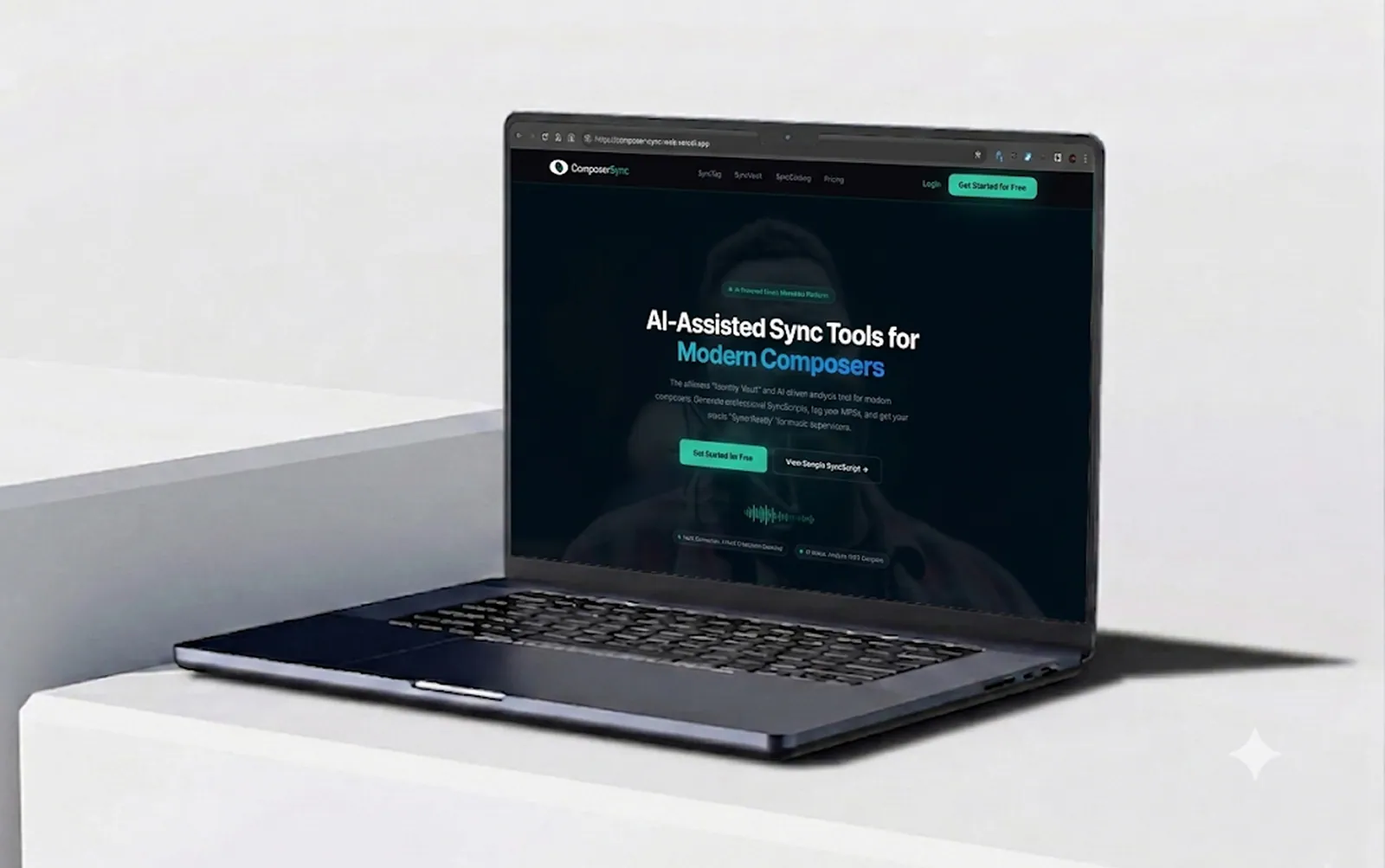
Composer Sync
Built an AI-powered platform that analyzes audio assets, extracts metadata, and generates professional reports through secure cloud-based workflows and automation.

Zenova Chatbot
Built a secure AI-powered knowledge hub that enables teams to search internal documents, retrieve files instantly, generate client-ready emails, and access company knowledge through natural language conversations.
Building something like Strategy Shortcut System Chatbot?