AI Chatbots for Education: Tutors, Quizzes & Study Tools
A practical look at AI chatbots for education: tutoring, quiz generation, and study tools, plus how to keep them accurate, safe, and grounded in your material.
 SprintX Team8 min read
A good tutor does something a textbook cannot: they notice where you are stuck, explain it a different way, and keep going until it clicks. The reason most students never get that is simple — one-on-one attention does not scale. A teacher with thirty students cannot sit with each one at 9pm when the homework stops making sense.
That is the gap AI chatbots are quietly filling in education. Not as a replacement for teachers, but as a patient, always-available layer that answers the fifth version of the same question without sighing, generates practice until a concept sticks, and turns a pile of notes into a study plan. Here is what actually works, where it goes wrong, and how to build one that stays accurate.
Where an education chatbot earns its keep
Three use cases deliver most of the value.
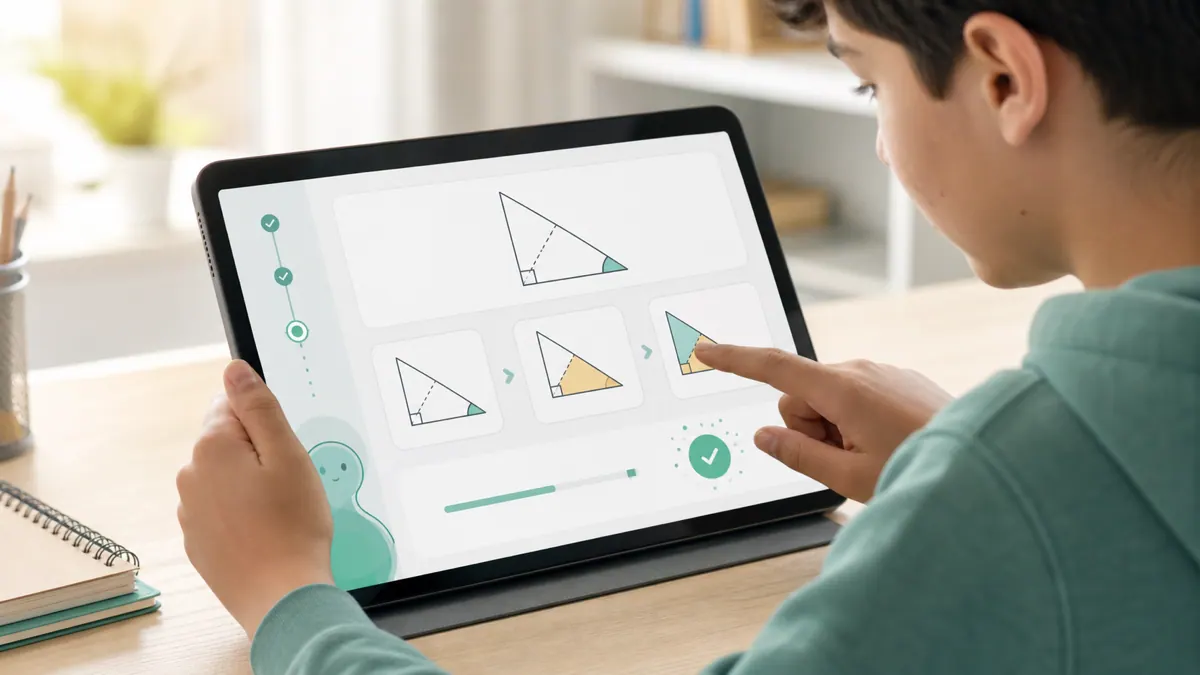
- The tutor. A student asks a question and the bot explains, checks understanding, and adapts. The important trick is that a good education bot does not just hand over answers — it uses the Socratic approach, nudging the student toward the answer so they actually learn.
- The quiz and practice generator. Feed it a topic or a chapter and it produces practice questions, worked solutions, and flashcards — endless fresh material tuned to the right difficulty.
- The study assistant. Upload notes, a syllabus, or a textbook chapter and the bot summarizes, builds a study schedule, and answers questions grounded in that specific material.
For a school, tutoring company, or edtech product, these map to real outcomes: better engagement, more practice, and support that scales past office hours. If you are weighing a build against an off-the-shelf tool, our post on building a custom AI chatbot lays out the trade-offs.
The accuracy problem — and how RAG fixes it
The single biggest risk in education AI is confident wrong answers. A generic chatbot will happily invent a historical date or botch a formula, and in a learning setting that is not a harmless quirk — it teaches something false.
The fix is RAG (retrieval-augmented generation). Instead of relying on whatever the model absorbed in training, the chatbot retrieves relevant passages from your trusted material — your textbook, your curriculum, your approved sources — and answers from that, citing where it came from. It grounds every response in content you control.
For education this matters twice over: it keeps answers correct, and it keeps them aligned to what is actually being taught, so the bot reinforces the curriculum instead of contradicting the teacher. If the term is new to you, our plain explanation of RAG chatbots is a good starting point.
Off-the-shelf vs custom
You have real choices here, and the right one depends on how much control you need.
| Option | Best for | Trade-off |
|---|---|---|
| ChatGPT / consumer tools | Individual students, general help | No curriculum grounding, no oversight, privacy questions |
| Custom GPT | A teacher or tutor adding light guardrails | Limited control, tied to one platform |
| Custom RAG chatbot | Schools, tutoring businesses, edtech products | Higher build cost, full control over accuracy, safety, branding |
For a business or institution putting its name on the tool, the custom RAG route wins — it is the only option that lets you guarantee answers come from approved material and that student data is handled properly.
Safety and the things you cannot skip
Education means minors, and that raises the bar. A responsible build handles:
- Content safety. Guardrails that keep conversations on-topic and age-appropriate, and refuse harmful or off-limits requests.
- Accuracy grounding. RAG plus source citations so answers are checkable and tied to real material.
- Anti-cheating design. For homework contexts, a bot tuned to guide rather than hand over finished answers — the Socratic approach again.
- Privacy and data handling. Clear rules on what student data is stored and where. Depending on your region and audience, standards like FERPA or COPPA may apply — build with them in mind from day one, not as a retrofit.
- Teacher oversight. Logs and visibility so educators can see how the tool is being used and catch problems.
These are not optional extras. For an education product, they are the difference between a tool a school will adopt and one it will not touch.
What it costs
A rough sense of investment:
- A focused custom GPT for a single teacher or small tutoring use is a low-cost starting point, often a few hundred to a couple thousand dollars to set up well.
- A custom RAG chatbot grounded in your material, with a proper interface and safety layer, is typically a $8,000–$30,000 build depending on scope and integrations.
- A full edtech product — accounts, analytics, multiple subjects, teacher dashboards — is a larger, staged project.
The ongoing cost is mostly AI usage, which scales with active students, plus light maintenance. Keeping model costs sane at scale is its own discipline; our note on reducing OpenAI API costs in production applies directly when a bot is used by thousands of students.
Frequently asked questions
Will an AI tutor just do students' homework for them? Only if you build it to. A well-designed education bot uses a Socratic, guide-don't-give approach — asking questions and offering hints rather than dumping finished answers. That design choice is central to a good build.
How do I stop it from giving wrong answers? Ground it with RAG on your trusted material and have it cite sources. That keeps answers correct and aligned to your curriculum instead of relying on the model's general training.
Is student data safe with an AI chatbot? It can be, with a custom build where you control storage and processing. Off-the-shelf consumer tools offer far less certainty, which is why institutions usually need a custom solution to meet privacy standards.
Can it work in multiple languages? Yes. Modern models handle many languages well, so the same tutor can support students in their first language — useful for diverse classrooms and international programs.
Thinking about an AI tutor, quiz tool, or study assistant for your school or edtech product? SprintX builds custom, curriculum-grounded education chatbots with the safety and privacy layers that matter — fixed-scope quote, and the build is yours to own. Tell us who your learners are and we will map the right approach.
Engineering and operations
Once it’s live, we keep it healthy.
Monitoring, backups, security updates and a monthly health report you can read in ten minutes.
Keep reading.
More on engineering and operations
Engineering and operations · 14 Aug 2026 · 8 min read
Load Testing Before You Get the Traffic You Wanted
A launch that works is the most expensive way to discover your connection pool holds twenty. Here is how to find your breaking point on purpose, first.
Engineering and operations · 14 Aug 2026 · 8 min read
Incident Response When You Are the Whole Team
Nobody to escalate to, no runbook, and the app is down. Here is the process that keeps a one-person outage from turning into a one-person disaster.
Engineering and operations · 14 Aug 2026 · 8 min read
Documenting a Codebase So the Next Engineer Can Take Over
Not a wiki nobody reads — the specific short documents that decide whether your next engineer ships in week one or spends a month reverse-engineering.