Versioning an API Before Anyone Depends On It
You do not need three API versions. You need one, plus the discipline and the mechanism to introduce a second the day you genuinely cannot avoid it.
 SprintX Team8 min read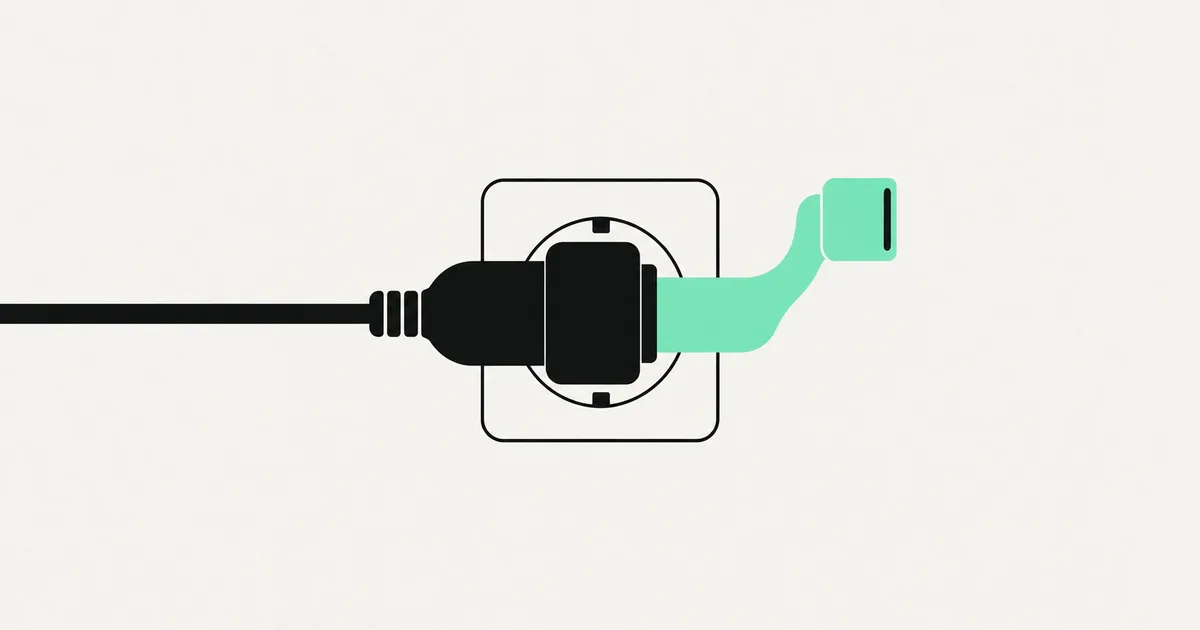
The reason to think about API versioning now, while nobody is calling your API, is that versioning is not really a technical problem. It is a promise problem. The moment someone else's software depends on your response shape, you have made a promise you did not write down, and you find out its exact terms by breaking it.
Small teams get this wrong in two opposite directions. Some ship v1 in the URL and then never make a v2, which is harmless. Others rename a field, deploy on a Thursday, and spend Friday on the phone with three integration partners.
What you want is the cheapest possible mechanism in place from the start, plus a habit that means you almost never have to use it.
Know exactly what counts as breaking
Most arguments about versioning are actually arguments about whether a specific change is breaking. It is worth being unambiguous, because the answer is not symmetric — additions are usually safe, removals and meaning changes never are.
| Change | Breaking? | Notes |
|---|---|---|
| Adding a new optional response field | No | Only if clients ignore unknown fields, which you must document |
| Adding a new optional request parameter | No | Default must preserve existing behavior exactly |
| Renaming a field | Yes | Add the new one, keep the old, remove later |
| Removing a field | Yes | Even if it is always null, someone reads it |
| Changing a type (number to string) | Yes | Silent parse failures downstream, the worst kind |
| Making an optional field required | Yes | Existing callers start getting 400s |
| Adding a value to an enum | Usually | Strict clients throw on unknown values |
| Tightening validation | Yes | Requests that worked yesterday now fail |
| Changing pagination defaults | Yes | Quietly changes results for everyone |
| Changing an error code or status | Yes | Retry and alerting logic keys off these |
| Making a synchronous call asynchronous | Yes | Response contract changed even if the shape did not |
Two entries deserve extra suspicion. Type changes are brutal because they usually fail at the consumer's parse layer, days later, in code you cannot see. And tightening validation feels like a bug fix — it is not, to whoever was relying on the loose behavior.
Put v1 in the URL and stop thinking about it
Every URL gets a version segment from your first endpoint: /v1/invoices, /v1/customers. Do this even if you are certain there will never be a v2.
The URL is not the technically elegant option — content negotiation via an Accept header is arguably purer, and date-based versions passed in a header scale better for very large APIs. But path versioning wins on the things that matter at your size. It is visible in logs, curl-able without ceremony, cacheable by any proxy, obvious in documentation, and impossible for a client to get wrong by omission. Header-based schemes need a default for callers who send nothing, and that default becomes a versioning decision you have to keep making.
Route the version at the edge, not deep in your handlers. A thin layer that maps /v1 and later /v2 onto shared business logic keeps you from forking the entire application the first time you version something. If you find yourself copying service code to make a v2, you have versioned at the wrong depth — version the serialization and validation, share the core.
Add, deprecate, remove — never edit
The habit that saves you from versions is aggressive additiveness. When a change is needed, add the new thing alongside the old one, support both for a defined window, then remove the old one.
Renaming a field becomes: return both names, document that one is deprecated, remove it after the window. Restructuring a response becomes: add the new nested object while keeping the flat fields, migrate consumers, drop the old ones. Changing behavior becomes: add an opt-in parameter, flip the default in the next major version, remove the parameter after.
This is slower to write and much cheaper to live with, and it is worth writing down as a rule your team and your AI assistant both follow — a coding-conventions file that says "never change or remove a field in a released response; add and deprecate" prevents an entire class of incident. That rule belongs alongside the rest of your codebase handover documentation, because it is exactly the kind of constraint a new engineer cannot infer from the code.
A useful corollary: publish your compatibility contract. State explicitly that clients must ignore unknown fields, must not depend on key order, must treat unknown enum values as a default case, and must not rely on undocumented fields. Without that sentence, every response you have ever sent is part of the contract.
Retiring a version, in the order that works
Assume you eventually ship v2. The interesting question is how v1 dies.
Instrument first. You cannot retire what you cannot see. Log the version, the endpoint, and the identity of the caller on every request, and keep a per-consumer view of it. When someone asks "who is still on v1", the answer must be a query, not a guess. If you have not set that up, adding observability is the prerequisite step.
Announce with a date, not a vibe. "Deprecated" with no removal date is ignored. Give a specific sunset date at least six months out for paying integrations, and send it by email as well as in the docs — nobody reads changelogs.
Signal in-band. Return a Deprecation header and a Sunset header with the retirement date on every v1 response, plus a link to the migration guide. Integration engineers see headers; their managers see emails. You want both.
Write the migration guide as a diff. Not prose about philosophy — a field-by-field mapping from old to new, with a before-and-after example payload for each endpoint that changed. This single document determines how much support load the migration creates.
Brown-out before you black-out. In the final weeks, return errors for v1 traffic during short scheduled windows — an hour, announced in advance. It surfaces the callers who never read anything, while the fix is still "wait an hour" rather than "your integration is dead."
Then remove it, and keep the routes returning a clear 410 with a link, rather than a 404 that looks like a bug.
Rate limits deserve a mention here too, since deprecation windows are exactly when badly behaved clients start hammering retries — rate limiting is what keeps one confused integration from becoming an incident.
Do not forget the APIs you did not think were APIs
Your versioned REST endpoints are the obvious surface. These are the ones that break customers anyway:
- Webhooks. You control the timing of a client's request; you do not control their parser. Version webhook payloads separately, let each endpoint subscribe to a version, and never add a required field to an existing one.
- Mobile apps. An installed app is a client you cannot upgrade. Some fraction of users will run last year's build for years, which is the single strongest argument for keeping old versions alive longer than feels reasonable.
- CSV and data exports. Column order and headers are a contract the moment someone builds a spreadsheet on top of them.
- Public URLs and IDs. Changing an ID format breaks bookmarks, integrations, and anything that stored your identifiers.
Each of these needs a contract test in CI that fails when the shape changes unintentionally — snapshot the response for a fixed input and diff it. That is the mechanism that catches the accidental breaking change before your customer does, and it fits naturally into a CI pipeline you may already have.
Frequently asked questions
Do I need versioning if my API is only used by my own frontend? You still want the version segment in the path, because it costs nothing and the day you expose the API to a partner it is already there. What you do not need is the deprecation apparatus — when you control both sides and deploy them together, you can change contracts freely. Mobile apps are the exception, since old clients keep running.
Should I version with dates instead of numbers? Date-based versioning is excellent for large APIs with many small changes and many independent consumers, since each customer pins the day they integrated. It also requires maintaining transformation layers between every version. For a product with a handful of integrations, integer major versions are simpler and easier to talk about.
How long should I support an old version? Six to twelve months after announcing the sunset, for paid integrations. The real answer comes from your telemetry: if three customers account for all remaining v1 traffic, call them and migrate them directly rather than waiting out a calendar.
If your API is about to get its first outside consumer and nothing about its contract is written down anywhere, that gap becomes expensive the first time you rename a field. SprintX sets up versioning, contract tests, and deprecation tooling that fit a small team, and hands over the docs that keep integrators out of your inbox. Send us your API surface and we will tell you what is already load-bearing.
Engineering and operations
Once it’s live, we keep it healthy.
Monitoring, backups, security updates and a monthly health report you can read in ten minutes.
Keep reading.
More on engineering and operations
Engineering and operations · 14 Aug 2026 · 8 min read
Documenting a Codebase So the Next Engineer Can Take Over
Not a wiki nobody reads — the specific short documents that decide whether your next engineer ships in week one or spends a month reverse-engineering.
Engineering and operations · 12 Aug 2026 · 6 min read
Moving Slow Work Into Background Jobs
Move long AI calls, imports, email, and document processing out of web requests without creating duplicate work or invisible failures.

Engineering and operations · 11 Aug 2026 · 7 min read
Error Handling Beyond the Happy Path
Why generated code swallows errors, how to find every place it happens, and a practical taxonomy for deciding what to retry, surface, or refuse.