How Much Does a Dental Website Cost? (With Booking & SEO)
A clear guide to what a dental practice website really costs to build and run in 2026 — including online booking, SEO, and HIPAA-aware forms.
 SprintX Team8 min read
A dental website is not a brochure — it is a front desk that never sleeps. Done right, it books appointments while you are with a patient, answers the questions that clog your phone line, and ranks when someone nearby searches "dentist near me." Done wrong, it is a pretty page that does none of that. That difference is exactly what separates a $500 template from a $10,000 patient-acquisition machine.
This guide gives you honest 2026 price ranges for a dental practice website with real booking and SEO, separates the build cost from the monthly running cost, and shows you what drives the quote.
Build cost vs running cost
Two numbers matter, and dental practices often get quoted only one.
- Build cost (one-time): design, development, booking setup, content, and SEO groundwork.
- Running cost (monthly): hosting, domain, the booking or scheduling tool, and maintenance.
The booking system in particular is usually a recurring cost, so it belongs in your monthly budget, not the build.
Dental website cost by type
Here is what different levels of dental website realistically cost in 2026.
| Website type | Build (one-time) | Running (monthly) |
|---|---|---|
| Template site (basic info only) | $500 – $2,000 | $20 – $100 |
| Professional practice site | $3,000 – $8,000 | $50 – $250 |
| Site with online booking + SEO | $6,000 – $15,000 | $100 – $400 |
| Multi-location / group practice | $12,000 – $30,000+ | $300 – $1,000+ |
A template site lists your services, hours, and phone number. It is better than nothing, but it makes patients call to book and rarely ranks well.
A professional practice site is custom-designed, fast, mobile-first, and built to convert visitors into patients — the baseline for a serious single-location practice.
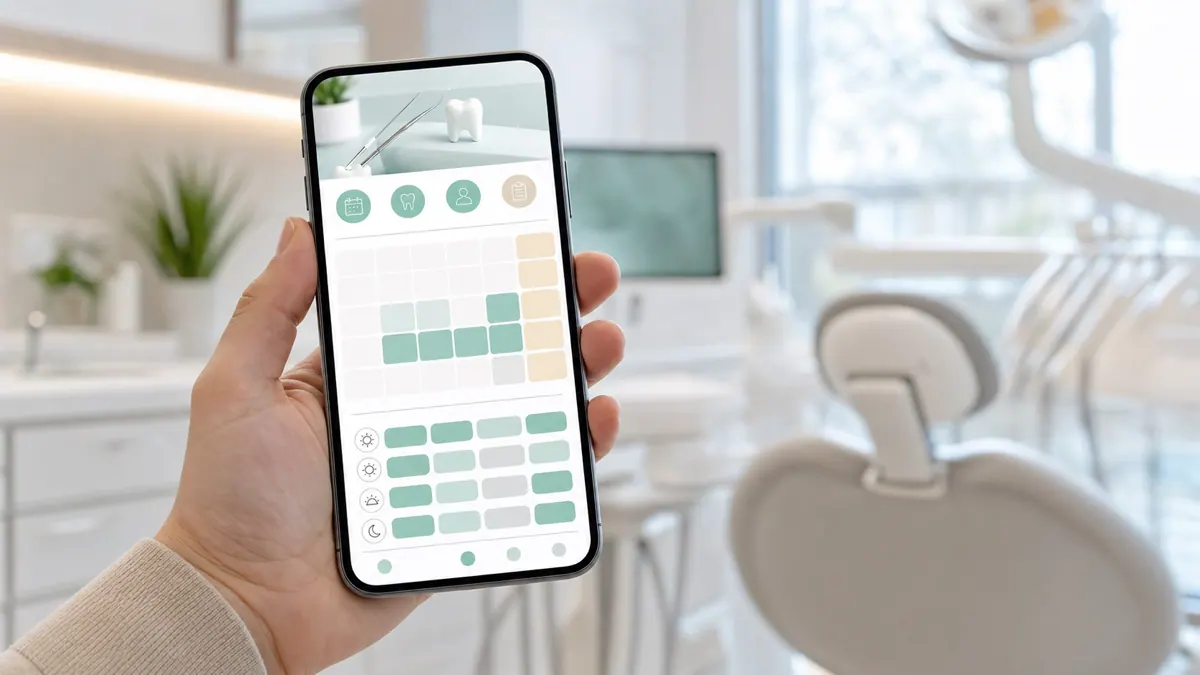
A site with online booking and SEO is where the return lives: patients self-schedule 24/7, and local SEO brings them in from Google in the first place.
A multi-location build adds per-location pages, provider profiles, and often a shared booking system across sites — a bigger project priced accordingly.
What actually drives the price
Five factors move a dental website quote up or down.
- Online booking. Embedding a scheduler like NexHealth, LocalMed, or a system tied to your practice management software is the single biggest value-add — and it takes real integration work, especially if it must sync with your PMS.
- Local SEO. Ranking for "dentist near me" and your city needs proper on-page SEO, a Google Business Profile setup, location schema, and genuinely useful service pages. This is work, not a checkbox.
- Content and photography. Real photos of your practice and team convert far better than stock. Writing clear service pages (implants, Invisalign, emergency care) is a common hidden cost.
- HIPAA-aware forms. Any form collecting patient health details needs secure, compliant handling — not a plain contact form emailing plaintext to your inbox.
- Number of locations and providers. Each adds pages, profiles, and booking complexity.
The booking system is where the ROI is
A phone line only works during office hours, and every missed call is a patient who books with the practice down the road instead. Online booking flips that: a patient searching at 9pm can pick a slot and be on your schedule before morning. That is the feature that pays for the whole website. When we build dental sites, the scheduler and its integration get the most attention for exactly this reason — it is the difference between a site that looks nice and one that fills your chairs. This is core to how we approach medical and dental web development.
The running costs to plan for
- Hosting and domain: typically $15–$50/month combined for a well-built site.
- Booking/scheduling tool: often $50–$300/month depending on the platform and whether it integrates with your PMS. This is usually the biggest recurring line item.
- Maintenance: updates, backups, security, and small content changes — budget a modest monthly amount or a retainer if the site is central to new-patient flow.
So what should you budget?
- A single practice that wants to look credible and get found: $3,000–$8,000 build, $50–$250/month.
- A practice that wants patients booking themselves and ranking locally: $6,000–$15,000 build — the version that actually grows the schedule.
- A group or multi-location practice: $12,000 and up, driven by locations and integration depth.
Frequently asked questions
Do I really need online booking? If you want to stop losing after-hours patients to competitors, yes. It is consistently the highest-return feature on a dental site because it captures patients at the exact moment they decide to book, including evenings and weekends when your phone goes unanswered.
How much does dental SEO add to the cost? Baseline on-page SEO and local setup are often built into a good practice site. Ongoing SEO and content — the work that keeps you ranking over time — is usually a separate monthly service. Ask what is included in the build versus ongoing.
Is a template site ever good enough? For a brand-new practice on a tight budget, a clean template can bridge the gap. But if new patients matter, the booking and local-SEO features that templates handle poorly are precisely what drive growth, so most practices outgrow them quickly.
Want a dental website that books patients while you work? SprintX builds fast, SEO-ready practice sites with real online booking on a fixed-scope quote — you own the site, with no lock-in. Get in touch for a straight answer on what yours would cost.
Building software
Systems your business runs on.
Custom platforms, internal tools and integrations that move work off spreadsheets.
Keep reading.
More on building software
Building software · 18 Jul 2026 · 8 min read
How Much Does Website Maintenance Cost in 2026? (Real Plan Pricing)
A no-hype breakdown of website maintenance cost in 2026 — what the monthly plans actually include, realistic ranges by site type, and where the money goes.
Building software · 18 Jul 2026 · 8 min read
WordPress Plugin Development Cost: A 2026 Pricing Guide
A clear 2026 pricing guide to WordPress plugin development — what a custom plugin really costs, what drives the price, and the ongoing costs to plan for.

Building software · 18 Jul 2026 · 9 min read
Progressive Web App (PWA) Development Cost in 2026
A clear, hedged breakdown of what a progressive web app costs to build in 2026 — price ranges by complexity, the cost drivers, and how PWAs compare to native apps.