Mobile App Maintenance Cost: The Number Nobody Budgets For
The number most founders forget to budget: what mobile app maintenance really costs each year in 2026, what it covers, and why skipping it gets expensive.
 SprintX Team8 min read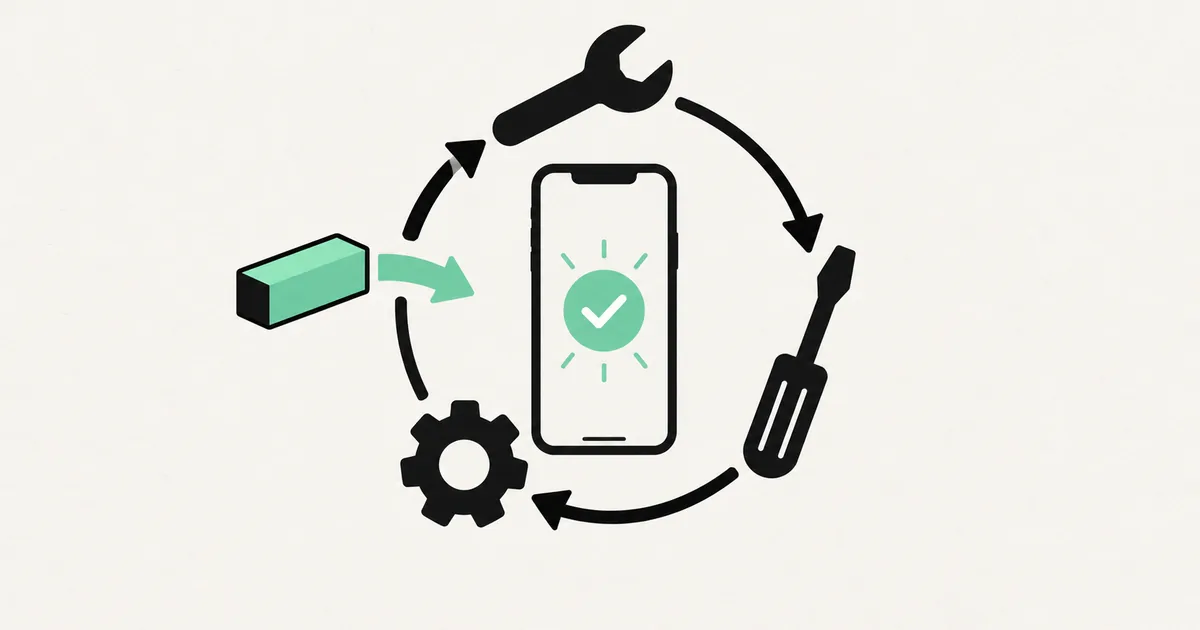
Almost every founder budgets carefully for building an app and almost none budget for keeping it alive. Then, six months after launch, Apple ships a new iOS version, a dependency breaks, the login stops working on newer phones, and the "finished" app suddenly needs a developer who moved on months ago. That gap — between "built" and "maintained" — is the most expensive surprise in mobile.
An app is not a product you buy once. It is a garden. Operating systems change twice a year, libraries update constantly, and the stores enforce new rules on their own schedule. This guide covers what mobile app maintenance actually costs in 2026, what the money buys, and why skipping it costs more than paying for it.
Why apps need maintenance at all
A website mostly sits still once it works. A mobile app lives on two moving platforms — iOS and Android — that both change underneath it whether you touch it or not. Four forces guarantee ongoing work:
- OS updates. New iOS and Android versions each year can break UI, permissions, or APIs your app relies on.
- Store policy changes. Apple and Google update submission and privacy rules regularly; falling out of compliance can get an app pulled.
- Dependency churn. In the React Native world, the New Architecture is now mandatory on current versions, and frameworks like Expo move fast — an app left untouched for a year can be several breaking changes behind.
- Backend and security. APIs, payment SDKs, and auth libraries all need patching as vulnerabilities surface.
None of these are optional. They happen to your app on someone else's timeline.

Mobile app maintenance cost: realistic 2026 ranges
The common industry rule of thumb is that annual maintenance runs roughly 15–25% of the original build cost — but that only holds for apps that keep evolving. A simple app in maintenance-only mode can cost less; an active app with new features every quarter costs more. Treat these as planning anchors, not quotes.
| App type | What maintenance covers | Typical annual cost |
|---|---|---|
| Simple app (few screens, light backend) | OS/store compatibility, bug fixes, minor updates | $3,000 – $9,000 |
| Standard business app | The above plus backend upkeep, integrations, small features | $9,000 – $25,000 |
| Complex / high-traffic app | Active feature work, scaling, monitoring, security | $25,000 – $60,000+ |
| App with AI features | The above plus model/API updates and usage monitoring | Varies with usage |
The AI row is the newest wrinkle. If your app calls an LLM or voice API, model families and pricing shift over time, and an integration that worked last year may need re-pointing — plus the running token or per-minute cost is its own line.
What "maintenance" actually includes
The word hides a lot. A real maintenance engagement is usually four buckets:
- Corrective — bug fixes. Things that break, including crashes that only appear on new devices or OS versions.
- Adaptive — keeping up. Updating for new iOS/Android releases, new store rules, and dependency upgrades. This is the unglamorous work that keeps the app installable.
- Perfective — improving. Small enhancements, performance tuning, and UX fixes based on real usage. We go deep on this category in our perfective software maintenance guide.
- Preventive — hardening. Security patches, monitoring, and refactoring to stop small problems becoming outages.
A cheap "maintenance plan" that only does bucket one is a false economy. The adaptive work is what stops your app quietly dying in the stores.
The real cost of skipping maintenance
Deferring maintenance does not save money; it defers and compounds it. The pattern we see repeatedly:
- The app works at launch, then the team stops touching it to save budget.
- Twelve to eighteen months pass. iOS and Android each ship new versions. Dependencies fall far behind.
- Something breaks — often login, payments, or push notifications — and now the fix is not a small patch but a major catch-up across many outdated libraries at once.
The bill to un-stick a neglected app is almost always larger than what steady maintenance would have cost, because upgrading one version at a time is routine while upgrading ten at once is a mini-rebuild. This is the same trap we describe when an app works locally but not in production — small deferred problems become one big expensive one.
In practice: rescuing a neglected app
A large share of the mobile work we take on is not fresh builds — it is rescue. A founder's original developer disappeared, or the app was prototyped fast and never hardened, and now it will not build against current tooling. We scope the recovery in phases: first get it building and shipping again on current React Native / Expo tooling, then patch the broken integrations, then set up a steady maintenance cadence so it never falls that far behind again. Each phase is a fixed-price milestone rather than an open-ended retainer, and the client owns the code at every step. If you are budgeting a build in the first place, our React Native app cost guide pairs naturally with this one.
How to keep maintenance costs sane
- Budget for it from day one. Assume 15–25% of build cost per year and you will not be blindsided.
- Keep dependencies current continuously. Small, frequent updates are cheap; giant catch-ups are not.
- Pick a maintainable stack. A modern, well-supported framework has fewer breaking surprises than an exotic or abandoned one.
- Monitor. Crash reporting and uptime alerts turn silent failures into fixable tickets before users churn.
- Right-size the plan. A stable app in maintenance-only mode does not need a full-time developer; an actively growing one does.
Frequently asked questions
How much does it cost to maintain a mobile app per year? A common rule of thumb is 15–25% of the original build cost annually. In practice, a simple app might run $3,000–$9,000/year while a complex or actively growing app runs well into the tens of thousands. Apps with AI features add usage costs on top.
Do I really need to pay for maintenance if my app works fine? Yes. iOS and Android each release major updates yearly, and store rules and dependencies change regardless of whether you touch the app. Without adaptive maintenance, a working app can break or be removed from the stores within a year or two.
Why is fixing a neglected app so expensive? Because upgrades compound. Updating one version at a time is routine, but a year or two of skipped updates means catching up across many breaking changes at once — closer to a partial rebuild than a patch.
What does app maintenance actually include? Four things: bug fixes, keeping up with new OS and store requirements, small improvements based on usage, and security hardening. A plan that only covers bug fixes leaves out the work that keeps the app installable.
Have an app that is drifting out of date — or one a previous developer left behind? SprintX offers fixed-scope app rescue and maintenance milestones: we get it building again, patch what is broken, and set a steady update cadence, all with you owning the code. Get in touch for a straight quote on what yours needs.
Building software
Systems your business runs on.
Custom platforms, internal tools and integrations that move work off spreadsheets.
Keep reading.
More on building software
Building software · 18 Jul 2026 · 8 min read
React Native App Development Cost in 2026
A clear, no-hype breakdown of what a React Native app actually costs to build in 2026 — from an MVP to a complex, integration-heavy product.
Building software · 11 Jul 2026 · 9 min read
How Much Does It Cost to Build an App in 2026?
A realistic, no-hype guide to what it costs to build a mobile app in 2026 — from simple MVPs to complex multi-platform products.
Building software · 23 Jul 2026 · 6 min read
The Hidden Costs of AI App Builders Nobody Quotes You
The subscription is the cheapest part. Here is the full bill for building on an AI app builder, from credit burn to the hardening work waiting at the end.