Staff Augmentation vs Outsourcing vs Dedicated Teams: Choosing a Model
A practical comparison of staff augmentation, project outsourcing, and dedicated teams — control, cost, management overhead, and the situations each one fits best.
 SprintX Team9 min read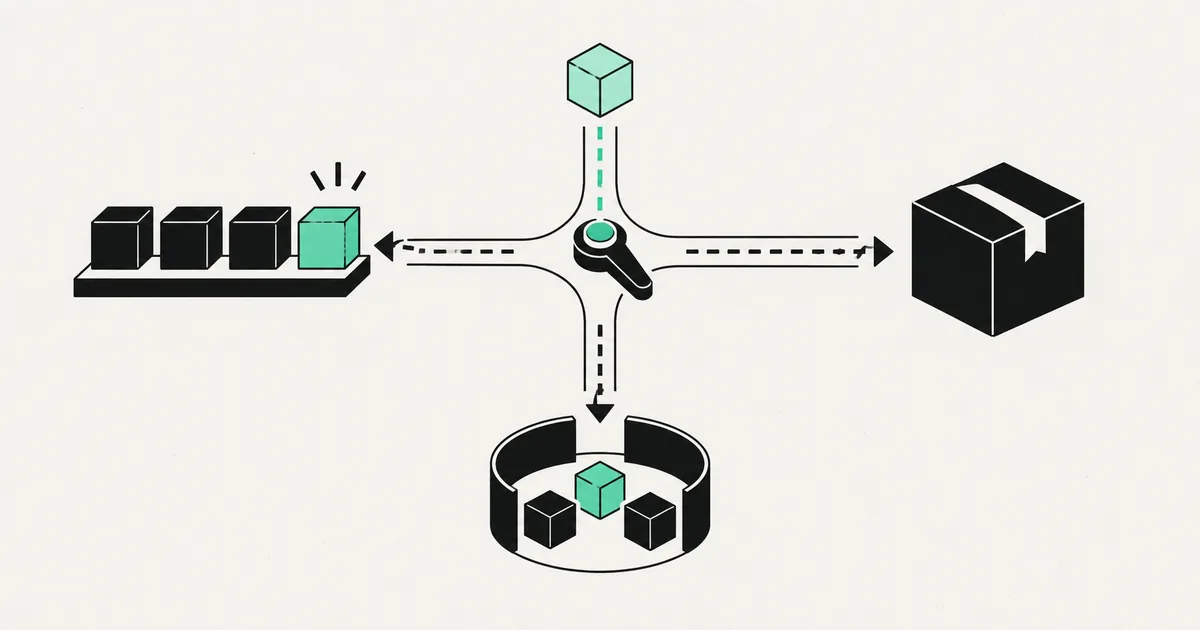
You need more engineering firepower than you have, and hiring full-time will take months you do not have. So you start looking outside — and immediately run into three terms that sound similar and get used interchangeably: staff augmentation, outsourcing, and dedicated teams. Vendors pitch all three, sometimes for the same problem, and the differences are exactly the things that determine whether you get what you need: who manages the work, how much control you keep, and what it costs.
This guide untangles the three models. Not the textbook definitions — the practical differences that actually change your outcome, and a straightforward way to pick the one that fits.
The real difference: who manages the work
Forget the marketing. The single question that separates these three models is: who is responsible for turning intent into working software?
- Staff augmentation: you manage the work. You bring in individual engineers who join your team, sit in your standups, and take direction from you. They are extra hands under your existing process.
- Project outsourcing: the vendor manages the work. You hand over a defined outcome, and they own the delivery — planning, staffing, and shipping it — usually against a fixed scope.
- Dedicated team: shared, leaning vendor-managed. You get a stable team that works only on your product and follows your roadmap, but the vendor supplies, manages, and supports the people day to day.
Every other tradeoff — cost, control, speed, risk — flows from that one distinction. Once you know who you want holding the steering wheel, the choice mostly makes itself.
Staff augmentation: extra hands on your team
Staff augmentation means renting individual specialists who plug into your team. You needed a React developer and a mobile engineer for the next four months; you get exactly those two people, and you direct them like employees without the hiring lag or long-term commitment.
Strengths: maximum control, fast to start, easy to scale a specific skill up or down, and you keep all the product knowledge in-house. It shines when you have a functioning team and process but are short a skill or a headcount or two.
Weaknesses: you carry all the management. If your own planning is weak, augmented engineers inherit that weakness — they can only be as effective as the direction you give them. You are also responsible for integration, code quality standards, and keeping everyone pointed the right way.
This is essentially hiring individual developers on a flexible contract, and models like agile nearshore staff augmentation exist specifically to keep those engineers in your time zone and sprint rhythm.
Project outsourcing: hand over the outcome
With project outsourcing, you define what you want built and hand the whole thing to a vendor who delivers it. You are buying a result, not people. The vendor scopes it, staffs it, manages it, and ships it — typically on a fixed price or milestone basis.
Strengths: minimal management burden on your side, a clear price and deadline, and accountability that sits with the vendor. It is ideal when you have a well-defined project — an MVP, a website, an integration, a rescue job — and you would rather buy the outcome than run the process.
Weaknesses: less day-to-day control and less visibility unless the vendor is genuinely transparent. If your requirements are still evolving, pure outsourcing strains against constant change. And a bad vendor can hand you a black box you cannot maintain — which is exactly how a lot of "the developer disappeared, finish my app" situations start.
Dedicated team: your team, run by someone else
A dedicated team is a group that works exclusively on your product for the long haul, following your roadmap, while the vendor handles recruiting, management, and retention. It blends the continuity of an in-house team with the flexibility of outsourcing.
Strengths: deep, compounding product knowledge; a stable group you can rely on month after month; the ability to scale without hiring and firing; and shared management, so you steer priorities without shouldering all the HR overhead.
Weaknesses: you pay for the full capacity whether a given week is busy or not, and it only makes economic sense for work that runs many months. For a short project, it is more commitment than you need.
Side-by-side comparison
| Factor | Staff augmentation | Project outsourcing | Dedicated team |
|---|---|---|---|
| Who manages the work | You | The vendor | Shared (vendor-led) |
| You get | Individual specialists | A finished outcome | A stable, exclusive team |
| Control | Highest | Lowest | High |
| Your management burden | High | Low | Medium |
| Best for | Filling skill gaps | Defined, one-off projects | Long-running products |
| Typical pricing | Per person / hourly | Fixed scope / milestones | Monthly recurring |
| Product knowledge lives | In-house | With the vendor | With the team |
| Ramp-down | Easy | Ends at delivery | Flexible |
How to choose in five questions
- Do you have a working team and process, just missing a skill? Staff augmentation.
- Do you have a defined project you'd rather just buy done? Outsourcing.
- Do you have a living product that needs continuous work for months? Dedicated team.
- Can you actually manage engineers day to day? If not, avoid staff augmentation — you will under-utilize good people.
- Are your requirements still moving? Lean dedicated team or a flexible outsourcing arrangement, not a rigid fixed bid.
One more practical note: these models are not permanent. A very common and healthy progression is to outsource the initial build (fast, low management), then transition to a dedicated team once the product is live and evolving, and pull in augmentation for occasional specialist spikes. Choosing today does not lock you in forever.
What this looks like in practice
A pattern we see constantly at SprintX: a founder tried staff augmentation first — hired a couple of freelancers — but had no one senior to manage them, so the work drifted and quality slipped. What they actually needed was outsourcing with senior ownership: hand us the outcome, we scope it into milestones, and a lead engineer owns delivery end to end. Projects like that usually land in the low-thousands-per-phase range and ship as production-ready, not just "deployed." Later, when the product had traction and a steady backlog, the same relationship shifted into a dedicated-team rhythm. The lesson: match the model to how much management you can realistically provide, not just to the headline rate.
Frequently asked questions
What is the main difference between staff augmentation and outsourcing? With staff augmentation you manage individual engineers who join your team; with outsourcing the vendor manages a team and delivers a finished outcome. Augmentation gives you more control but more management work; outsourcing gives you less control but far less overhead. The right pick depends on whether you can manage engineers day to day.
Is a dedicated team cheaper than staff augmentation? Not necessarily cheaper per head, but often more cost-effective for long-running work because the vendor handles recruiting and retention, and the team's compounding product knowledge means less time lost to onboarding. For a short-term skill gap, staff augmentation is usually the leaner choice.
Which model is best for a startup MVP? For a first MVP with a defined feature set, outsourcing on a fixed-scope basis is usually best — you buy a shippable outcome without needing to manage a team. Switch to a dedicated team once the product is live and the backlog keeps growing.
Can I switch models partway through? Yes. A common path is to outsource the initial build, move to a dedicated team as the product matures, and use staff augmentation for occasional specialist needs. Just make sure you own the code and documentation so any transition is clean.
Not sure whether you need extra hands, a finished outcome, or a standing team? SprintX works across all three models and will tell you honestly which one fits your stage — fixed-scope quotes, NDA-friendly, milestone-based, and you own the repo throughout. Tell us what you're building and we'll recommend the leanest way to get it shipped.
Cost, hiring and outsourcing
Start with a project, keep us on, or let us look after it.
Three ways to work with us, and how the first weeks run.
Keep reading.
More on cost, hiring and outsourcing
Cost, hiring and outsourcing · 18 Jul 2026 · 8 min read
Top IT Staff Augmentation Companies in 2026 (Compared)
A buyer-focused comparison of IT staff augmentation companies in 2026 — the provider archetypes, what they cost, and how to choose without getting burned.

Cost, hiring and outsourcing · 18 Jul 2026 · 8 min read
Staff Augmentation vs Managed Services: Which Model Fits Your Project?
A plain-English comparison of staff augmentation and managed services, with a decision framework for founders choosing how to get software built.
Cost, hiring and outsourcing · 18 Jul 2026 · 8 min read
Fractional CTO Cost: Rates & Pricing Models in 2026
A plain-spoken breakdown of fractional CTO cost in 2026: hourly, day-rate, monthly retainer and equity models, what drives the number up or down, and when to hire one.