Website Redesign Cost in 2026: What You Actually Pay For
A no-hype breakdown of website redesign cost in 2026 — what you are really paying for, realistic ranges, and how to avoid a quote that balloons.
 SprintX Team8 min read
"How much does a website redesign cost?" is the question, but it is almost never the real question. The real question is: what am I actually paying for, and why does the same brief get a $3,000 quote from one shop and a $40,000 quote from another? Both can be honest numbers. They are just describing different amounts of work hiding behind the same word: "redesign."
This guide pulls the word apart so you can budget with your eyes open. We will separate a fresh coat of paint from a genuine rebuild, show realistic 2026 ranges, and flag the line items that quietly double a quote.
First: are you redesigning or rebuilding?
Most price confusion comes from mixing these two up.
- Redesign means new look, same bones. You keep the platform and most of the structure, and you restyle pages, refresh copy, and modernize the layout. Faster and cheaper.
- Rebuild means new bones. You move to a new framework or CMS, restructure the content model, rewire integrations, and often re-architect for speed and SEO. This is where cost climbs — and where the biggest long-term wins live.
A tired WordPress site that is slow and hard to edit is usually a rebuild candidate, not a reskin. If your real complaint is "it's slow and I can't update it myself," restyling the surface will not fix that. We wrote a full breakdown of moving from a legacy stack in our guide to a WordPress to Next.js migration, which is one of the most common "redesigns" that is really a rebuild.
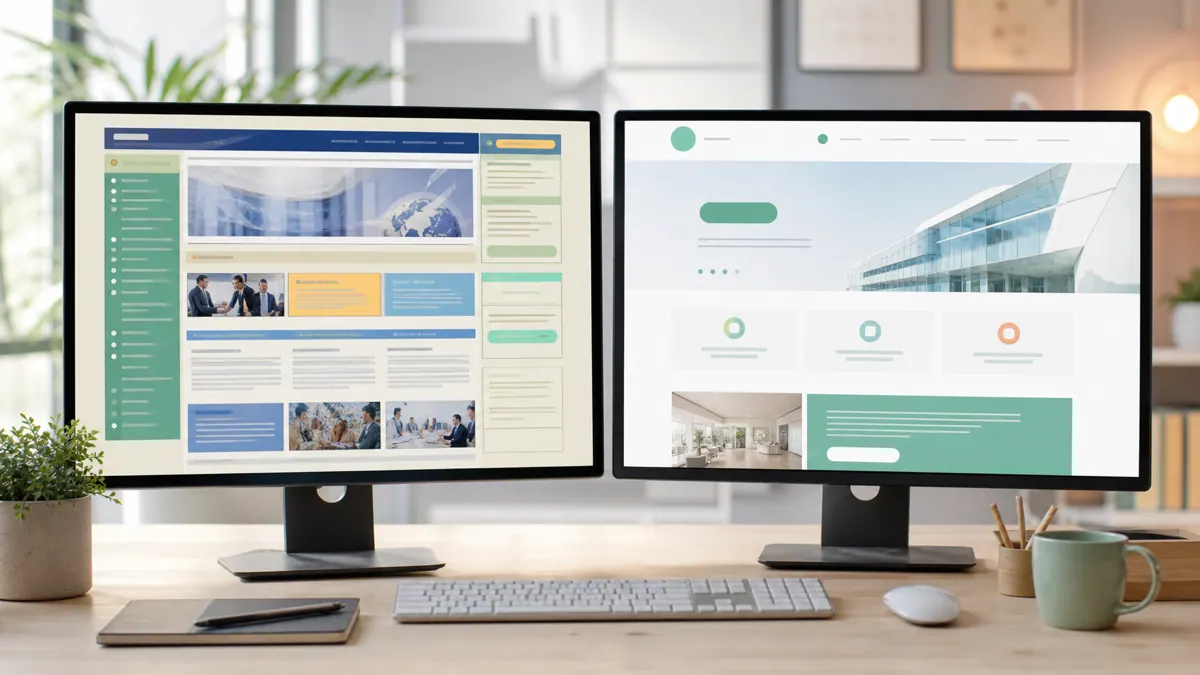
Website redesign cost by project size
Here are realistic 2026 ranges. Treat them as planning anchors, not quotes — every one depends on page count, integrations, and how finished your content is.
| Project type | What it includes | Typical range |
|---|---|---|
| Template refresh | New theme, restyle, light copy edits, a handful of pages | $1,500 – $5,000 |
| Custom small-business redesign | Custom design, 8–15 pages, CMS, basic SEO, mobile-first | $5,000 – $15,000 |
| Rebuild on a modern stack | New framework/CMS, restructured content, integrations, performance work | $15,000 – $40,000 |
| Large / commerce / multi-role | Many templates, e-commerce, gated content, custom features | $40,000+ |
Notice the overlap between "custom redesign" and "rebuild." That gap is almost always explained by three things: how much of the work is design versus engineering, how many systems the site has to talk to, and whether your content is ready or has to be created.
Where the money actually goes
A redesign invoice is really five buckets stacked together. Knowing them lets you push a quote up or down deliberately instead of by accident.
- Discovery and design. Sitemap, wireframes, and a visual design system. Skimp here and you pay later in revisions. This is often 20–35% of a custom project.
- Content. Words and images do not write themselves. If you supply finished copy, you save real money. If the agency writes it, budget for it.
- Build. Turning approved designs into a fast, responsive, accessible site. In 2026 that usually means a modern framework like Next.js 16 with the App Router, or a well-configured CMS.
- Integrations. Booking, payments, CRM, email, analytics, chat. Each one is a small project with its own testing.
- QA, launch, and SEO preservation. Redirects, metadata, testing across devices, and making sure you do not lose rankings on launch day. This is the step cheap quotes skip — and the one that hurts most when skipped.
That last point deserves its own paragraph. A redesign that ignores redirects and existing SEO can tank the traffic you already earned. Preserving URL structure, mapping old pages to new, and keeping page speed high are not optional extras. If speed is already a sore spot, our piece on why your website is slow covers the fixes a good rebuild bakes in.
What quietly doubles a redesign quote
Five things move a number more than clients expect:
- Page count creep. "Just a few more pages" is the most common budget leak. Ten unique templates cost far more than one template used ten times.
- Custom features. A member area, a booking flow, a quote calculator, or gated content each turn a marketing site into a small application.
- E-commerce. Product catalogs, checkout, tax, and shipping logic add a whole layer. Platform choice matters here — in 2026, custom storefronts build carts against the Storefront Cart API, not legacy checkout endpoints.
- Content production. Photography, copywriting, and video are often left out of the first quote and then added back at the worst time.
- Revisions without limits. Endless rounds are how fixed budgets quietly become hourly nightmares. Agree on a review structure up front.
In practice: what a real redesign engagement looks like
A common project we take on is a business whose site "works locally" or looks fine but is slow, unmaintainable, and impossible to edit without a developer. We scope it as phases: a discovery-and-design phase, then a build phase on a modern stack, then integrations and launch. Each phase is a fixed-scope milestone in the low-thousands range rather than one open-ended bill, so the client always knows the next number before they approve it. That structure is how we keep a "redesign" from silently turning into a runaway rebuild — the scope changes are decisions, not surprises. It is the same milestone approach we describe in our website development cost guide.
How to get a redesign for less (without cutting corners)
You have more control over the price than the quote suggests:
- Bring finished content. Copy and images ready to go can cut a build's cost meaningfully.
- Reuse templates. Design one great template per page type and reuse it. Uniqueness on every page is where budgets die.
- Phase it. Launch the core site first, add the member area or store in phase two once revenue justifies it.
- Pick the right platform for who edits it. If your team updates the site weekly, a good CMS pays for itself. If it barely changes, you can go leaner.
- Insist on SEO preservation in the scope. It costs little to plan and a fortune to fix after a traffic drop.
Frequently asked questions
How much does it cost to redesign a small business website in 2026? A custom small-business redesign typically lands in the $5,000–$15,000 range, depending on page count, integrations, and whether you supply the content. A lighter template refresh can come in under $5,000.
Is a redesign cheaper than a full rebuild? Usually, yes — a redesign keeps your existing platform and structure, so you pay mostly for design and styling. A rebuild replaces the underlying framework or CMS and costs more, but it is the right call when the site is slow, insecure, or impossible to maintain.
Why are website redesign quotes so different? Because "redesign" spans everything from a theme swap to a ground-up rebuild with integrations. The biggest drivers are page count, custom features, e-commerce, and how much content the agency has to create versus what you provide.
Will a redesign hurt my SEO? It can, if redirects and metadata are ignored. A properly scoped project maps old URLs to new, preserves structure, and keeps page speed high, so rankings hold or improve after launch.
How long does a website redesign take? A template refresh can be a couple of weeks. A custom redesign is often 6–12 weeks, and a full rebuild with integrations can run longer, depending on content readiness and approvals.
Thinking about a redesign but tired of vague quotes? SprintX scopes redesigns and rebuilds as fixed-price, milestone-based phases — you always know the next number before you approve it, you own the code, and SEO preservation is built into the plan, not billed as a surprise. Get in touch for a straight quote on what your site would actually cost.
Building software
Systems your business runs on.
Custom platforms, internal tools and integrations that move work off spreadsheets.
Keep reading.
More on building software
Building software · 18 Jul 2026 · 8 min read
How Much Does Website Maintenance Cost in 2026? (Real Plan Pricing)
A no-hype breakdown of website maintenance cost in 2026 — what the monthly plans actually include, realistic ranges by site type, and where the money goes.
Building software · 18 Jul 2026 · 8 min read
WordPress Plugin Development Cost: A 2026 Pricing Guide
A clear 2026 pricing guide to WordPress plugin development — what a custom plugin really costs, what drives the price, and the ongoing costs to plan for.

Building software · 18 Jul 2026 · 9 min read
Progressive Web App (PWA) Development Cost in 2026
A clear, hedged breakdown of what a progressive web app costs to build in 2026 — price ranges by complexity, the cost drivers, and how PWAs compare to native apps.