Case study · Healthcare care coordination
Perfect Care.
A centralized, role-based healthcare management platform with structured access control, streamlined workflows, and integrated communication tools.
- What we built
- Role-based healthcare management web platform
- Stack
- Next.js 15.5.9 with App Router & Turbopack, React 19.1.1 with Server Components, TypeScript 5.x in strict mode, Tailwind CSS 4.x for styling
- Services
- Web appAdmin dashboardsEmail and SMS communication
About the project
What is Perfect Care?
We designed and developed a centralized, role-based healthcare management platform that addresses healthcare organizations' operational and coordination challenges through structured access control, streamlined workflows, and integrated communication tools.
Completed features
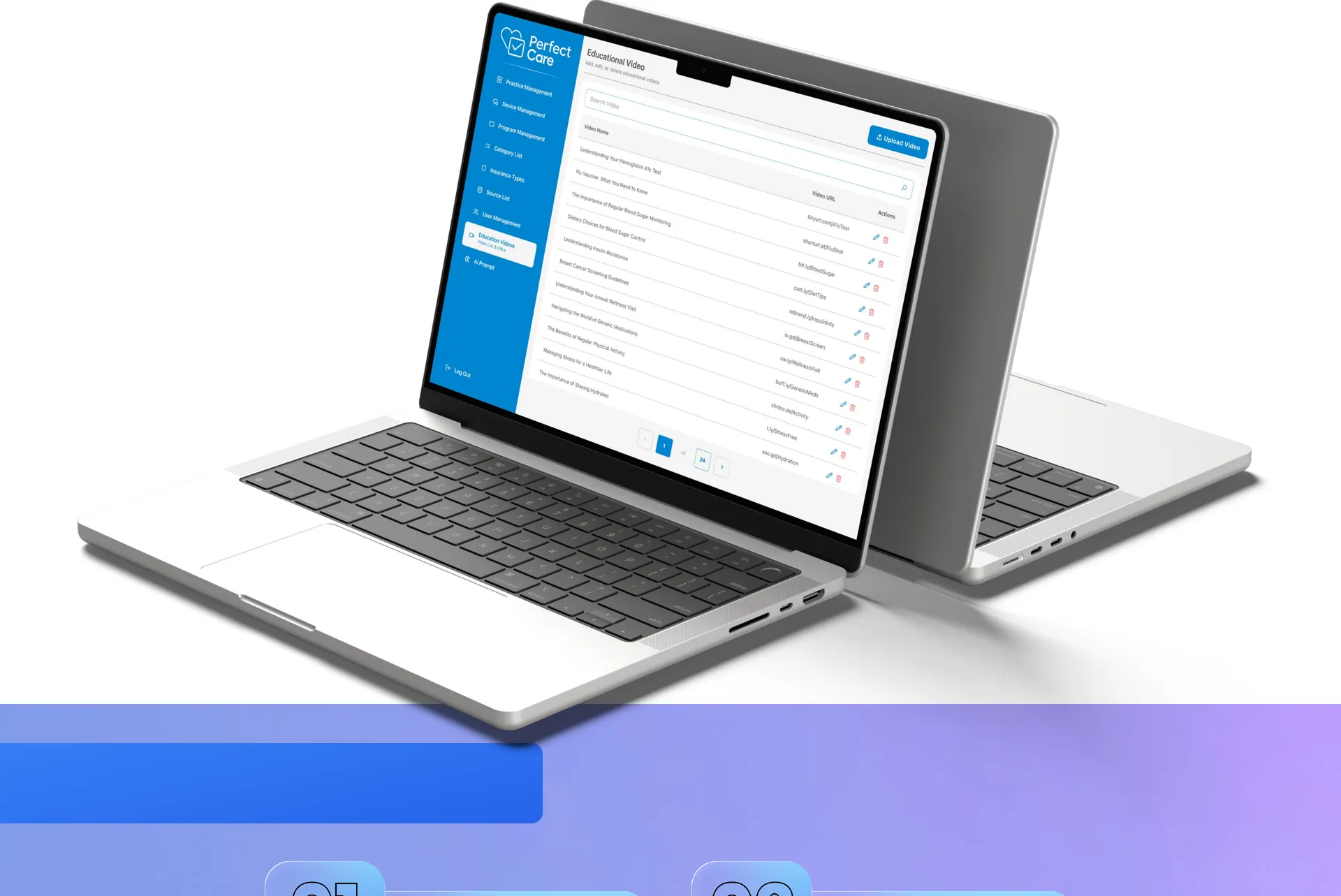
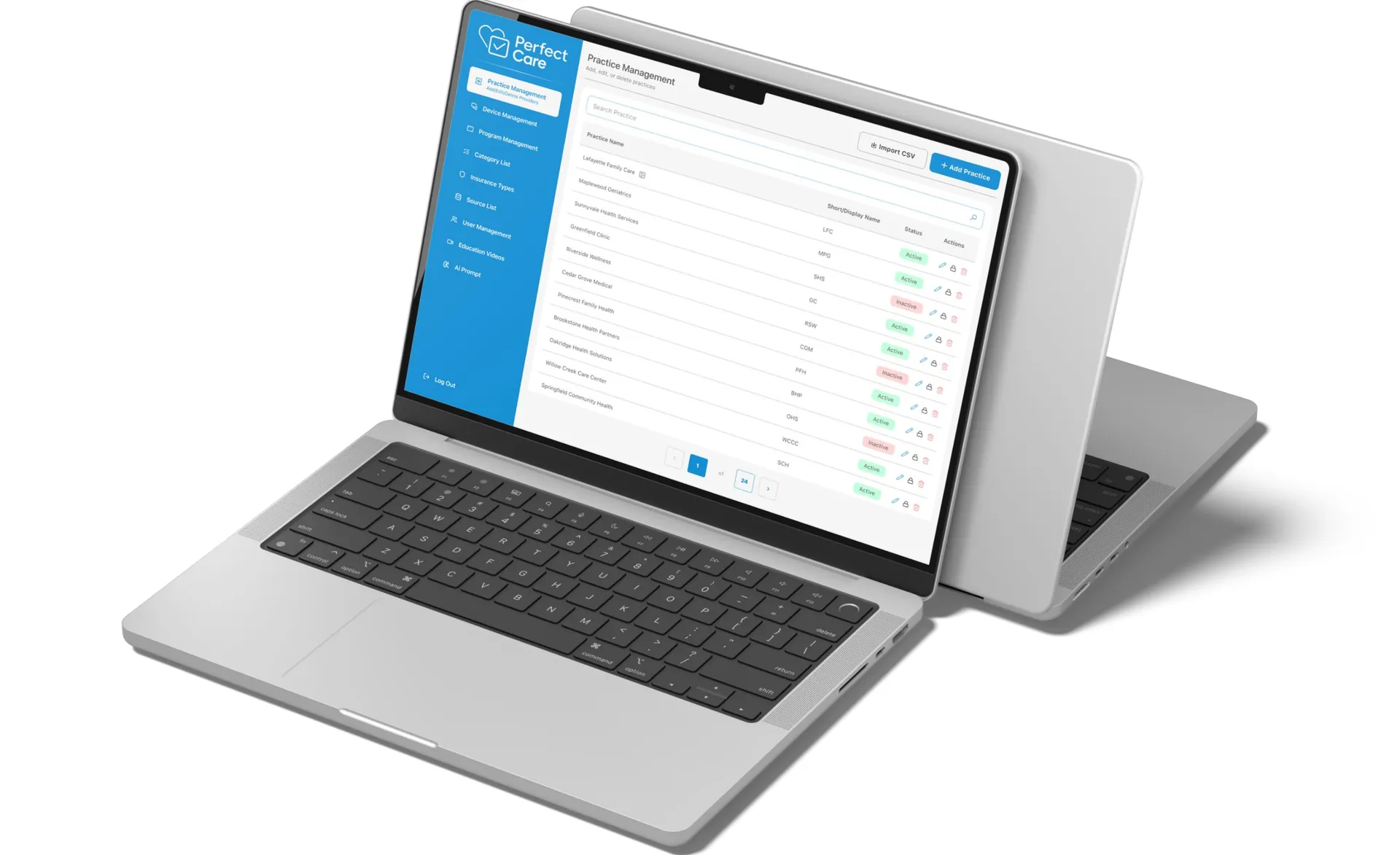
Admin CRM modules for practices, users, programs, devices, and education videos. PCA dashboard with patient listing, item tracking, notes, and care plan management. Role-based access for Admins, PCAs, and Observers. Clear Chronic system integration for practices, devices, and programs. Order forms with validation and structured delivery.
Ongoing & final enhancements
Dashboard refinements and UI improvements. Bulk patient import functionality. Reference panel development. Final testing and optimization.
Conclusion
The platform successfully transformed fragmented healthcare operations into a unified, role-driven care coordination platform. By centralizing patient management, enabling structured communication, and enforcing strict access controls, the system empowers healthcare teams to deliver more efficient, consistent, and secure patient care. For the client, it represents a scalable and market-ready healthcare solution that improves operational efficiency, enhances patient engagement, and supports long-term growth across multiple practices.
The problem
What was slowing them down.
- 01
Fragmented systems
Patient data, care plans, and communications were spread across disconnected tools.
- 02
Manual workflows
Patient tracking, notes, and follow-ups relied heavily on spreadsheets and emails.
- 03
Limited visibility
Admins struggled to monitor patient progress and PCA activity across practices.
- 04
Poor role separation
Systems lacked clear permission boundaries, increasing data access risks.
- 05
Inefficient patient communication
Sending care plans, educational materials, and reminders was time-consuming and inconsistent.
- 06
Scalability issues
Managing multiple practices, providers, programs, and devices became increasingly complex as organizations grew.
The solution
What we built.
Role-Based Dashboards
Tailored experiences for Super Admins, Admins, PCAs, and Observers with clearly defined permissions.
Centralized Practice & Patient Management
Manage practices, providers, patients, programs, and devices from one system.
Secure Authentication & Session Handling
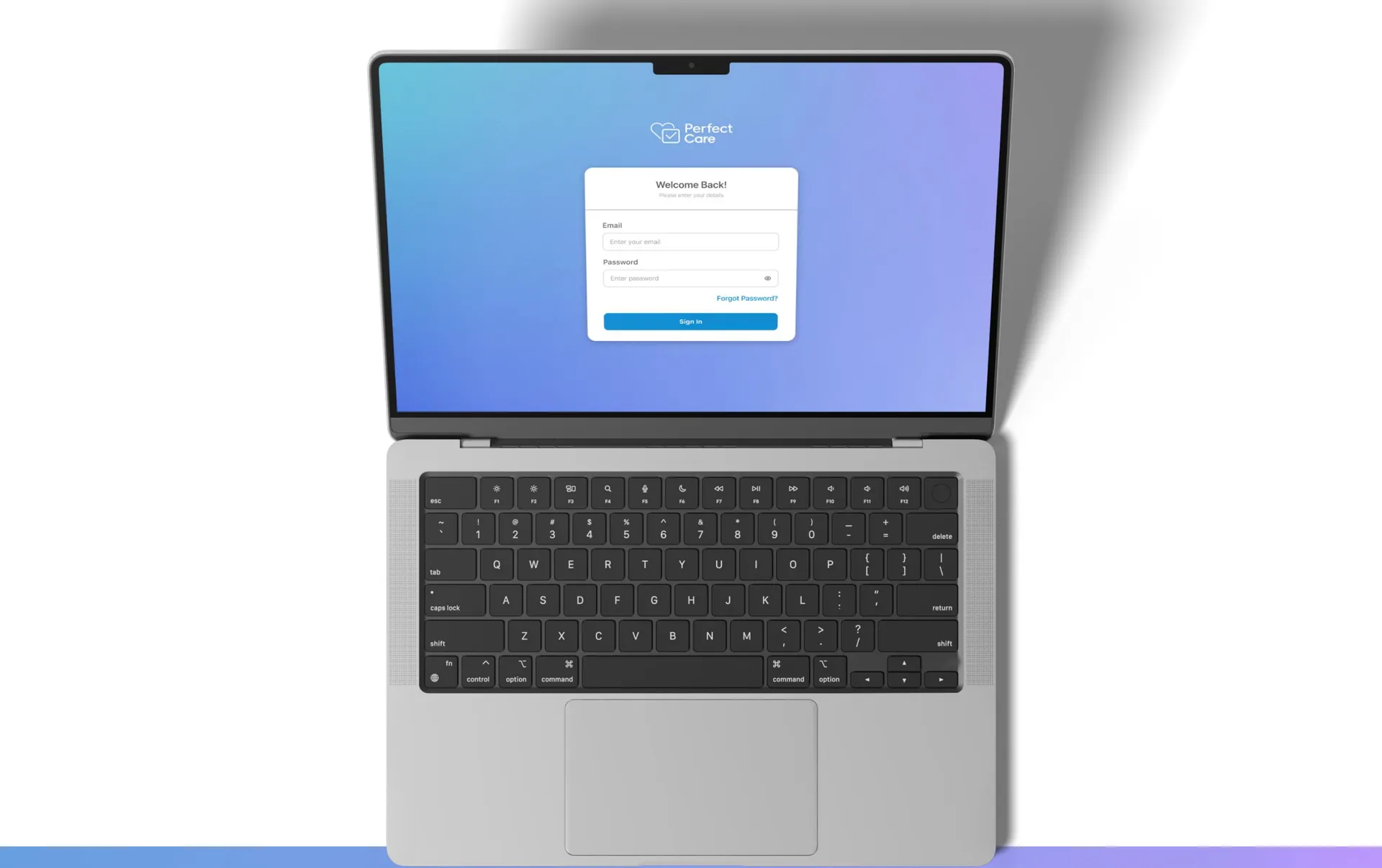
Controlled login with admin-managed credentials, session timeouts, and role-based redirection.
PCA-Focused Patient Workflow
Tools for item tracking, care plan distribution, messaging, and order management.
Integrated Communication
Ability to send care plans, educational videos, messages, and medical orders via email and SMS.
Scalable Architecture
Designed to support multiple practices and growing patient volumes without operational overhead.
Results
What changed.
Healthcare organizations
Significant time savings
Significant time savings by eliminating manual patient tracking and communication workflows.
Improved care coordination
Improved care coordination through structured item tracking, notes, and timely messaging.
Enhanced data security
Enhanced data security via strict role-based access and controlled permissions.
Scalable multi-practice management
Scalable multi-practice management, enabling growth without additional administrative burden.
Better patient engagement
Better patient engagement through consistent delivery of care plans, videos, and reminders.
Market-ready healthcare product
Market-ready healthcare product suitable for long-term SaaS deployment.
Key challenges
The hard parts, and how we solved them.
Complex role-based access requirements
Implemented granular permission controls with distinct dashboards for each user role.
Secure handling of patient data
Enforced controlled authentication, session management, and audit-friendly note tracking.
Efficient patient communication at scale
Built reusable communication modals for care plans, videos, messages, and orders.
Managing multiple practices and providers
Designed centralized admin tools with practice switching and bulk management capabilities.
Usability for non-technical healthcare staff
Focused on clean UI, dropdown-based inputs, auto-filled fields, and clear workflows.
Tech stack
What it runs on.
- Frontend
- Next.js 15.5.9 with App Router & TurbopackReact 19.1.1 with Server ComponentsTypeScript 5.x in strict modeTailwind CSS 4.x for styling
- External Integrations
- Twilio for SMSSendGrid for emailsOpenAI for AI featuresPuppeteer for PDF generation
- Backend & Database
- Supabase (PostgreSQL + Auth + Storage)Next.js API RoutesRow Level Security (RLS)Service-based architecture (20+ services)
- Development Tools
- Biome for linting & formatting (replaces ESLint/Prettier)React Hook Form + Zod for validationPapa Parse for CSV processing
Process
How we got there.
01User Authentication & Role Routing
Users log in with admin-assigned credentials and are redirected to dashboards based on role (Super Admin, Admin, PCA, Observer).
02Practice & Patient Setup
Admins manage practices, providers, programs, devices, and patients, including bulk imports and assignments.
03Patient Management (PCA Dashboard)
PCAs view assigned patients, expand patient records, track care items, update notes, and monitor progress.
04Communication & Care Delivery
PCAs send care plans, educational videos, messages, and orders to patients via email and SMS.
05Monitoring & Oversight
Admins and Observers review patient data, notes, and activity with full audit visibility.
More work.
All projects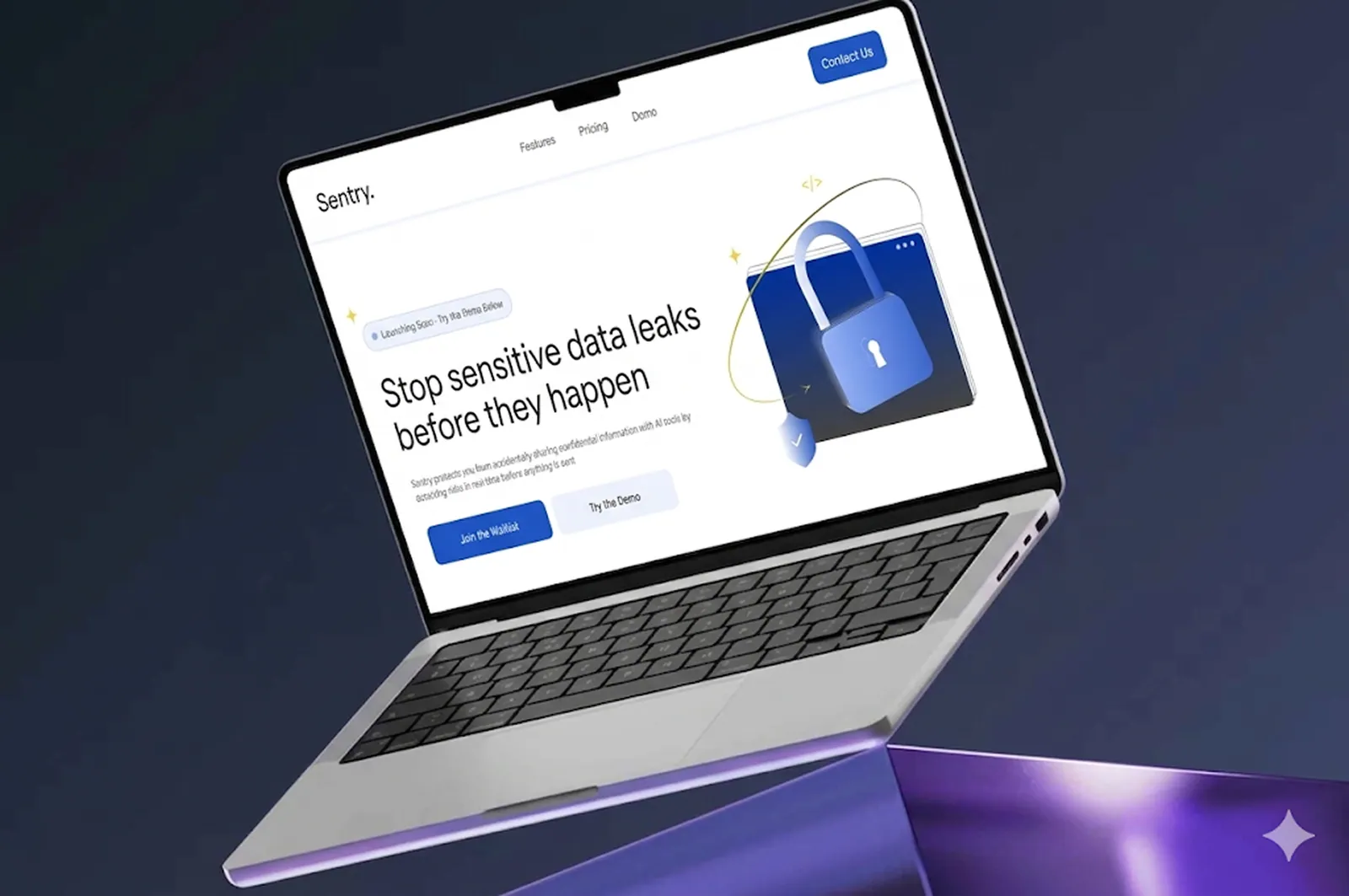
SENTRY
AI-powered platform generating consistent, print-ready corrective exercise programs from assessments, enabling customization, automation, and efficient workflows for fitness professionals.

EDUVENTS
Educational events marketplace with paid submissions, admin moderation, and advanced event discovery, built as a scalable, revenue-driven MVP.
Building something like Perfect Care?