What an AI Code Audit Costs and What You Actually Get
What an audit of an AI-generated codebase costs, what the report should contain, and how to judge whether the one you were sent is worth what you paid.
 SprintX Team8 min read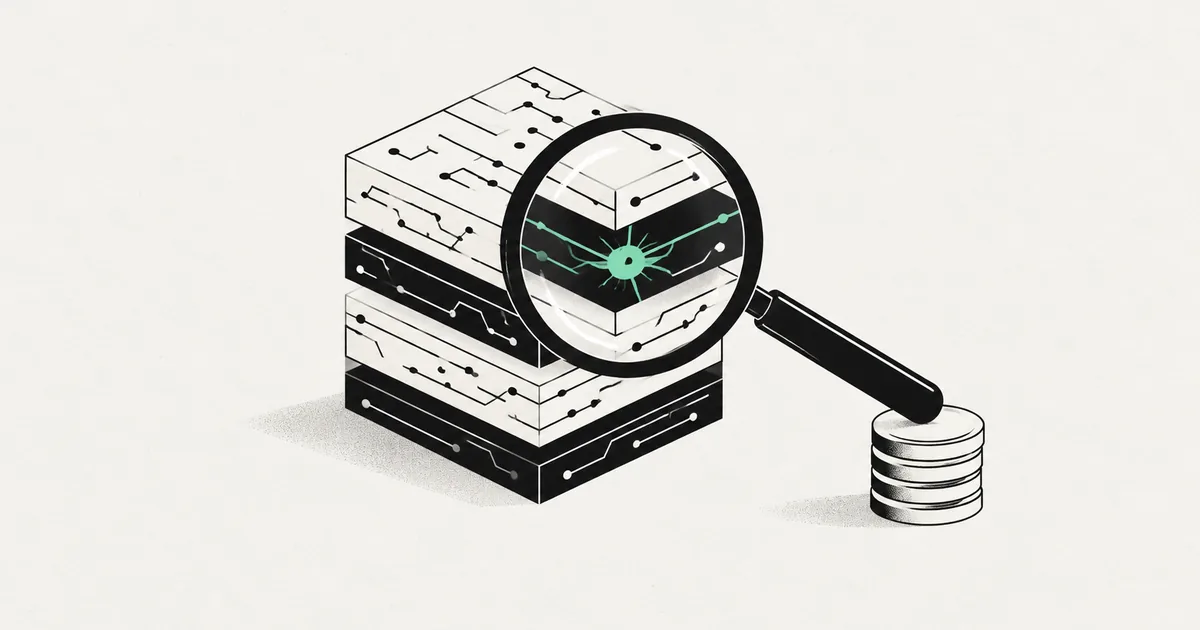
An audit is the cheapest useful thing you can buy for an AI-generated codebase, and the easiest to buy badly. The gap between a $400 audit and a $4,000 audit is not effort per hour — it is whether anyone actually exercised your app as an attacker, or just ran tools over the source.
Prices cluster into three tiers, and each one answers a different question.
The tiers
| Tier | Typical price | Turnaround | Answers |
|---|---|---|---|
| Automated scan | $0 – $400 | Hours | What do off-the-shelf tools flag? |
| Standard code audit | $800 – $2,500 | 2–5 days | What is dangerous, and what does fixing it cost? |
| Deep audit with testing | $3,000 – $8,000 | 1–2 weeks | Can someone actually get in, and does the architecture hold? |
For a typical vibe-coded MVP with a few thousand lines, a standard audit at $800 to $2,500 is the right purchase. Below that, you are buying scanner output you could have generated yourself. Above it, you are buying manual testing that only makes sense once the obvious problems are already fixed or the stakes are high enough — enterprise contracts, regulated data, an acquisition.
What the standard tier should include
A real audit has a human reading your code and driving your running app. Specifically:
Secrets and credentials. Working tree and full git history, plus the deployed client bundle. Every finding named by file and line, with a rotation instruction — not just "remove hardcoded keys."
Authorization, tested from a second account. The auditor should create two users and try to read and write each other's data. This is the difference between "row-level security is enabled" and "row-level security works." Enabled-but-wrong is the most common finding we write up.
Data model review. Missing constraints, missing indexes on columns you filter by, money stored as floats, no unique index where uniqueness is assumed, no migration history. This section predicts your next six months of bugs more accurately than the security section does.
Dependencies. Known vulnerabilities, unmaintained packages, and — increasingly relevant — packages that do not exist or were only recently created under a name a model likes to invent. The Cloud Security Alliance found around 19.7 percent of 2.23 million AI-generated code samples referenced hallucinated package names, which is now a supply-chain attack surface rather than a curiosity.
External call handling. Where the app talks to third parties and what happens when those calls fail, hang, or get retried.
A prioritized remediation list with estimates. Every finding rated by severity and paired with a rough cost or duration to fix. Without this, the report is a source of anxiety rather than a plan.
Our fuller description of the process is in the AI code audit guide; this piece is about what it should cost you.
What moves the price
Size, but less than you think. A 5,000-line app and a 15,000-line app do not differ by three times in audit cost, because the review is concentrated in the auth boundary, the schema, and the external integrations. Sprawl adds maybe 30 to 50 percent.
Whether you can hand over a repository. If your app lives inside a builder with no export path, the auditor's first job is getting readable code out, which adds time before the audit begins.
Live users. Auditing an app with real customer data means the auditor cannot freely poke at production, so testing has to happen against a copied environment. Add a day.
Payments and regulated data. Both expand the surface that must be examined by hand and both raise the bar for what counts as a pass.
Report depth. A report meant for you internally is cheaper than one meant for an enterprise customer or an investor, because the second needs evidence, methodology, and remediation tracking. If you need something a security reviewer will accept, say so upfront — retrofitting it costs more.
How to tell a real audit from a dressed-up scan
Read the findings. A scanner-derived report is recognizable instantly: everything is generic, severities come from a CVSS lookup rather than your context, and nothing references your product's actual behavior.
A real audit says things like "the invoices endpoint takes an ID from the query string and does not scope by organization, so account A can fetch account B's invoices — verified with two test accounts on July 3." That sentence cannot be produced by a tool. It is what you are paying the difference for.
Also check whether anything was ruled safe. A report where every single item is high severity has not been triaged, and triage is most of the value. Knowing which twelve findings you can ignore is worth as much as knowing which three you cannot.
Why buying the audit separately is the point
The most useful property of a standalone audit is that it makes everything after it fixed-scope. Once you know your app has, say, four authorization gaps, no migrations, and an unverified Stripe webhook, any competent team can quote that work precisely — and you can compare quotes on identical information. Without the audit, you are asking vendors to price an unknown, and they will price it defensively or discover it on your budget. That structural argument is in why a rescue should be fixed-scope, and the downstream numbers are in what it costs to take a vibe-coded app to production.
Insist on owning the report. You paid for it, it should be readable by a third party, and you should be free to take it to a different vendor for the fix. Any audit you are not allowed to shop around with was priced as a sales call.
When you need something else instead
An audit reads code. A penetration test attacks a running system from the outside, on a defined scope, with a report format security teams recognize — different exercise, different price, usually worth doing after the audit findings are fixed rather than before. Do you need a pen test for an AI-built app covers the choice, and what a security audit costs covers the security-specific pricing in more detail.
Frequently asked questions
Can I just run the scanners myself and skip the audit? Run them — a dependency scan and a secret scan are free and you should have both in CI regardless. What they will not find is the class of bug that dominates AI-generated apps: logic that is syntactically fine and semantically wrong. Missing tenant scoping, an entitlement granted by the client, a webhook nobody verifies. Those need a person with two test accounts.
How long is an audit valid? Until the code changes meaningfully. If you ship a new integration or restructure your data access, the security conclusions are stale. Most teams re-audit before a major launch, an enterprise deal, or a funding round rather than on a calendar.
Is a cheap audit worth anything at all? As a smoke test, yes. If a $300 review comes back with three specific, verifiable findings, you have learned something real for very little. Just do not treat a clean cheap audit as evidence of safety — absence of findings from a shallow pass is not the same as absence of problems.
If you want to know what is actually wrong before you commit to fixing anything, that is a small, bounded purchase. SprintX runs fixed-price audits on AI-built codebases and returns a prioritized report with cost estimates per finding, yours to take anywhere. Send us your repo or builder link.
Security and compliance
Models you own.
When data can’t go to a public AI service, we deploy and train models that run in your environment.
Keep reading.
More on security and compliance
Security and compliance · 1 Aug 2026 · 7 min read
What a Security Audit Costs for an AI-Built Product
Quotes for the same security audit routinely differ by a factor of ten. Here is what actually drives the number, and how to buy the right depth for your situation.
Security and compliance · 7 Aug 2026 · 6 min read
My Supabase RLS Policy Is Not Working
A debugging order for Supabase row-level security when policies seem ignored or block everything, including the service-role trap and the tests that prove it.
Security and compliance · 6 Aug 2026 · 6 min read
Someone Found My API Key. What Do I Do Right Now?
A calm, ordered playbook for the hour after you discover an API key leaked: rotate the right things first, read the logs, and purge the key from history.