AI Code Audit: Is Your AI-Built App Safe to Ship?
What an AI code audit actually checks before you put an AI-generated app in front of real users — and how to tell a genuine review from a rubber stamp.
 SprintX Team8 min read
You built an app with an AI tool in a weekend, it works in the demo, and now you are about to hand it to paying customers — or investors. A small, uncomfortable voice keeps asking the same question: is this actually safe to ship? You cannot read the code well enough to know, and the tool that wrote it will happily tell you everything is fine.
An AI code audit answers that question honestly. It is a structured review of an AI-generated codebase by someone who can read it, run it, and break it — before your users do. This is what a real audit checks, what it costs, and how to tell a genuine review from a reassuring rubber stamp.
What an AI code audit actually is
An audit is not a rewrite and it is not "the AI grading its own homework." It is an experienced engineer reading your code with a specific goal: find the gaps between "runs in a demo" and "survives real users, real data, and someone actively poking at it."
The reason this is a distinct service in 2026 is that AI coding tools — Lovable, Bolt, Cursor, Replit Agent, v0, and the rest — are genuinely excellent at producing code that works once, on the happy path, on the machine it was built on. They are far weaker at the defensive, unglamorous engineering that keeps an app alive: input validation, access control, error handling, and cost control. An audit is how you find out which of those are missing before they cost you money or a data breach.
The seven things a real audit checks
A serious audit is not a vibe check. It walks a defined surface and reports findings by severity. These are the areas that matter most for AI-built apps specifically.
| Area | What the auditor looks for | Why it bites AI apps |
|---|---|---|
| Secrets & config | API keys in the frontend, hardcoded credentials, missing server-side env vars | AI tools routinely leak keys into client code |
| Data access | Whether one user can read another's records | Access rules (e.g. Supabase RLS) are often wide open |
| Input validation | Unchecked forms, no database constraints | AI assumes clean input that real users never send |
| Error handling | External calls with no try/catch or fallback | One failed API call takes down the whole page |
| AI cost control | Model calls firing on every event or keystroke | Silent, runaway API bills |
| Auth & sessions | Weak or missing login, tokens that never expire | Auth is faked or half-built in prototypes |
| Dependencies | Outdated or vulnerable packages, abandoned libraries | Generated stacks pin old, unsafe versions |
Security and secrets come first
The single most common critical finding is a secret sitting somewhere a user can see it. If your OpenAI or Stripe key is bundled into the frontend, anyone can open their browser tools and take it. An audit checks that every secret lives server-side and that nothing sensitive ships to the browser. This is also where MCP-based integrations get a look — the protocol is now the cross-vendor standard for connecting agents to tools, but 2026 brought real security concerns around tool poisoning and over-broad permissions, so any agent wiring gets scrutinized.
Data access is where quiet disasters live
The failure that never shows up in a demo is one user seeing another user's data. AI-generated apps frequently leave the database open, trusting the frontend to hide things it should be blocking at the data layer. An auditor tries to read data they should not be able to. Our deep dive on Supabase row-level security and roles covers the fix pattern for the most common stack.
What the audit report should look like
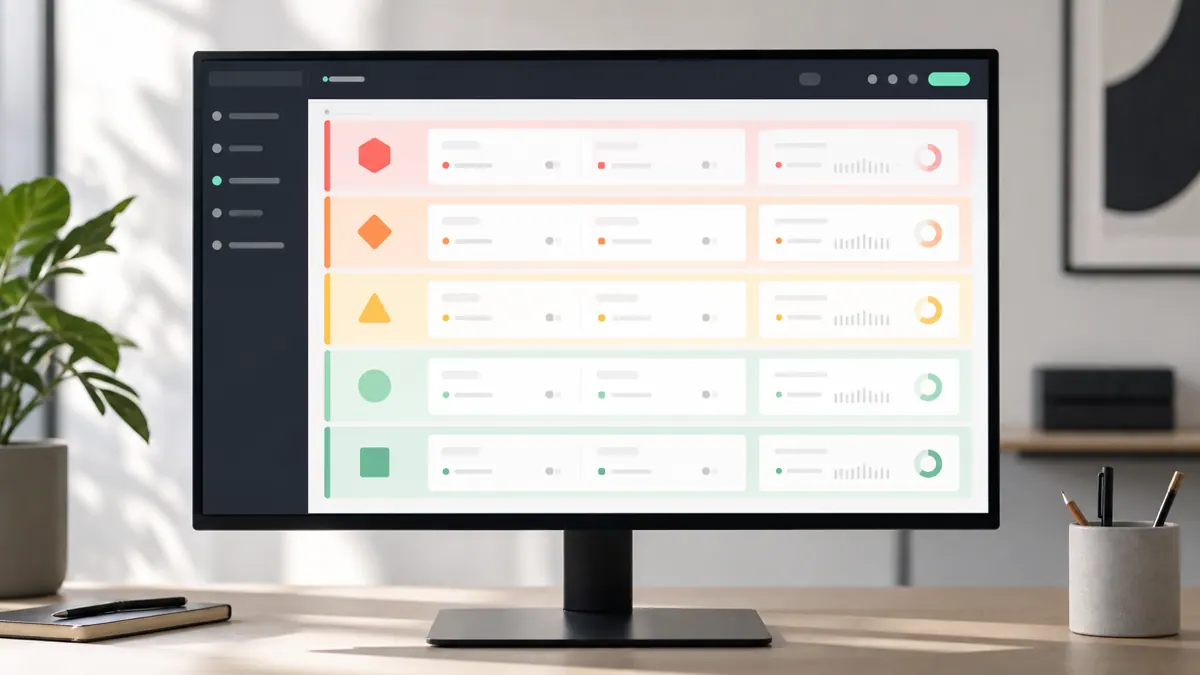
A good report is boring in the best way: a list of findings, each with a severity, a plain-English description, the file and line, and a recommended fix. You should be able to hand it to any engineer and have them act on it. Severity usually breaks down like this:
- Critical — ship-blockers. Exposed secrets, open data access, missing auth. Fix before launch, full stop.
- High — will cause incidents. Missing error handling on payments, no input validation, runaway cost paths.
- Medium — will cause pain later. No tests, fragile queries, no logging.
- Low — cleanup. Dead code, minor inefficiencies, style.
If a report comes back as a paragraph of reassurance with no file references, it is not an audit. The specificity is the value.
What an AI code audit costs
Pricing depends entirely on how much code there is and how deep you go. As a rough guide for mid-2026, a focused audit of a small-to-mid AI app — the kind built in a few weeks with a code generator — typically lands in a low-four-figure fixed-scope range, with larger or more sensitive codebases costing more. What you should expect regardless of price is a written report you own, not a sales call disguised as a review.
Be wary of two extremes. A free "audit" is usually a lead magnet that surfaces one obvious issue to sell you a rebuild. And an open-ended hourly engagement with no defined deliverable can drift for weeks. A fixed-scope audit with a clear list of what gets reviewed and a written report at the end is the honest middle.
Audit, then fix — but know they are separate
An audit tells you what is wrong. Fixing it is the next decision, and you should make it with the report in hand rather than being rushed. Many findings are quick and cheap to fix; a handful might be structural. The good news, which we cover in how to fix AI-generated code, is that most AI-built apps are worth fixing, not scrapping — the UI and product logic are usually fine, and the missing pieces are predictable. If you are earlier in the journey, taking a vibe-coded app to production maps the full hardening path from prototype to launch.
What this looks like in practice
A recent client project came to us as "the AI used to work, now it fails silently and we are burning credits" — and the founder wanted to launch in two weeks. Before touching anything, we ran an audit: the app had a Stripe key in the frontend, no access rules on the database so any logged-in user could read every record, no error handling on the payment flow, and a model call firing on every page load. None of that showed in the demo. The report gave the founder a ranked list of exactly what had to be fixed before launch versus what could wait. We then fixed the criticals in a phased, fixed-scope milestone — no rewrite — and the app shipped safely. The audit is what turned a nervous guess into a clear plan.
Frequently asked questions
Is AI-generated code safe to use in production? It can be, but not by default. AI tools reliably skip security, validation, and error handling because a demo never exercises them. An audit tells you which of those gaps exist in your specific app so you can close them before real users hit them.
Can I just ask the AI to audit its own code? Only up to a point. An AI can flag some obvious issues, but it cannot reliably see the things it systematically omits, and it has no stake in whether your app survives real traffic. A human review by someone who will try to break it catches what the generator cannot.
How long does an AI code audit take? A focused audit of a small-to-mid app is usually a few days, not weeks. The output is a written report ranked by severity. Fixing the findings is a separate, scoped decision you make afterward.
What is the difference between a code audit and a security audit? Overlapping but not identical. A security audit focuses specifically on vulnerabilities and attack surface. A code audit is broader — it also covers reliability, cost control, data integrity, and maintainability. For an AI-built app about to launch, you usually want the broader review.
Not sure whether your AI-built app is safe to ship? SprintX runs fixed-scope AI code audits and hands you a written, severity-ranked report you own — NDA-friendly, no rewrite pressure. Send us a link to the code and we will tell you exactly what stands between you and a safe launch.
AI agents and automation
AI agents that do the work.
We build agents and automations for the repetitive work your team does by hand, and measure what they save.
Keep reading.
More on ai agents and automation
AI agents and automation · 25 Jul 2026 · 6 min read
From Google AI Studio Prototype to Production App
A studio prototype is a prompt that worked once in a browser tab. Here is everything that has to exist around it before it becomes a product.
AI agents and automation · 24 Jul 2026 · 6 min read
Shipping a Claude Code Project to Production
Agent-written repositories fail in their own specific ways. Here is what to check before a Claude Code project meets real users, in the order that matters.
AI agents and automation · 24 Jul 2026 · 6 min read
Taking a Windsurf Project to Production
A Windsurf project runs perfectly in one place — your editor. Here is what has to change before it runs anywhere else, and in what order.