AI Tools for Real Estate Teams: Voice, Chat & Automation
A practical map of AI tools for real estate teams — voice, chat, and automation — and how they fit together to stop leads leaking out of the pipeline.
 SprintX Team9 min read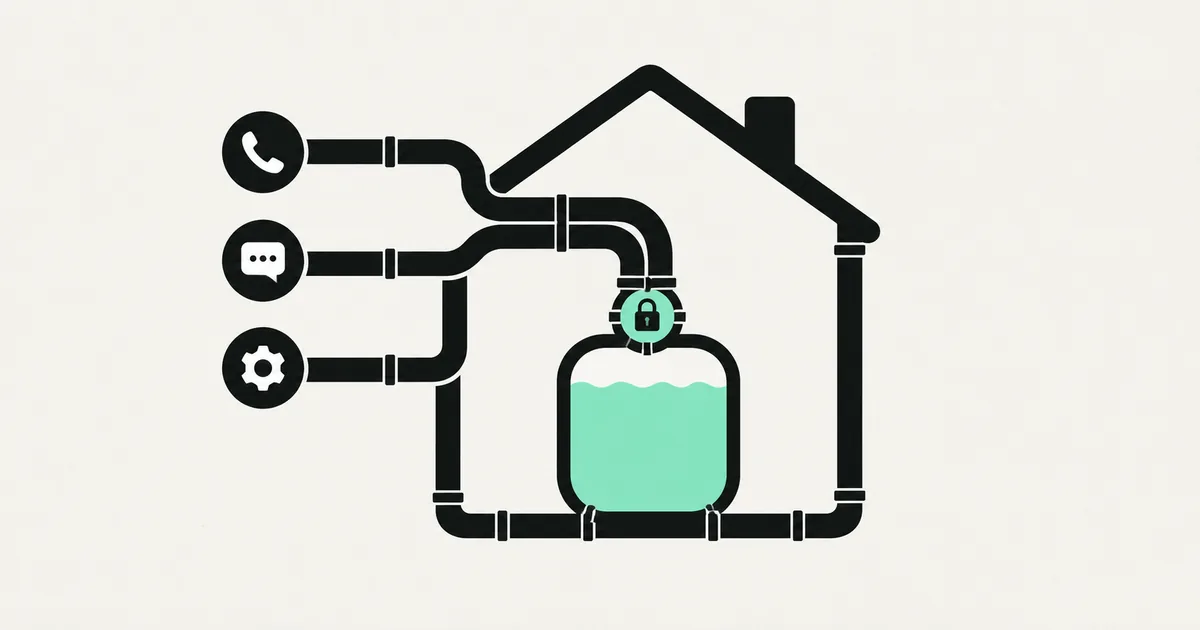
Real estate runs on speed to lead. A buyer inquires on a listing at 10 p.m., and whoever calls back first usually wins the deal. But agents are in showings, on the road, or asleep — so the average inbound lead sits for hours, goes cold, and gets worked by a competitor who happened to be free. The lead was never bad. The response was just too slow.
That gap is exactly where AI helps a real estate team. Not gimmicks — a voice agent that answers every inquiry instantly, a chatbot that qualifies website visitors, and automations that keep your CRM from becoming a graveyard. This is a practical map of what works in 2026, how the pieces fit, and what it costs to run.
The real problem: leads leak faster than you can work them
Most teams do not have a lead-generation problem. They have a lead-response problem. Inquiries come from Zillow, your website, Facebook ads, and referrals — and they arrive at random hours, faster than anyone can personally answer. The ones that do not get a fast, human-feeling reply evaporate.
AI closes that gap in three places: the phone, the website, and the CRM. Handle those and you stop the leak without hiring an inside sales team.

Voice agents: answer and qualify every call
An AI voice agent built on Vapi or Retell picks up on the first ring, day or night, and handles the inquiry the way a good inside sales rep would.
- Answers instantly so no lead hits voicemail, including nights and weekends when a lot of property browsing happens.
- Qualifies the lead — budget, timeline, financing, buying or selling, area of interest — and captures it cleanly.
- Books the showing or callback straight into the agent's calendar.
- Routes hot leads immediately with a text or CRM alert so a human closes while interest is high.
The point is not to replace the agent's relationship-building. It is to make sure every lead is greeted, qualified, and scheduled the moment they raise a hand — which is the real-estate version of using an AI voice agent to qualify leads around the clock.
Chatbots: turn website visitors into conversations
Your website and listing pages get traffic that never picks up the phone. A chatbot catches those visitors.
- Answers property questions — price, square footage, HOA, schools, availability — from your listing data.
- Captures the lead with a natural conversation instead of a dead contact form.
- Books tours by handing off to your calendar.
- Works 24/7, so the 11 p.m. browser becomes a lead instead of a bounce.
A well-built real estate chatbot pulls from your actual listings so it answers accurately rather than guessing, and it hands off to a human whenever the conversation gets serious. It is the cheapest way to stop losing the visitors who would never call.
Automation: keep the CRM and follow-up alive
Voice and chat get the lead in the door. Automation makes sure it does not die there. Wired together with n8n, the back office runs itself:
- Instant lead routing from every source into one CRM, tagged and assigned.
- Automated follow-up sequences — the drip campaigns agents always mean to send and never do.
- Listing alerts to matched buyers when a new property fits their criteria.
- Review and referral requests to happy clients after closing.
- Transaction reminders so nothing in the closing checklist slips.
This is where a lot of quiet revenue hides. Most teams lose deals not to bad leads but to no follow-up on the fifth, tenth, or thirtieth day. Automation does the remembering. If you want the broader pattern, our guide to AI automation for small business covers the same playbook applied across industries.
How the pieces fit together
The tools are not separate products — they are one pipeline. Here is the division of labor:
| Layer | Tool | Job |
|---|---|---|
| Phone | Voice agent (Vapi / Retell) | Answer and qualify every call instantly |
| Website | AI chatbot | Convert visitors, answer listing questions |
| Routing & follow-up | n8n automation | Get leads into the CRM, keep them warm |
| CRM | Your existing system | Single source of truth for the pipeline |
| AI layer | OpenAI / Claude | Drafting, qualifying, summarizing |
You do not need all of it on day one. Most teams start with the biggest leak — usually phone response or follow-up — prove it, then add the next layer.
What it costs
AI tooling for a real estate team spans setup and running costs. Rough 2026 figures:
| Component | Setup | Ongoing |
|---|---|---|
| Voice agent | $2,000 – $6,000 | $150 – $600 / mo + usage |
| Website chatbot | $1,500 – $5,000 | $50 – $300 / mo |
| Automation suite (CRM, follow-up) | $2,000 – $8,000 | Hosting + minimal fees |
Against a single closed deal's commission, the whole stack usually pays for itself on one or two extra conversions a year — and it typically produces far more than that by simply responding faster than the competition.
Where to start
Do not boil the ocean. A sane order:
- Fix your fastest leak first. If leads die on the phone, start with the voice agent. If they die in your inbox, start with routing and follow-up automation.
- Connect it to the CRM you already use. The goal is one pipeline, not another disconnected tool.
- Keep a human on the hot leads. Let AI qualify and schedule; let your agents build the relationship and close.
- Measure response time and conversion. If speed-to-lead improves and more inquiries turn into showings, expand.
You can see how we scope voice, chat, and automation work on SprintX — for real estate the value is in wiring the pieces into one pipeline, not in any single tool.
Frequently asked questions
Will an AI voice agent sound robotic to my leads? Modern voice agents sound natural and can be tuned to your team's tone. For a first-touch qualifying call — where the alternative is voicemail — most leads simply appreciate a fast, helpful response.
Can these tools connect to my CRM? Yes. Whether you use Follow Up Boss, kvCORE, HubSpot, or another system, leads from voice and chat can be routed straight into your CRM through its API, tagged and assigned automatically.
Do I still need an inside sales agent? AI handles instant response, qualification, and scheduling at scale, around the clock. Many teams use it instead of, or alongside, an ISA — the AI never sleeps and never misses a lead, while your people focus on the conversations that need a human.
How fast can this be set up? A focused first project — say, a voice agent or a chatbot connected to your CRM — is typically live in a few weeks. A full voice-plus-chat-plus-automation pipeline takes longer but is best rolled out one layer at a time anyway.
Stop losing deals to slow follow-up. SprintX builds AI voice, chat, and automation for real estate teams that answer every lead instantly and keep your pipeline warm — fixed-scope quote, and the system is yours to keep. Tell us where your leads leak and we will map the fastest fix.
AI agents and automation
AI agents that do the work.
We build agents and automations for the repetitive work your team does by hand, and measure what they save.
Keep reading.
More on ai agents and automation
AI agents and automation · 18 Jul 2026 · 9 min read
RPA vs AI Agents: Which Should Automate Your Back Office?
A decision guide to robotic process automation vs AI agents: what each is good at, where each breaks, costs, and how to pick the right tool for back-office work.
AI agents and automation · 18 Jul 2026 · 8 min read
Playwright MCP Server: AI Browser Automation That Actually Works
A plain-English guide to the Playwright MCP server: how AI agents control a real browser, why it beats pixel-guessing bots, and where it fits your business.

AI agents and automation · 18 Jul 2026 · 9 min read
The Best MCP Servers for Business in 2026 (Curated + Tested)
A curated shortlist of the most useful MCP servers for real businesses in 2026 — what each connects your AI agent to, where it shines, and what to watch out for.