Medical & Dental Website Development With Online Booking
What actually goes into a medical or dental website that books patients — booking, compliant forms, speed, and local SEO — and how to scope the build.
 SprintX Team8 min read
A prospective patient finds your clinic on their phone at 9 p.m. They have a toothache or an overdue check-up, and they want to book — right now, without calling. If your site makes them wait for a slow page, hunt for a phone number, and call back during business hours, most of them will just tap the next result. The practice down the road with a "Book Now" button that works gets the patient.
A medical or dental website is not a brochure. It is a booking machine that happens to look professional. Get the booking, speed, forms, and local search right and it quietly fills your schedule; get them wrong and you are paying for a site that does nothing. Here is what actually goes into building one that works, and how to scope it.
What a medical website is really for
Strip away the stock photos and there are four jobs a healthcare site must do:
- Convert a visitor into a booked appointment with as little friction as possible.
- Answer the questions that stop people booking — services, insurance, hours, location, what to expect.
- Load fast and work perfectly on a phone, where the majority of health searches happen.
- Show up when locals search for your service in your city.
Everything else — the design, the copy, the team bios — supports those four. A beautiful site that does not book patients is a failure; a plain one that does is a success.
Online booking: the feature that pays for the site
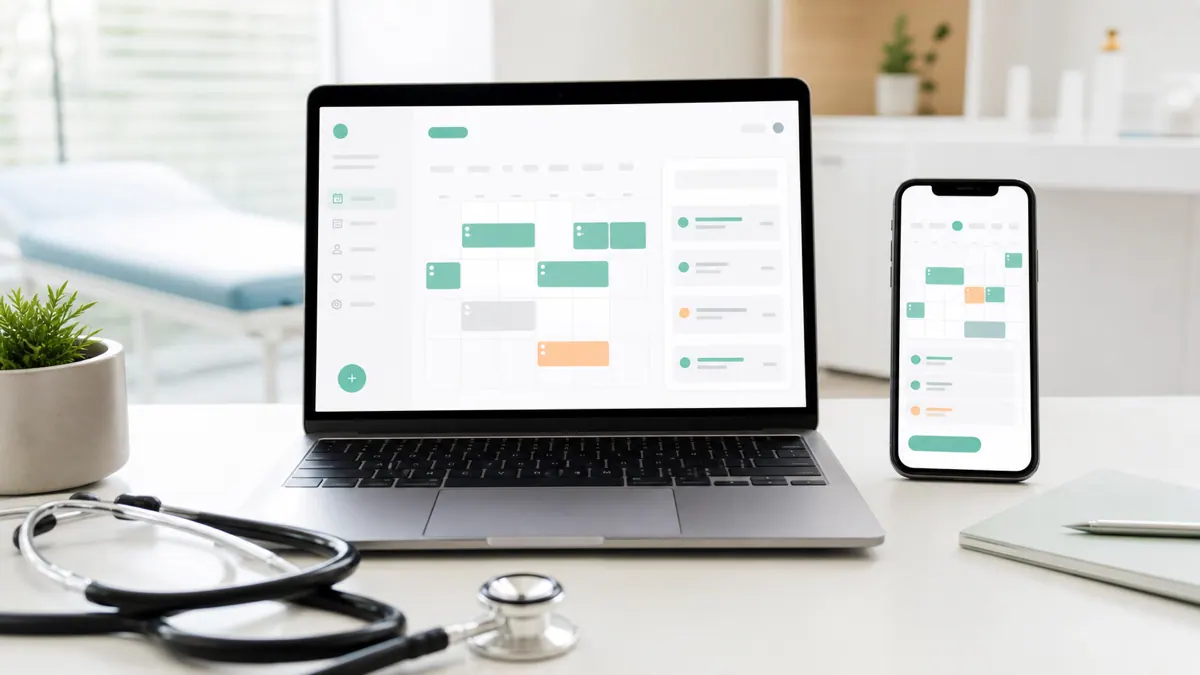
The single highest-value thing on a medical or dental website is a booking flow that actually works. There are two ways to do it:
- Embed your scheduling system. If you already use a practice management or scheduling tool (like a dental PMS or a healthcare booking platform), the site can embed or connect to it so patients book into your real calendar with live availability. Cleanest option when your system supports it.
- Build a custom booking flow. When you need something specific — multi-provider scheduling, service-based routing, new-patient intake before the visit — a custom flow connected to your calendar gives you full control over the experience.
Either way, the rules are the same: as few steps as possible, mobile-first, real availability (no "we'll call you to confirm" dead ends), and an instant confirmation by email or text. Pair it with automated reminders and you cut no-shows at the same time. If you want the whole loop handled, automated appointment booking is a sibling topic worth reading — it covers reminders and follow-ups end to end.
Forms and privacy: the part you cannot fake
The moment a form collects patient details tied to health information, you are handling sensitive data, and in the US that means HIPAA-aware design. This is where a lot of cheap medical sites quietly cut corners.
- Compliant intake forms. New-patient forms and anything collecting health history must be handled through a compliant channel — encrypted, access-controlled, and stored somewhere covered by a Business Associate Agreement. A plain contact form emailing PHI in cleartext is a liability.
- No PHI leaking to trackers. Analytics and ad pixels must not receive health information. This has become a real enforcement area, and it is easy to get wrong without care.
- Clear consent and privacy notices. Visible, honest, and matched to what the site actually does.
You do not need to turn the whole site into a fortress — most pages are public marketing. But the forms and anything touching patient data need to be built properly. This is a big reason healthcare web work costs more than a generic small-business site.
Speed, mobile, and accessibility
Health searches are overwhelmingly on phones, often on shaky connections, and sometimes by people who are stressed or in a hurry.
- Fast load times. Built on a modern stack (Next.js on Vercel is our default), a medical site should load in a couple of seconds or less. Speed affects both booking rates and Google ranking.
- Genuinely mobile-first. The booking button, phone number, and directions should be reachable in one tap, not buried.
- Accessible. Readable contrast, proper labels, keyboard navigation. It is the right thing to do, it widens your patient base, and it reduces legal risk.
Local SEO: getting found in your city
A perfect site nobody finds is wasted. For clinics, local search is where patients come from.
| Element | Why it matters |
|---|---|
| Google Business Profile | The map pack is where most local patients start |
| Service + city pages | "dentist in [city]", "pediatrician near me" landing pages |
| Consistent name/address/phone | Same details everywhere builds local trust |
| Fast, mobile, secure site | Ranking signals Google rewards |
| Patient reviews | Volume and recency drive both ranking and bookings |
The winning formula is boring and effective: a fast site with clear service pages for your area, a well-kept Google Business Profile, and a steady flow of reviews. Do those and you show up when someone nearby searches for what you offer. You can see how we approach healthcare web builds on SprintX — the work is in the booking flow and local search, not the homepage art.
What it costs
Medical and dental sites span a wide range depending on scope. Rough 2026 figures:
| Scope | Typical range |
|---|---|
| Solid template-based site with embedded booking | $2,500 – $6,000 |
| Custom design + custom booking + compliant intake | $6,000 – $15,000 |
| Multi-location / multi-provider with integrations | $15,000+ |
Most single-location practices land in the middle band. The custom booking and compliant forms are where the money goes — and where the return comes from, because that is what turns visitors into patients. For a wider view of what drives the number, our business website cost guide and dental website cost guide are useful companions.
Frequently asked questions
Can patients book directly into our existing scheduling system? Usually yes. Most practice management and healthcare booking platforms can be embedded or connected so patients book into your live calendar. If yours cannot, a custom booking flow connected to your calendar achieves the same result.
Do our forms really need to be HIPAA compliant? Any form collecting patient information tied to health details does. That means encrypted, access-controlled handling through a channel covered by a BAA — not a plain contact form emailing details in the clear.
How long does a medical website take to build? A template-based site with booking can be a few weeks. A custom design with a bespoke booking flow and compliant intake is typically six to ten weeks, depending on integrations and how fast content and approvals come together.
Will the site actually bring in new patients? It will if it is fast, mobile, easy to book on, and backed by local SEO and reviews. The website is one part of the system; the booking flow and local search are what turn traffic into appointments.
Your website should book patients while your front desk sleeps. SprintX builds fast, compliant medical and dental sites with real online booking and local SEO baked in — fixed-scope quote, and the site is yours to own outright. Tell us about your practice and we will map what it takes to fill your schedule.
Building software
Systems your business runs on.
Custom platforms, internal tools and integrations that move work off spreadsheets.
Keep reading.
More on building software
Building software · 8 Aug 2026 · 6 min read
CORS Errors in an AI-Generated App, Explained Properly
CORS explained without hand-waving, the specific mistakes AI-generated backends make, and why disabling it is the wrong fix even though it works.

Building software · 8 Aug 2026 · 6 min read
My App Shows a Blank White Screen in Production
The blank white screen is not a bug in itself — it is what a single-page app looks like when the first render fails. Here is how to find the real cause fast.
Building software · 6 Aug 2026 · 6 min read
My AI-Built App Is Broken on Mobile
Why AI builders produce apps that look right on a laptop and fall apart on a phone, and the specific fixes for layout, viewport, touch, and performance failures.