How to Build a SaaS MVP in 8 Weeks
A week-by-week playbook for building a SaaS MVP in eight weeks — scope, stack, and the discipline that keeps a first version shippable.
 SprintX Team9 min read
Most SaaS MVPs die not from bad ideas but from bloated scope. The founder wanted to launch in two months, then added "just one more feature" until the two months became eight and the launch never came. Eight weeks is enough time to build a real, paid SaaS MVP — but only if you treat every week as a hard constraint and every feature as guilty until proven essential.
Here is a week-by-week plan that has shipped real products, plus the ruthless scoping rules that make it possible.
First, agree on what an MVP is not
An MVP is the smallest product that lets a real customer get one job done and pay you for it. That is the entire definition. It is not a smaller version of your five-year vision; it is the single sharpest slice of it.
The discipline is subtractive. For every feature, ask: "If we cut this, can a customer still get the core value?" If yes, cut it — or push it to week nine. Settings pages, team roles, an admin dashboard, dark mode, integrations you "might" need: almost all of it can wait.
The 8-week plan at a glance
| Weeks | Focus | Outcome |
|---|---|---|
| 1 | Scope, flows, and design | One core flow, wireframed and agreed |
| 2 | Foundation: auth, database, deploy | Skeleton app live on a real URL |
| 3–4 | Core feature build | The one thing your product does, working |
| 5 | Billing and onboarding | Users can sign up and pay |
| 6 | Polish and edge cases | It survives real, messy usage |
| 7 | Private beta | Real users, real feedback, fast fixes |
| 8 | Launch prep and go-live | Public, monitored, ready to sell |
This is a guide, not a straitjacket. But if a week slips, cut scope — do not extend the timeline. The calendar is the one thing you protect.
Weeks 1–2: Scope and foundation
Week one is not coding, it is deciding. Map the single core user journey end to end — the path from signup to the "aha" moment where your product delivers value. Wireframe just those screens. Write down what is explicitly out of scope so nobody relitigates it in week five.
Week two builds the skeleton every SaaS shares: authentication, a database, and a deployment pipeline. Do not reinvent these. A modern, boring stack gets you here fast:
- Next.js for the app (front end and API in one).
- Supabase or Postgres for the database and auth.
- Vercel for instant deploys and previews.
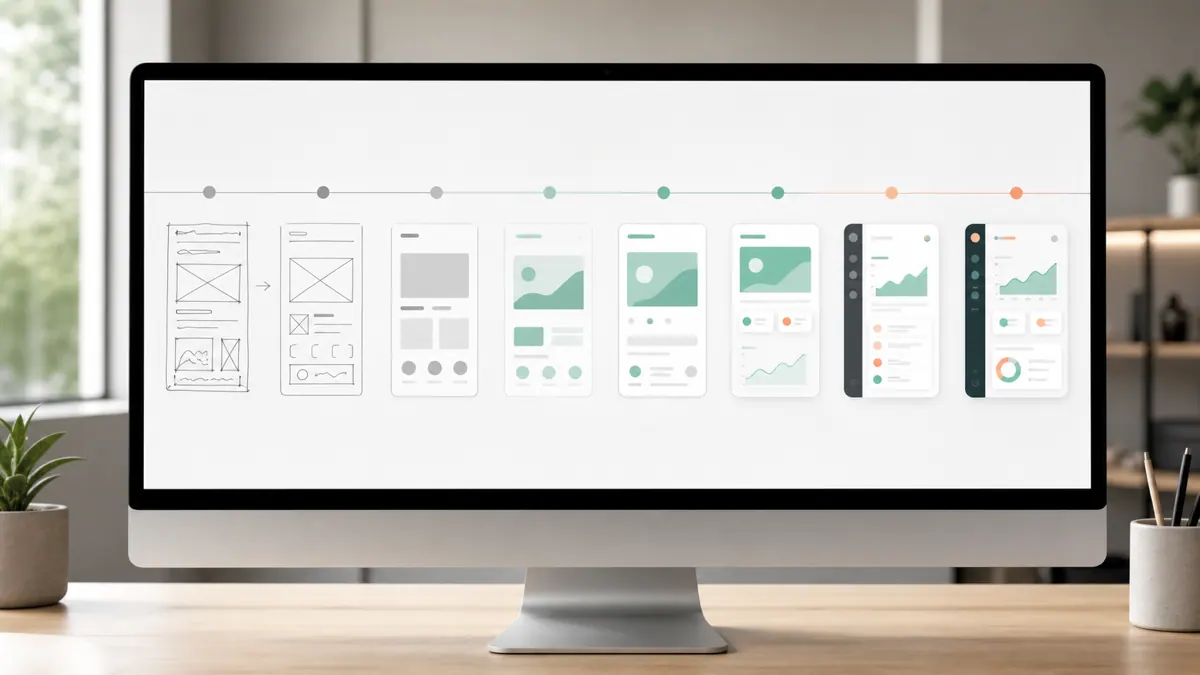
By the end of week two you should have a login, an empty dashboard, and a live URL. It does nothing useful yet — and that is exactly on schedule.
Weeks 3–4: Build the one thing
This is the heart of the MVP: the feature that is the reason your product exists. If you are building project management, this is tasks and boards. If it is invoicing, this is creating and sending an invoice. Everything else is scaffolding around this.
Build it properly and build it narrow. Resist the urge to add "quick wins" that expand the surface area. A focused core feature that works flawlessly beats five half-features. This is where most of your engineering hours go, and it should be.
Keep the data model simple but not naive — you will live with early schema decisions for a long time, and a little thought here prevents painful migrations later. If your team is unsure how to structure this for future growth, a discovery conversation with a SaaS development partner early can save weeks of rework.
Week 5: Billing and onboarding
An MVP that cannot take money is a demo. Week five makes it a business. Integrate Stripe for subscriptions — checkout, a webhook to activate accounts, and a basic plan or two. Do not build a custom billing engine; Stripe's Checkout and Customer Portal handle the hard parts.
Then add onboarding: the first-run experience that gets a new user to value fast. Even a simple three-step setup and a sensible empty state dramatically improve whether people stick. A confused first five minutes kills more MVPs than any missing feature.
Weeks 6–7: Polish and private beta
Week six is where you make the core flow survive reality — the empty states, the error messages, the "what happens when a user does something weird." You are not adding features; you are removing rough edges from the ones you have.
Week seven, put it in front of real users. Not a public launch — a private beta of ten to thirty people who match your target customer. Watch where they get stuck. Fix the top three problems fast. This week of real feedback is worth more than another month of guessing behind closed doors.
Week 8: Launch
Final week: tie off the loose ends. Set up basic error monitoring (Sentry), analytics so you can see what people do, a real landing page that explains the value, and the operational basics — a support email, terms, a privacy policy. Then ship it. Publicly. Start telling people.
Launch is not the finish line; it is the moment your real roadmap begins, now informed by paying users instead of assumptions.
What to deliberately leave out
The features founders fight to keep, and should cut, from an eight-week MVP:
- Team accounts and granular permissions (add when a customer demands it).
- A settings page for every preference imaginable.
- Multiple pricing tiers with complex logic — one or two plans is plenty.
- Native mobile apps — a responsive web app is enough to validate.
- Integrations you have not confirmed a customer needs.
Every one of these can come after launch, funded by revenue and guided by evidence.
Frequently asked questions
Can you really build a SaaS MVP in 8 weeks? Yes, if scope is disciplined and you use a modern stack instead of building infrastructure from scratch. The timeline breaks when scope creeps, not because eight weeks is too short. The projects that miss are almost always the ones that quietly added features.
How much does an 8-week MVP cost? It varies with complexity, but a focused MVP typically lands in the low-to-mid five figures when built by a small experienced team. The cost driver is scope: every extra core feature adds weeks and budget. Cutting to one sharp feature is the single biggest lever on price.
Should I use no-code to build my MVP? No-code tools are great for validating an idea and even for a first version. The catch is that many teams hit a wall when they need custom logic, real scale, or to own their code — and then need to rebuild. If you expect to raise money or scale, starting on a real, ownable stack usually saves a painful migration later.
What if 8 weeks is not enough for my idea? Then your MVP scope is probably still too big. Almost any product has a core slice that fits in eight weeks. If it genuinely does not, break it into phases and ship the first phase — do not try to build all of it before any customer sees it.
Sitting on a SaaS idea and a deadline? SprintX builds MVPs on a fixed-scope, fixed-timeline quote using Next.js, Supabase, and Stripe — you own the code and the result, with no lock-in. Tell us the one thing your product must do, and we will map the eight weeks to get there.
Building software
Systems your business runs on.
Custom platforms, internal tools and integrations that move work off spreadsheets.
Keep reading.
More on building software
Building software · 11 Jul 2026 · 9 min read
Adding Stripe Subscriptions to Your SaaS: A Complete Guide
How to add Stripe subscription billing to a SaaS the right way — checkout, webhooks, the customer portal, and the details that keep revenue accurate.

Building software · 11 Jul 2026 · 8 min read
How to Build a SaaS Dashboard Users Actually Understand
A practical guide to designing and building a SaaS dashboard that users read in five seconds, not five minutes, from metrics to the tech stack.
Building software · 11 Jul 2026 · 9 min read
How to Build a Multi-Tenant SaaS the Right Way
A founder-and-engineer guide to multi-tenant SaaS architecture: how to isolate tenant data, pick a tenancy model, and avoid the leaks that sink products.