Legacy Software Modernization: A Practical 2026 Playbook
A no-hype guide to modernizing legacy software in 2026 — how to decide what to touch, which strategy fits, and how to do it without breaking the business.
 SprintX Team9 min read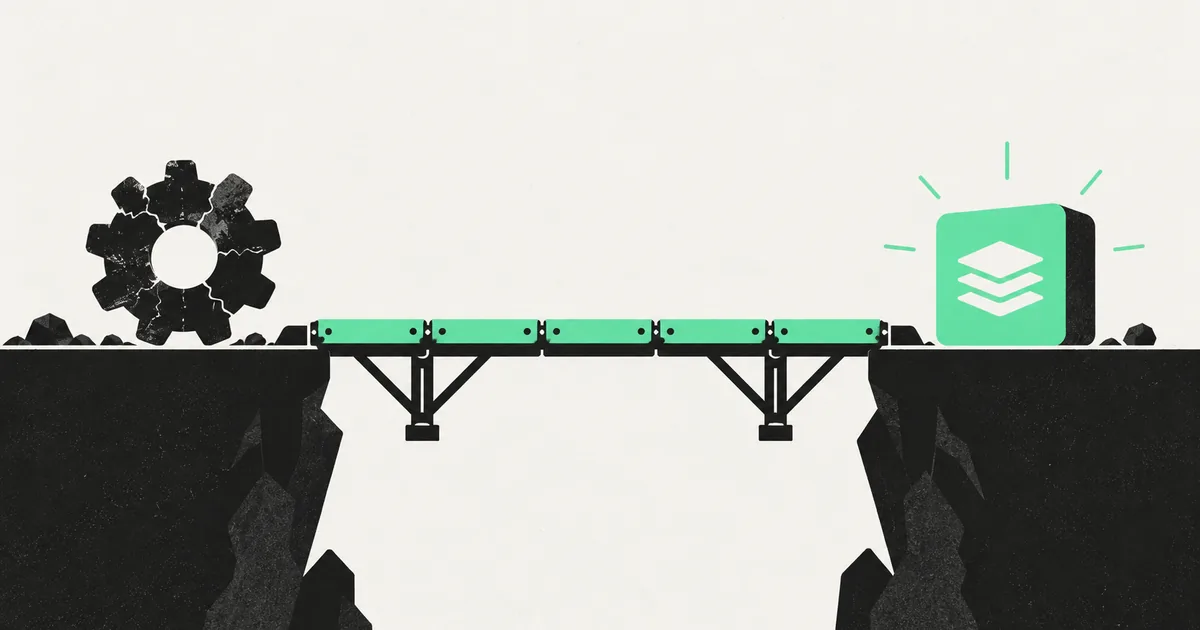
Every legacy system starts as a success. It was the app that ran the business for years — until the original developers left, the framework fell three major versions behind, and now every change takes a week and breaks two things you did not touch. Nobody wants to open it. New hires are afraid of it. And the vendor who wrote it is quoting a full rewrite that would take a year and stop all new features until it ships.
That rewrite is usually the wrong move. Legacy software modernization in 2026 is not about ripping everything out and starting over — it is about reducing risk and cost while the business keeps running. This is the playbook we use to decide what to touch, in what order, and how to do it without a scary big-bang cutover.
What "legacy" actually means
Legacy does not mean old. Plenty of ten-year-old systems are perfectly healthy. A system is legacy when it has become expensive or risky to change — and that shows up as concrete symptoms:
- The framework or runtime is past end-of-life (an app still on Node.js 18, for example, is running an end-of-life runtime with no security patches).
- Nobody on the team fully understands how a critical piece works.
- Deploys are manual, rare, and scary.
- There are no tests, so every change is a gamble.
- Dependencies are so far behind that upgrading one breaks ten others.
- You cannot hire for the stack, or the people who could maintain it are gone.
If two or three of those are true, you have a legacy problem — regardless of the calendar. The goal of modernization is to move the system back into "cheap and safe to change," not to chase the newest possible tech.
The six modernization strategies (and when each fits)
There is a well-worn set of options here, often called the "Rs." You rarely pick one for the whole system — you pick one per component. Here is the practical version:
| Strategy | What it means | Best when |
|---|---|---|
| Retire | Turn it off | The feature is barely used and not worth maintaining |
| Retain | Leave it alone | It works, it is stable, and nothing forces a change yet |
| Rehost | "Lift and shift" to new infra | You need out of dying hosting fast, logic is fine |
| Replatform | Move + light updates (runtime, DB) | Small changes unlock big stability or cost wins |
| Refactor | Restructure the code, same behavior | The logic is valuable but the code is unmaintainable |
| Rebuild / Replace | Rewrite or buy a SaaS product | The system cannot support what the business now needs |
The expensive mistake is defaulting to Rebuild because it feels clean. A full rewrite means the business gets zero new value until the day it ships — and rewrites routinely overrun. Most healthy modernizations are mostly Refactor and Replatform, with Rebuild reserved for the one or two components that genuinely cannot be saved.
Assess before you touch anything
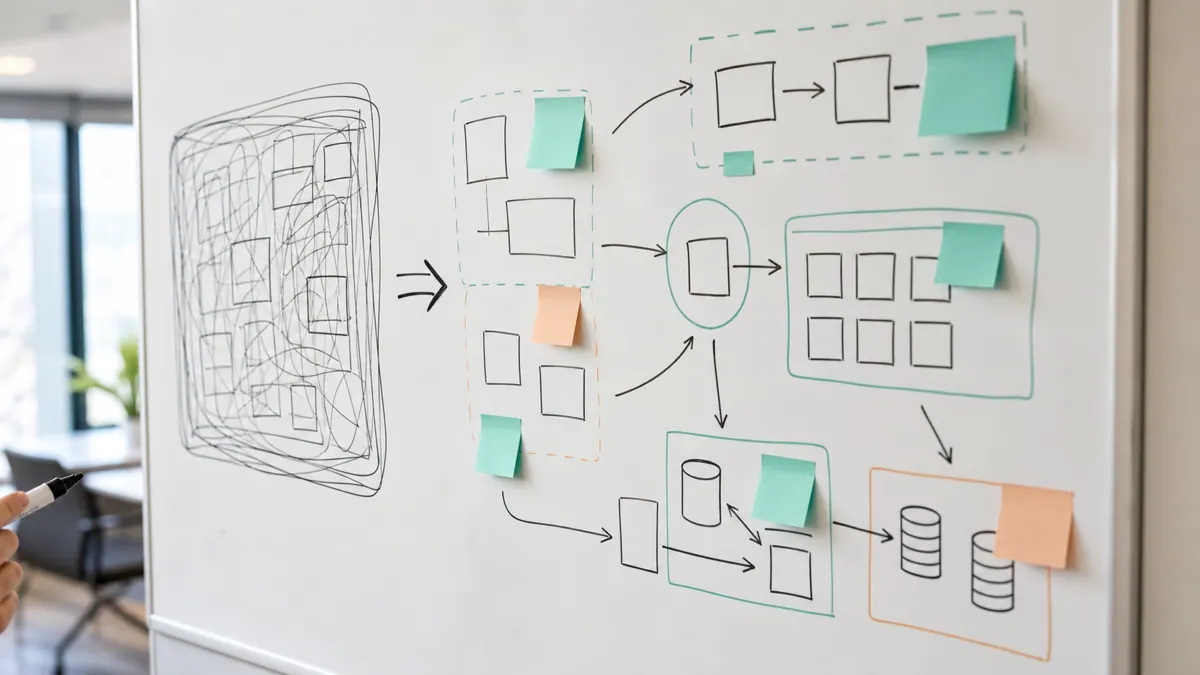
You cannot modernize what you have not mapped. Before writing a line of new code, spend real time on assessment — it is the cheapest risk reduction you will ever buy.
- Inventory the system. What are the components, what talks to what, where does the data live, and which integrations are load-bearing?
- Find the risk hot spots. Where are the end-of-life runtimes, the un-upgradeable dependencies, the parts with no tests, the code nobody understands?
- Rank by business value and risk. A high-risk, high-value module (the thing that takes payments) gets attention before a low-risk, low-value one (an internal report nobody reads).
- Establish a safety net. Add characterization tests around the behavior you must preserve before you change it, so you can prove you did not break anything.
This is also where an outside review earns its keep — a fresh reading of the codebase surfaces the landmines the current team has learned to walk around. If you inherited the system with no documentation, our guide on inheriting a codebase from a developer who left covers how to build that map from scratch.
Strangler fig: how to modernize without a big-bang rewrite
The single most important pattern in 2026 modernization is the strangler fig. The name comes from a vine that grows around a tree and gradually replaces it. In software, you put a routing layer in front of the old system, then build new functionality — or rebuilt versions of old functionality — as separate modules behind that layer. One route at a time, traffic shifts from old to new. When a piece is fully replaced, you delete the old code.
Why this beats a big-bang rewrite:
- The business keeps running the whole time. Nothing goes dark on a cutover weekend.
- Risk is bounded to one module at a time, and each step is reversible.
- Value ships continuously instead of all-or-nothing at the end.
- You can stop when the system is "good enough" — you are not committed to replacing everything.
A common concrete version: an aging app on an unsupported runtime gets a modern layer — often a Next.js 16 front end and a current Node.js 24 service tier — added alongside it. New features are built in the modern stack, and old screens are migrated one at a time. The legacy code shrinks every month instead of being frozen for a year-long rewrite.
Where the real work usually is: data and dependencies
Two areas quietly consume most of a modernization budget, and both are worth calling out.
The database. Old systems often run on aging or awkward data stores — a SQLite file doing a Postgres job, an unversioned schema, or a database with business logic buried in stored procedures nobody documented. Migrating data safely is its own discipline: you dual-write, verify, and cut over carefully. Our walkthrough on moving from Prisma SQLite to Postgres shows the shape of a careful data migration.
Dependencies and runtimes. Getting current on the framework is often the highest-leverage single move, because it restores security patches, hiring pool, and access to modern tooling. If the front end is a decade-old CMS or template stack, moving it to a modern framework is frequently worth it on its own — see WordPress to Next.js migration for how that specific jump plays out.
A note on AI: modernization tooling in 2026 is genuinely better because AI assistants can help read and explain unfamiliar code, draft characterization tests, and speed up mechanical refactors. But AI does not remove the need for a plan — it accelerates a good one and amplifies a bad one. Treat it as a power tool, not a strategy.
A realistic timeline and budget
There is no single number, but the shape is predictable. Modernization done right is phased, and each phase should deliver something usable.
| Phase | Typical focus | Rough effort |
|---|---|---|
| Assessment | Inventory, risk map, safety-net tests | 1–3 weeks |
| Stabilize | Patch security, add CI, fix the scariest failures | 2–6 weeks |
| Modernize (per module) | Refactor/replatform behind a routing layer | ongoing, module by module |
| Decommission | Delete replaced legacy code | as each module lands |
For small-to-mid businesses, phases commonly land in the low-thousands-of-dollars range each — projects like this usually run in fixed-scope milestones rather than one open-ended contract. That structure is deliberate: it means you can stop, re-prioritize, or pause after any milestone with a working system in hand, instead of being locked into a rewrite that only pays off at the very end.
Frequently asked questions
Should I modernize or just rewrite from scratch? Rewrite only the components that genuinely cannot support the business anymore. For most systems, a phased refactor-and-replatform approach behind a strangler-fig routing layer delivers value sooner and carries far less risk than a full rewrite, which produces nothing usable until the day it ships.
How do I modernize without downtime? Put a routing layer in front of the old system and replace it one module at a time, shifting traffic gradually. Each step is small, reversible, and ships while the business keeps running — no big-bang cutover weekend.
What is the first step in a legacy modernization project? Assessment. Inventory the components and integrations, map the risk hot spots (end-of-life runtimes, untested code, dead-end dependencies), and add characterization tests around critical behavior before you change anything.
How much does legacy software modernization cost? It depends on the system, but phased modernization is usually billed as fixed-scope milestones in the low thousands of dollars each, rather than one large rewrite fee. The advantage is you can stop or re-prioritize after any milestone with a working system.
If your app has become expensive and scary to change, you do not need a year-long rewrite — you need a plan. SprintX assesses legacy systems, stabilizes the risky parts first, and modernizes module by module with fixed-scope milestones, an NDA if you want one, and code you fully own at every step. Get in touch and we will map the safest path forward for your system.
Building software
Systems your business runs on.
Custom platforms, internal tools and integrations that move work off spreadsheets.
Keep reading.
More on building software
Building software · 6 Aug 2026 · 6 min read
I Cannot Get My Code Out of the Builder
What to do when a no-code or AI builder will not hand over your code: what each export really contains, how to extract the missing pieces, and the runway plan.
Building software · 28 Jul 2026 · 6 min read
How to Get Your Code Off Replit
Replit gives you real files, but not a portable app. Here is how to get the code out, replace the platform-specific pieces, and run it on infrastructure you own.
Building software · 28 Jul 2026 · 6 min read
How to Get Your App Out of Base44
Base44 hands you a frontend and keeps the backend. Here is what you can actually export, what has to be rebuilt, and the order that keeps the app running.