n8n Consulting: Self-Hosted Automation Done Right
What an n8n consultant actually does, when self-hosted automation beats Zapier or Make, and how to scope a workflow build that runs reliably.
 SprintX Team8 min read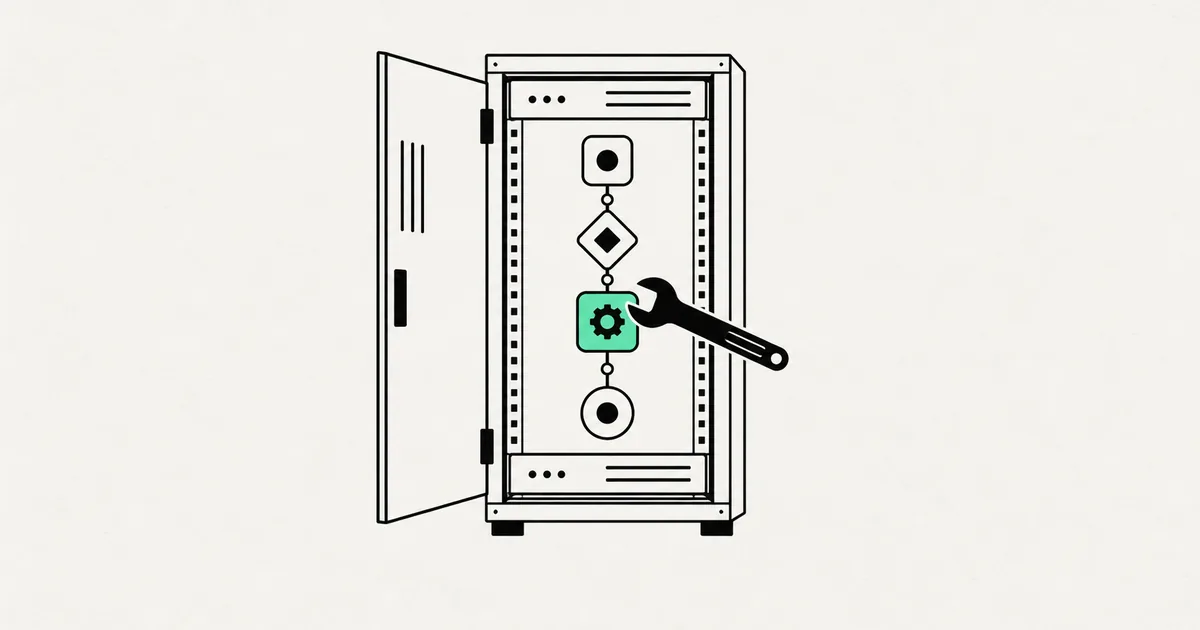
n8n is one of the best things to happen to business automation in years — an open, self-hostable platform that connects your tools, runs AI agents, and does not bill you per task while your workflows scale. But "self-hostable and free" is exactly where a lot of businesses get into trouble. They spin up a server, wire together a few workflows, and six months later have a sprawl of half-documented automations that nobody fully understands and that fail silently at the worst moments. Good n8n consulting is the difference between that and a system you can actually trust.
This guide covers when self-hosted automation is the right call in 2026, what an n8n consultant actually does, what it costs, and how to scope the work so you end up with reliable plumbing rather than a fragile pile of workflows.
Why n8n, and why self-hosted
The automation market gives you three broad choices. Zapier has the widest app library and per-task pricing. Make offers a visual canvas and per-operation pricing. Both are cloud-only. n8n is the one you can self-host — run it on your own server, keep your data in your own environment, and pay for infrastructure instead of per-task fees.
That self-hosting is the whole point for a lot of businesses. It matters when:
- Volume is high enough that per-task pricing hurts. Cloud tools are cheap until they are not; at scale, execution-based or per-task billing can dwarf the cost of a small server.
- Data privacy matters. Healthcare, legal, finance, or anyone who would rather their customer data never leave their own infrastructure.
- You want deep control. Custom code steps, self-hosted AI models, and logic that cloud tools make awkward.
As of 2026, n8n's current generation (the 2.0 line released early in the year) leans hard into AI — native LangChain support, a large library of AI nodes, and an Agent node with tool-calling and memory. That makes it one of the most capable platforms for building AI-driven automations you actually own. We cover the platform trade-offs in n8n vs. Make, and if you are new to it, what is n8n is the primer.
What an n8n consultant actually does
The node editor makes n8n look easy, and building a demo workflow is easy. Making one that runs unattended for a year without corrupting your data is not. A good consultant earns their fee in the parts you do not see in a tutorial.
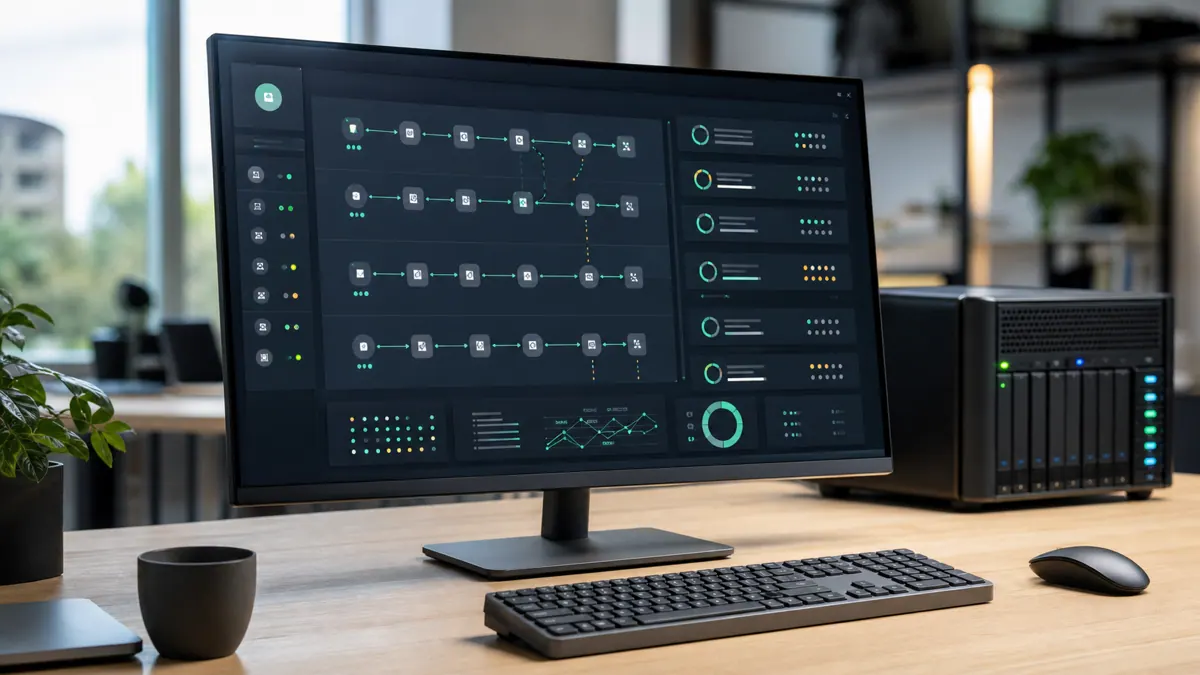
- Architecture. Deciding what should be one workflow versus several, where to put shared logic, and how to keep the whole system understandable as it grows.
- Reliable error handling. Retries, error workflows, and alerts so a failure pages you instead of silently dropping records. This is the single biggest gap in DIY setups.
- Hosting and security. Standing up n8n properly — HTTPS, backups, credential encryption, access control, and a plan for updates — instead of an exposed instance on a forgotten server.
- Real integrations. Connecting the specific APIs your business runs on, including the ones without a pre-built node, via custom HTTP calls handled correctly.
- AI agents where they help. Using the Agent node and AI steps for genuine judgment tasks, not sprinkling AI where a simple rule would be more reliable.
- Documentation and handoff. Leaving you with workflows you (or the next person) can understand and maintain.
What n8n consulting costs
Two costs sit side by side, and it helps to separate them.
| Cost | What it covers | Rough 2026 anchor |
|---|---|---|
| Hosting (infrastructure) | The server n8n runs on | Often ~$5–40/mo for a small VPS; more at scale |
| Consulting / build | Designing and building the workflows | Project-based, quoted per scope |
| Ongoing maintenance | Updates, monitoring, changes | Optional retainer or per-change |
The hosting number is genuinely small — a modest server runs n8n for most businesses, and that is a big part of the appeal versus per-task cloud pricing. The consulting cost is where the value lives, and it tracks complexity: a couple of clean workflows is modest, while an end-to-end operational system spanning many tools is a real project, usually phased across milestones. Treat every figure here as a ballpark, not a quote. For the wider picture, our AI automation cost guide breaks down what drives the number.
What this looks like in practice
A common engagement is migrating a business off a cloud tool it has outgrown. One recurring pattern: a company running everything through Make hits the point where per-operation costs climb and they want their data on their own infrastructure. The work is a Make.com to self-hosted n8n migration — rebuilding each workflow on n8n, this time with proper error handling and monitoring, standing up the server securely, and documenting the whole system so the team is not dependent on one person's memory. The payoff is lower running cost, full data ownership, and automations that fail loudly instead of silently. That last part is what separates a professional build from a DIY one.
A caution about DIY n8n
n8n's approachability is a double-edged sword. It is realistic to build useful workflows yourself, and for simple internal automations you probably should. The trouble starts when business-critical processes run on workflows that:
- Have no error handling, so a failed step quietly drops data.
- Live on an insecure or unmonitored server.
- Exist only in one person's head, with no documentation.
- Break the moment an API changes and nobody notices for weeks.
If your automations are convenience, DIY is fine. If your revenue, invoicing, or customer experience depends on them, the reliability engineering is the whole job — and that is what consulting buys. The failure mode we get called to fix most is "our automations used to work and now something is silently broken," which is almost always a missing-error-handling problem baked in at the start.
Frequently asked questions
What does an n8n consultant do? An n8n consultant designs, builds, and hosts self-hosted automation workflows — handling architecture, reliable error handling, security, real API integrations, and documentation. The value is in making automations that run unattended and fail loudly, not just building a workflow that demos well.
Is n8n really free? The self-hosted community edition is free to run under n8n's Sustainable Use License for internal business use; you pay only for the server it runs on, often a small monthly cost. n8n Cloud uses execution-based pricing. The main real cost for a serious system is the consulting and build work, not the software.
When should I choose self-hosted n8n over Zapier or Make? Choose self-hosted n8n when task volume makes per-task pricing expensive, when data privacy requires keeping information on your own infrastructure, or when you need deep control like custom code and self-hosted AI models. Zapier and Make are cloud-only and can be the better call for simpler, standard flows.
Can I build n8n workflows myself instead of hiring a consultant? Yes, for simple internal automations. Hire a consultant when the workflows are business-critical — that is where error handling, secure hosting, monitoring, and documentation matter, and where DIY setups tend to fail silently.
Self-hosted automation is powerful, but only if it is built to run unattended and fail loudly. SprintX designs, builds, and migrates n8n workflows on a fixed-scope, milestone-based quote — secure hosting, real error handling, and full documentation, with you owning the server, the workflows, and the credentials. Tell us what you want automated and we will scope it before you commit.
AI agents and automation
AI agents that do the work.
We build agents and automations for the repetitive work your team does by hand, and measure what they save.
Keep reading.
More on ai agents and automation
AI agents and automation · 18 Jul 2026 · 8 min read
AI-Powered Lead Generation Services: What an Automation Agency Actually Builds
A plain-English look at what "AI lead generation services" really means in 2026 — the systems an automation agency builds, what they cost, and where they go wrong.
AI agents and automation · 18 Jul 2026 · 8 min read
Ecommerce Order Management: How to Automate It End-to-End
How to automate ecommerce order management from checkout to delivery — the lifecycle, the tools, and where manual work quietly costs you money.
AI agents and automation · 18 Jul 2026 · 8 min read
Sales Automation That Reps Actually Use: A 2026 Guide
A practical 2026 guide to sales automation that reps adopt instead of resent — what to automate, what to keep human, and how to roll it out.