Software Development for Startups: MVP to Scale Without a Full-Time Team
A founder-focused guide to software development for startups — how to ship an MVP and scale it without prematurely building a full-time engineering team.
 SprintX Team8 min read
The instinct when you have a product idea is to hire engineers. It feels like the serious move — you have a startup, startups have engineering teams, so you post a job. But a full-time team is the most expensive, least reversible commitment you can make before you know whether anyone wants what you are building. Salaries, benefits, recruitment, and the sheer time-to-hire all land before you have shipped a single feature to a real user. For most early-stage founders, that is exactly the wrong order.
There is a better path, and it is how sensible software development for startups actually works: get to a real MVP fast with a partner, validate it with actual users, and only build permanent headcount once you know what you are scaling. This guide walks that path — MVP to scale — and is honest about what it costs, where it goes wrong, and when you should finally hire.
Why hiring a full-time team first is usually a mistake
Before product-market fit, your biggest risk is not "can we build it" — it is "should we build this at all." A full-time team optimises for the wrong risk:
- It is slow to assemble. Good engineers take months to hire and onboard. That is months before you learn anything.
- It is expensive to be wrong with. If the first idea does not land — and often it does not — you are now pivoting with payroll running.
- It locks in decisions early. The team you hire for v1 shapes the architecture and the culture before you know what the product needs to be.
None of this means engineers are bad. It means the sequence matters. Validate first, staff second.
The MVP-to-scale path
Think of it in three stages, each with a different right answer for who builds it.
| Stage | Goal | Who should build it |
|---|---|---|
| Validate | Prove people want it, ship a focused MVP | A fixed-scope partner or a very small senior team |
| Grow | Real users, iterate on what works | Partner continuing, or first key hires |
| Scale | Reliability, performance, a real roadmap | A core in-house team, supported as needed |
The mistake is jumping straight to stage three. You do not need scale-grade infrastructure or a ten-person team to answer "does anyone want this." You need the smallest honest version of the product in front of real users.

What actually goes in a startup MVP
An MVP is not a prototype and it is not a toy — it is the smallest thing that delivers real value and can survive real users. The discipline is subtraction. For most startups, an MVP includes:
- The one core loop — the single workflow that is the reason the product exists. Everything else waits.
- Authentication and data — usually a managed backend like Supabase (Postgres, auth, storage) so you are not building plumbing.
- A clean, credible UI — good enough that users trust it, not gold-plated.
- The one integration you cannot ship without — payments via Stripe's current API line, or whatever your core loop demands.
Everything you are tempted to add "while we are at it" is a candidate for cutting. Our guides on what an MVP is and building a SaaS MVP go deep on scoping the smallest viable version.
Where AI and vibe-coding fit — and where they do not
In 2026 you can get a startlingly good prototype out of a vibe-coding tool like Lovable or Bolt.new in an afternoon. That is genuinely useful for testing an idea or a pitch. What those tools do not give you is a production-ready product — auth that holds up, data that is safe, payments that reconcile, and code you can build on without it collapsing under its own weight. A very common and reasonable path is: prototype fast in a vibe-coding tool, then harden it into something real. Just do not mistake the prototype for the finished product; the gap between "demo works" and "handles real users and real money" is exactly where startups get stuck.
What it costs
Building a startup MVP with a partner is dramatically cheaper than a year of full-time salaries, and the numbers are knowable. As planning anchors for 2026:
- A focused MVP aimed at validation typically lands in the low tens of thousands, often delivered in phases so you are not committing the whole budget before you see value. Many specialist teams — us included — work in milestone phases in the low-thousands-per-phase range.
- A full-time senior engineer, by contrast, is a six-figure annual commitment before you have shipped anything.
The point is not that partners are always cheaper forever — at scale, in-house wins. It is that before validation, a fixed-scope partner lets you spend a fraction of the money to learn the most important thing. Our MVP development cost guide breaks the ranges down in detail.
When you SHOULD hire a full-time team
Fixed-scope partners are the right tool early. There is a real point where in-house becomes correct, and it is worth naming so you do not stall:
- You have found product-market fit. Demand is real and repeatable, and the roadmap is now about depth, not discovery.
- The product is your core IP and you need the knowledge to live in-house permanently.
- Iteration speed is your edge and the overhead of coordinating externally is now slowing you down.
- You can afford it without betting the company. Payroll should be a considered investment, not a gamble.
A healthy transition is gradual: a partner builds and stabilises the product, then hands off a clean, documented, owned codebase to the team you hire — no rewrite required. That handover only works if you owned the code all along, which is why ownership terms matter from day one.
What this looks like in practice
A recurring pattern we see with founders: they build a first version themselves or on a vibe-coding platform, get early interest, and then hit the wall — it works in a demo but falls over with real users, burns API credits, or cannot take a payment reliably. The productive move is rarely "hire five engineers." It is a fixed-scope engagement to take the validated idea to a production-ready MVP: proper auth, a real database, payments that reconcile, deployed properly, with the repo in the founder's own account. Then they raise or grow into hiring from a position of knowledge rather than hope. If you are weighing the staffing question specifically, our companion piece on IT staff augmentation companies covers the trade-offs.
Frequently asked questions
Do I need a technical co-founder to build a startup? It helps, but it is not mandatory. Plenty of non-technical founders ship successful products by partnering with a strong development team for the build, retaining ownership of the code, and bringing engineering in-house once the product is validated and funded. What you cannot skip is enough technical judgement to hold a partner accountable.
How long does it take to build a startup MVP? A focused MVP typically takes on the order of 6–12 weeks from a signed scope, depending on how disciplined you are about cutting features. The single biggest lever on timeline is scope: every "while we're at it" feature pushes launch — and learning — further out.
Should I use a vibe-coding tool or hire a developer? Use both, in sequence. Vibe-coding tools like Lovable or Bolt.new are excellent for fast prototypes and testing an idea. When you need something users and payments can rely on, harden it into a production build. The tools are a starting point, not a finish line.
Is it cheaper to outsource or hire in-house for a startup? Before product-market fit, a fixed-scope partner is almost always cheaper and lower-risk than full-time salaries — you spend a fraction to learn whether the idea works. After fit, when the product is your core and iteration speed is your edge, in-house usually wins. Sequence it: partner first, hire once you know what you are scaling.
Have an idea, or a rough first version that needs to become real? SprintX takes startups from MVP to production on fixed-scope, milestone-based quotes — NDA-friendly, production-ready as the definition of done, and you own the repo the whole way, so hiring in-house later is a clean handover. Get in touch and we will scope the smallest honest version of your product.
Building software
Systems your business runs on.
Custom platforms, internal tools and integrations that move work off spreadsheets.
Keep reading.
More on building software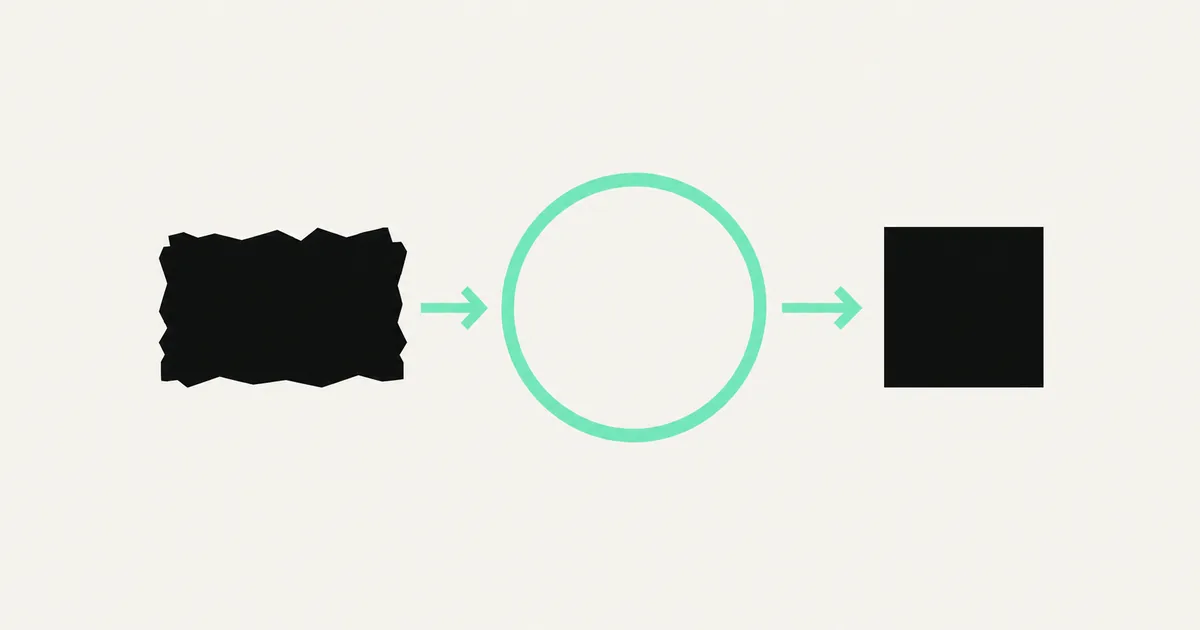
Building software · 11 Jul 2026 · 9 min read
From Vibe-Coded MVP to Production-Ready App
A practical roadmap for hardening a vibe-coded or AI-generated MVP into a real production app — security, data, testing, and deployment.

Building software · 14 Aug 2026 · 7 min read
Monitoring and Alerts for a Small SaaS
You do not need an observability stack. You need about six alerts that catch the failures that cost you money, and the discipline to keep the rest quiet.
Building software · 13 Aug 2026 · 8 min read
Retrofitting Multi-Tenancy Into a Single-Tenant App
Your app assumes one company per account and a customer just asked for teams. Here is how to add tenancy to a live product without a rewrite or a data leak.