AI Answering Service for HVAC: Never Miss a Service Call
How an AI answering service for HVAC captures every call, triages no-heat emergencies, and books jobs around the clock without a call center.
 SprintX Team8 min read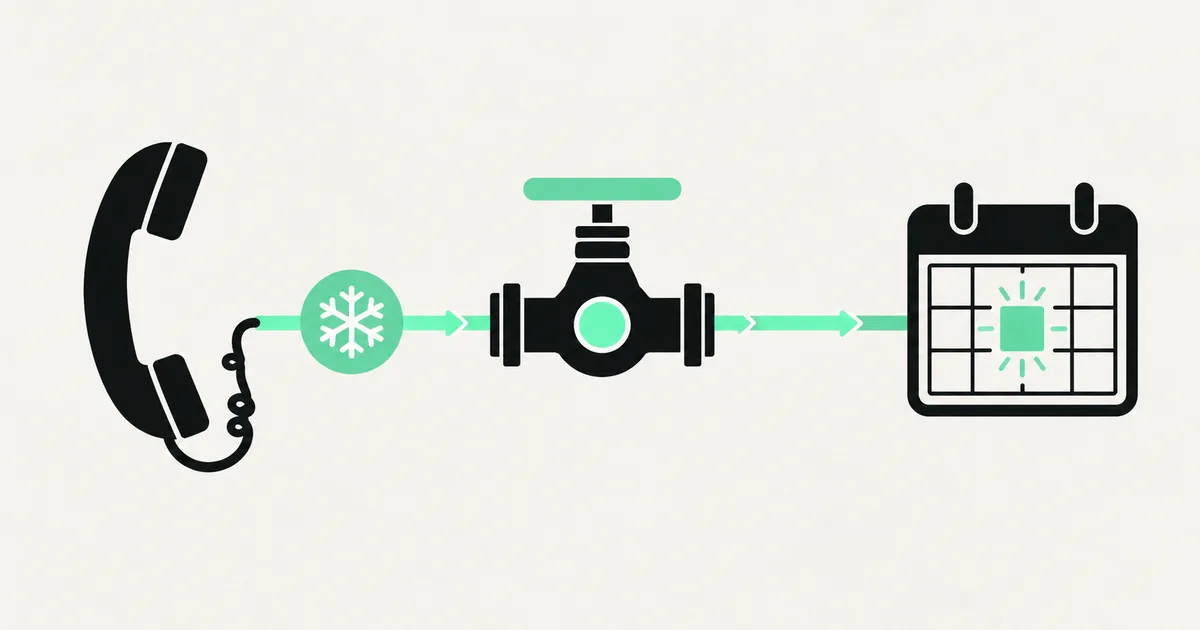
It is the first freezing night of the year. A homeowner's furnace dies, they Google "HVAC near me," and they start calling. The first company to answer with a human voice and a "we can be there tomorrow morning" gets the job. Everyone who sends them to voicemail gets nothing. For HVAC contractors, that scene plays out every heat wave and every cold snap — and the technician who could answer the phone is usually up a ladder with their hands full.
An AI answering service fixes the structural problem: you cannot be on the roof and on the phone at the same time. It answers every call instantly, triages emergencies, books routine jobs into your schedule, and does it at 2 a.m. on a holiday weekend without a call center. Here is how it works for HVAC specifically, what it costs, and where it fits.
Why HVAC loses more calls than most trades
HVAC has a brutal combination of factors that make missed calls especially costly:
- Demand spikes with weather. The exact moment your phone rings most is the moment your whole crew is slammed — nobody is free to answer.
- Emergencies do not wait. No heat in winter or no AC in a heat wave is urgent. Those callers dial the next number in seconds, not hours.
- After-hours is prime time. Systems fail at night and on weekends, precisely when your office is closed.
- Jobs are high-value. A single booked repair or install dwarfs the monthly cost of never missing one.
Voicemail is where these leads go to die. An AI answering service picks up on the first ring, in parallel, no matter how many people call at once.
What an AI answering service does for HVAC
A well-built voice agent handles the call the way your best dispatcher would:
- Answers instantly, 24/7, in your company's voice.
- Triages urgency — a no-heat emergency in January is not the same as a spring tune-up, and the agent treats them differently.
- Captures the essentials — name, address, system type, and the nature of the problem.
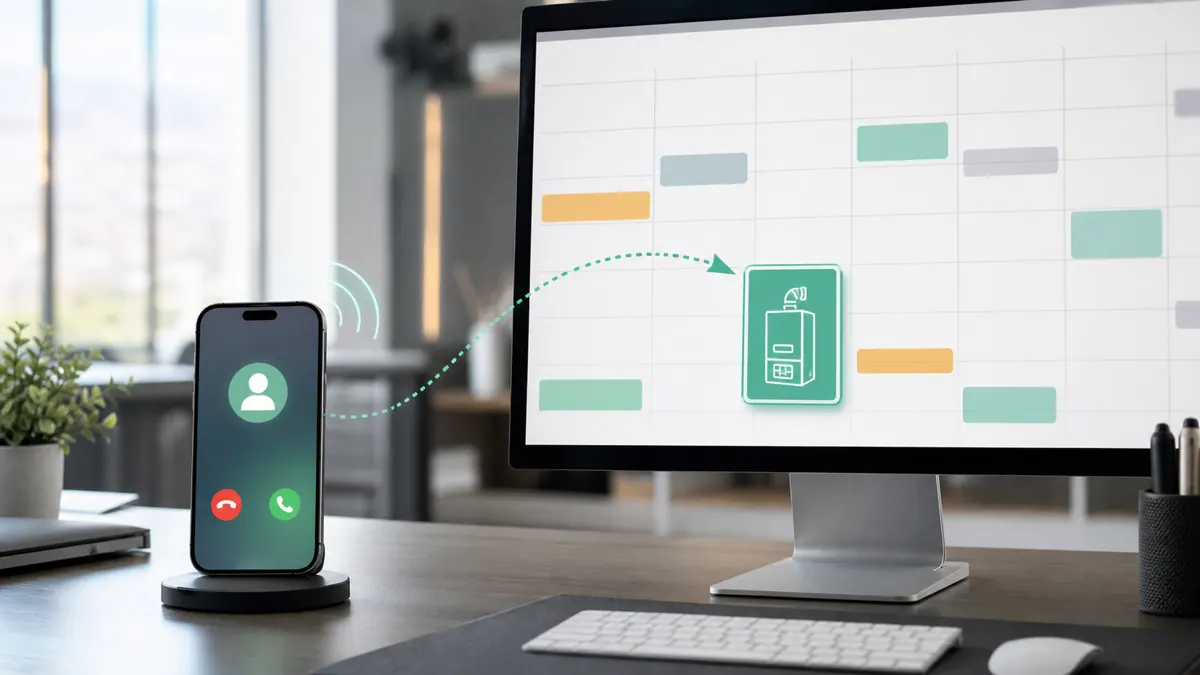
- Books the job by checking your live schedule and confirming a window by SMS.
- Escalates true emergencies by routing to your on-call tech with the details attached, based on rules you set.
The payoff: every caller gets a real response, emergencies get flagged, and routine jobs land on the calendar without your team touching the phone. Your techs stay on the tools instead of stopping mid-job to answer, and your office manager stops playing phone tag with people who already called someone else. The general economics — setup, per-minute, retainer — are the same across trades, and we break them down in our AI receptionist cost guide.
It also handles the calls that are not jobs at all — solicitations, wrong numbers, and vendors — without wasting a human's time, so your team only sees the conversations that actually matter. Over a busy season, that filtering alone gives a small crew back hours a week.
Emergency triage is the feature that matters
For HVAC, the single most valuable thing the agent does is tell an emergency from a routine call — and act accordingly. A generic bot that treats every call the same either annoys tune-up callers with urgency questions or, worse, schedules a frozen family for next Tuesday.
A good build encodes your dispatch logic: which symptoms count as emergencies, what your after-hours policy is, when to offer the next available slot versus route to an on-call tech, and how to handle a caller who is clearly a sales solicitation rather than a customer. That logic is exactly what turns "an answering machine that talks" into something that actually protects revenue. Booking-heavy trades benefit from the same automation we describe in how to automate appointment booking.
What it costs
Same three-part structure as any custom voice agent: a one-time build, per-minute usage, and a monthly retainer. Realistic 2026 anchors, not quotes:
| Component | What it covers | Typical range |
|---|---|---|
| Setup (one-time) | Call flows, triage logic, scheduling integration, phone number, testing | $3,500 – $9,000 |
| Per-minute usage | Speech-to-text, LLM, text-to-speech during calls | ~$0.05 – $0.30/min |
| Monthly retainer | Monitoring, seasonal tuning, updates | $300 – $900 |
Per-minute pricing depends on the voice stack — platforms like Vapi and Retell bill by talk time, and as of mid-2026 all-in rates commonly land in the $0.05–$0.30 range. Put that next to a single missed emergency install and the math is not close. A human answering service runs roughly $1–$2/min and still queues callers during a storm; the AI answers everyone at once. For a small operation, our AI receptionist for small business guide covers the lighter end of this.
In practice: how we build these
A typical HVAC engagement starts by mapping dispatch logic with the owner: the emergency symptoms, the after-hours policy, the service area, and the questions that qualify a job. We build the agent on a voice platform like Vapi or Retell, connect it to the scheduling tool the crew already uses so booked jobs show up on the real calendar, and tune it against recordings of actual calls until the triage is right and the voice sounds like the company. We ship it in fixed-scope phases — an "answer and book" agent first, then emergency escalation and CRM writes — so the contractor sees booked jobs before paying for the full system, and owns the whole thing with no lock-in. It is the same production-first discipline we apply to making a voice agent fast enough for real-time calls.
Frequently asked questions
Can an AI answering service tell an emergency from a routine call? Yes, when it is built to. The agent encodes your dispatch rules — which symptoms are emergencies, your after-hours policy, and when to route to an on-call tech — so a no-heat call in winter is handled very differently from a spring tune-up request.
Will it book jobs directly into my schedule? It can. A proper build connects to the scheduling tool your crew already uses, checks live availability, books the window, and confirms with the customer by text — so jobs land on the real calendar without office staff retyping anything.
Is an AI answering service better than a call center for HVAC? For most contractors, it answers instantly and in parallel at a fraction of the per-minute cost, with no hold queue during a storm. Call centers still have a place for complex human conversations, but the AI captures the calls you would otherwise lose to voicemail.
How much does an AI answering service for HVAC cost? Expect a one-time build in roughly the $3,500–$9,000 range, per-minute usage around $0.05–$0.30, and a monthly retainer of a few hundred dollars. It scales with call volume, and a single saved emergency job often covers months of it.
How fast can it be up and running? A focused answer-and-book agent is often live within one to three weeks, depending on how much triage logic it captures and how many systems it connects to.
Missing service calls every time the weather turns? SprintX builds custom AI answering services for HVAC on Vapi and Retell — real emergency triage, live scheduling, and clean escalation — as fixed-scope, milestone-based phases you fully own. Get in touch for a straight quote on what yours would cost.
AI agents and automation
AI agents that do the work.
We build agents and automations for the repetitive work your team does by hand, and measure what they save.
Keep reading.
More on ai agents and automation
AI agents and automation · 18 Jul 2026 · 8 min read
AI Receptionist for Law Firms: Intake and Booking, 24/7
How an AI receptionist for law firms captures after-hours leads, runs first-pass intake, and books consultations without missing a call.

AI agents and automation · 18 Jul 2026 · 8 min read
AI Receptionist for Salons & Spas: Fill Your Calendar Automatically
How an AI receptionist keeps your chairs full: answering calls while you are mid-service, booking after hours, and rebooking cancellations before the slot goes cold.

AI agents and automation · 11 Jul 2026 · 8 min read
AI Receptionist Cost: What Businesses Actually Pay in 2026
A straight, no-hype look at what an AI receptionist really costs to set up and run in 2026 — and how it compares to a human answering service.