AI Voice Agents for Clinics & Healthcare: What's Possible
A grounded look at AI voice agents for clinics and healthcare — the calls they handle well, the compliance line, and where a human still has to answer.
 SprintX Team8 min read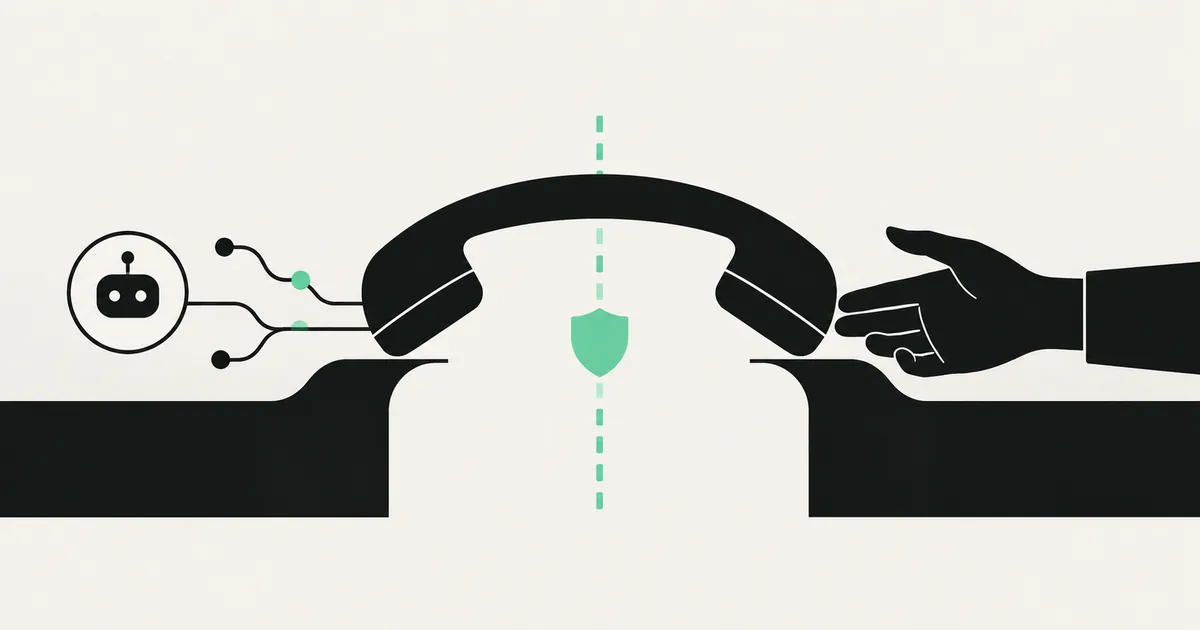
A patient calls your clinic at 8:05 in the morning to reschedule. So do eleven other people. The front desk is checking in a waiting room, answering the phone, and fielding a pharmacy fax all at once — and the twelfth caller gets voicemail, gives up, and books nowhere. Meanwhile, the practice loses an appointment slot it could have filled, and the patient's care slips a week.
The phone is the busiest, most understaffed part of most clinics. An AI voice agent can take a large share of that load — but healthcare is not a restaurant, and the honest answer is that some things it should do and some things it must not. This is a grounded look at what is actually possible for clinics in 2026, where the compliance line sits, and what it costs.
What an AI voice agent can genuinely handle
For routine, non-clinical calls, a voice agent built on a platform like Vapi or Retell answers instantly, every time, and never puts a patient on hold.
| Call type | What the AI does |
|---|---|
| Appointment booking | Checks live availability, books, confirms |
| Rescheduling & cancellations | Moves or frees the slot, updates the calendar |
| Reminders & confirmations | Outbound calls to cut no-shows |
| Hours, location, directions | Answers instantly, 24/7 |
| Insurance & pre-visit basics | Explains what to bring, accepted plans |
| Prescription refill requests | Captures the request, routes to staff |
| After-hours intake | Takes details, triages urgency, routes |
The pattern is the same as any well-scoped voice agent: it fully handles the repetitive, non-clinical calls and it captures-and-routes anything that needs a human. For a clinic, that alone can clear the morning phone spike and recover the appointments you currently lose to voicemail.

Where the line is: what it must not do
This is the part cheaper "just plug in a bot" pitches skip, and it matters more in healthcare than anywhere else.
- No diagnosis, no medical advice. The agent does not interpret symptoms or tell a patient what is wrong. It books, routes, and informs — nothing clinical.
- Emergencies route immediately. If a caller describes anything urgent, the agent's job is to direct them to call 911 or your emergency line, not to assess. This has to be designed in from the first call flow.
- Protected health information is handled carefully. The moment a call touches patient identity and health together, you are in HIPAA territory. That governs what is stored, where, for how long, and with which vendors you can even work.
- Escalation is always available. A patient who wants a human gets one. An agent that traps people in a loop is worse than voicemail.
A good build treats these as guardrails baked into the design, not disclaimers bolted on afterward.
The HIPAA reality
If your AI voice agent handles protected health information — and any real appointment call does — the vendors in your stack that touch that data are business associates and need a signed Business Associate Agreement (BAA). That single requirement rules out a lot of consumer AI tooling and shapes the whole architecture:
- Choose components that will sign a BAA. Not every model provider or telephony platform will. This constrains your stack and is non-negotiable.
- Minimize what you store. The safest design captures only what the workflow needs and avoids retaining call recordings or transcripts with PHI unless there is a clear, compliant reason.
- Encrypt and access-control everything. Data in transit and at rest, with logged access — the same discipline you would apply to your EHR.
- Integrate through compliant channels. Writing to your practice management system or EHR happens through supported, secured APIs.
None of this is exotic, but it is the difference between a demo and something you can put in front of patients. It is also why healthcare voice builds cost more than a generic receptionist — the compliance work is real.
What it costs a clinic
Pricing has a one-time build and ongoing usage, and healthcare sits at the higher end because of integrations and compliance.
| Item | Typical range |
|---|---|
| Setup (booking, triage routing, EHR/PMS integration) | $4,000 – $12,000 |
| Per-minute usage | $0.08 – $0.20 / minute |
| Monthly (platform + typical call volume) | $300 – $900 |
Weigh that against the cost of missed appointments and no-shows. A single recovered slot a day, plus a measurable drop in no-shows from automated reminders, usually covers the running cost several times over. For the broader cost picture across use cases, our AI receptionist cost guide breaks the components down; this piece is the healthcare-specific version of that same math.
How to roll it out sensibly
Do not flip the whole phone line to AI on day one. Stage it:
- Start after-hours and overflow. Let the agent take calls only when the desk cannot — nights, weekends, and when every line is busy. Low risk, immediate recovery of lost calls.
- Add reminders and confirmations. Outbound reminder calls are pure no-show reduction and touch minimal PHI.
- Expand to daytime booking and rescheduling once the flows are proven and the EHR integration is solid.
- Keep triage conservative. Route anything clinical or urgent to a human quickly. Err toward escalation.
Measure the same things you would judge a receptionist on: calls answered, appointments booked, no-show rate, patient complaints. If those move the right way, expand. You can see how we scope voice agents on SprintX — for healthcare the work is in the call flows, the escalation logic, and the compliant integration, not the underlying model.
Frequently asked questions
Is an AI voice agent HIPAA compliant? It can be, if it is built to be. That means every vendor touching PHI signs a BAA, data is minimized and encrypted, and access is controlled and logged. A consumer chatbot bolted onto your phone line is not compliant; a purpose-built system can be.
Can it book directly into our scheduling system? Yes. Connected to your practice management system or EHR through a supported API, it checks live availability, books, reschedules, and confirms without double-booking.
What happens in an emergency call? By design, the agent does not assess symptoms. If a caller signals urgency, it directs them to emergency services or your on-call line immediately. Emergency routing is a first-class part of the call flow, not an afterthought.
Will patients accept talking to an AI? Most accept it for routine tasks — booking, hours, refills — especially when the alternative is a busy signal or voicemail. The key is fast, natural handling and an easy path to a human whenever they want one.
Your front desk should not lose the 8 a.m. rush to voicemail. SprintX builds compliant AI voice agents for clinics that book appointments, cut no-shows, and route the calls that need a human — fixed-scope quote, and it is yours to keep. Tell us how your phones run today and we will map a safe, staged rollout.
AI agents and automation
AI agents that do the work.
We build agents and automations for the repetitive work your team does by hand, and measure what they save.
Keep reading.
More on ai agents and automation
AI agents and automation · 18 Jul 2026 · 8 min read
AI Receptionist for Law Firms: Intake and Booking, 24/7
How an AI receptionist for law firms captures after-hours leads, runs first-pass intake, and books consultations without missing a call.
AI agents and automation · 18 Jul 2026 · 8 min read
AI Answering Service for HVAC: Never Miss a Service Call
How an AI answering service for HVAC captures every call, triages no-heat emergencies, and books jobs around the clock without a call center.
AI agents and automation · 18 Jul 2026 · 8 min read
AI Receptionist for Salons & Spas: Fill Your Calendar Automatically
How an AI receptionist keeps your chairs full: answering calls while you are mid-service, booking after hours, and rebooking cancellations before the slot goes cold.