LangChain vs LlamaIndex in 2026: Which for Your RAG App?
A practical, hype-free comparison of LangChain and LlamaIndex for building RAG and agent apps in 2026 — strengths, overlap, and how to choose.
 SprintX Team8 min read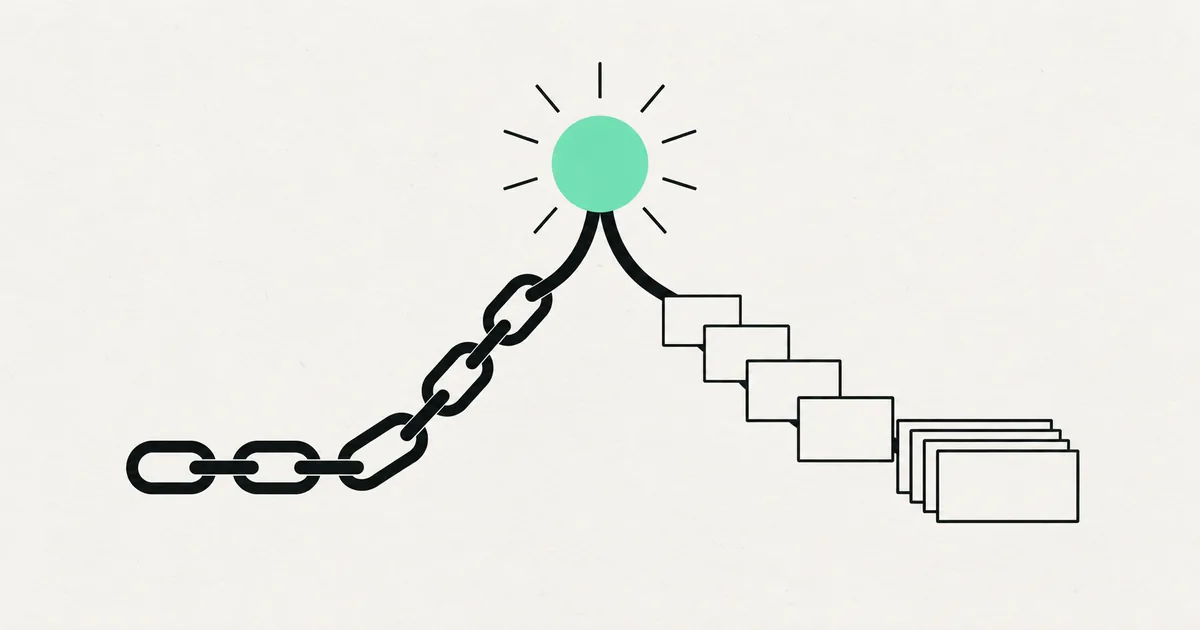
If you have started building anything that answers questions over your own data, you have hit the same fork in the road everyone does: LangChain or LlamaIndex? The internet is full of hot takes declaring one dead and the other the winner, and almost all of them are out of date. In 2026 the honest answer is that both are healthy, both can build a solid RAG app, and they have quietly grown into each other's territory — which makes the choice more about your center of gravity than about a feature checklist.
Here is what each framework is genuinely best at now, where they overlap, and a clear way to decide.
The one-line difference
LlamaIndex was born to do one thing extremely well: connect your data to a language model and retrieve the right piece of it at the right moment. LangChain was born to orchestrate — to chain steps, call tools, and coordinate multi-step agent workflows. Over the last two years each grew toward the other, so both can now do retrieval and both can do agents. But their DNA still shows.
The durable framing for 2026: LlamaIndex leans toward retrieval quality; LangChain leans toward agent orchestration. Neither is wrong for RAG — they just optimize for different halves of the problem.

LlamaIndex: when retrieval quality is the whole game
If your app lives or dies on finding the exactly-right passage out of a large, messy corpus, LlamaIndex is the natural home. It puts its best thinking into the retrieval layer: how documents get parsed and chunked, how indexes are structured, how results get re-ranked, and how you route a query to the right index. When "the bot cited the wrong paragraph" is the failure mode you are fighting, this is where you want to be working.
It shines on document-heavy problems: a knowledge base over thousands of PDFs, a research assistant that needs to pull precise citations, an assistant over a large contract or policy library. If most of your engineering effort is going into making retrieval accurate rather than into complex branching logic, LlamaIndex keeps you close to the tools that move that needle. Our primer on what a RAG chatbot is walks through why retrieval quality dominates answer quality.
LangChain: when the workflow is the hard part
If the challenge is not "find the right paragraph" but "do a sequence of things" — call an API, decide what to do next, use a tool, loop, remember context across turns — LangChain's orchestration model fits better. It gives you the building blocks for agents that plan and act, and a large ecosystem of integrations for the tools those agents call.
LangChain is the stronger starting point when retrieval is just one step in a bigger flow: an agent that looks something up, then books a meeting, then updates a record. That is the same world as our how to build an AI agent guide — the retrieval matters, but it is one node in a graph of decisions, not the entire app.
They overlap more than the debates admit
Here is the part the "X is dead" posts miss: the frameworks have converged. LlamaIndex has real agent capabilities now, and LangChain has perfectly good retrieval. You can build a competent RAG chatbot in either. You will not hit a wall in LangChain because its retrieval is "too weak," and you will not hit a wall in LlamaIndex because it "can't do agents." For most business apps, either one gets you to production.
That is why framework choice is not the highest-stakes decision in your project. The things that actually determine whether your RAG app is good — how you chunk documents, which embedding model you use, where your vectors live, how you evaluate answers — are largely the same regardless of which framework wraps them. Choosing your vector store and your chunking strategy will move quality far more than picking a logo here.
Side by side
| Factor | LlamaIndex | LangChain |
|---|---|---|
| Core strength | Retrieval quality, data connectors | Orchestration, agents, tool use |
| Best fit | Document-heavy Q&A, precise citations | Multi-step agents, complex workflows |
| RAG capability | Excellent (its home turf) | Very good |
| Agent capability | Good and growing | Excellent |
| Ecosystem | Data-loading and indexing focused | Broad integration ecosystem |
| Learning curve | Gentler for pure RAG | Steeper, more surface area |
| When it is overkill | Complex branching agent logic | Simple "answer over these docs" apps |
Both are actively maintained and both work with the current model families — Claude (Opus 4.8, Sonnet 5, Haiku 4.5), the GPT-5 family, and the Gemini 3 family — so model support is not a differentiator. Framework support is now table stakes across the ecosystem.
What this looks like in practice
We have shipped RAG systems on both, and the choice usually follows the shape of the problem, not a preference. For a recent build — a chatbot trained on a consultant's library of course videos — the entire difficulty was retrieval: transcribe hours of video, chunk it sensibly, embed it, and reliably surface the right two minutes of content for a given question. That is LlamaIndex's wheelhouse, and leaning on its retrieval tooling saved real time. On a different project — an assistant that answered from documents but also had to take actions across a couple of systems mid-conversation — the orchestration was the hard part, and LangChain's agent model fit better. The lesson we keep relearning: pick the framework whose strength matches your hardest problem, and do not agonize, because a good team can build either well.
How to actually choose
Answer three questions:
- Is retrieval or orchestration your hard part? Finding the right content → LlamaIndex. Coordinating multi-step actions → LangChain. If it is genuinely both, you can combine them, or pick the one matching your team's stronger muscle.
- What does your team already know? Familiarity beats theoretical fit. If your developers know one well, that head start usually outweighs a marginal capability edge.
- How complex is the flow, really? For a straightforward "answer over these documents" app, either is fine and you should optimize the retrieval details instead. Save the agonizing for genuinely agentic products.
A common, sane pattern is to prototype quickly in whichever you know, prove the retrieval quality is there, and only reconsider if you hit a specific wall — which, for most business RAG apps, you never do.
Frequently asked questions
Is LangChain or LlamaIndex better for RAG in 2026? Both build strong RAG apps. LlamaIndex has a slight edge when retrieval accuracy over messy documents is the core challenge; LangChain has the edge when retrieval is one step inside a larger agent workflow. For a plain document-Q&A app, either is a fine choice and the retrieval details matter more than the framework.
Can I use LangChain and LlamaIndex together? Yes, and teams do — using LlamaIndex for the retrieval layer and LangChain for orchestration around it. It adds some complexity, so only combine them when each is clearly pulling its weight rather than out of indecision.
Is LangChain dead / is LlamaIndex dead? Neither. Both are actively developed and widely used in production in 2026. The "one is dead" takes are usually recycled from older release drama. Choose on fit, not on rumors.
Does the framework choice affect answer quality much? Less than people expect. Chunking strategy, embedding model, vector store, and evaluation move answer quality far more than which framework wraps them. Get those right first.
Picking a framework is the easy part — building retrieval that is actually accurate and cheap to run is where projects succeed or stall. SprintX builds production RAG systems on both LangChain and LlamaIndex, chosen to fit your problem rather than our habit, with retrieval tuned for accuracy and cost. Get a fixed-scope quote, keep full ownership, and tell us what your assistant needs to know so we can scope it right.
Cost, hiring and outsourcing
Start with a project, keep us on, or let us look after it.
Three ways to work with us, and how the first weeks run.
Keep reading.
More on cost, hiring and outsourcing
Cost, hiring and outsourcing · 18 Jul 2026 · 8 min read
FlutterFlow vs Bubble: Which No-Code App Builder Should You Pick?
A practical FlutterFlow vs Bubble comparison for founders deciding between a native mobile builder and a web app builder, with honest trade-offs.
Cost, hiring and outsourcing · 18 Jul 2026 · 8 min read
Zendesk Alternatives in 2026: Cheaper Support Stacks Compared
A 2026 comparison of Zendesk alternatives and cheaper support stacks — from lean help desks to AI-first tools to custom builds.
Cost, hiring and outsourcing · 18 Jul 2026 · 8 min read
Synthflow vs Vapi vs Retell: Choosing a Voice AI Platform in 2026
A hype-free 2026 comparison of Synthflow, Vapi, and Retell — no-code ease versus developer control — and how to pick the right voice AI platform.