IT Staff Augmentation Services: Scale Your Dev Team Fast
A practical guide to IT staff augmentation services — what it is, when it beats a full project team, what it costs, and how to add senior developers without the hiring lag.
 SprintX Team8 min read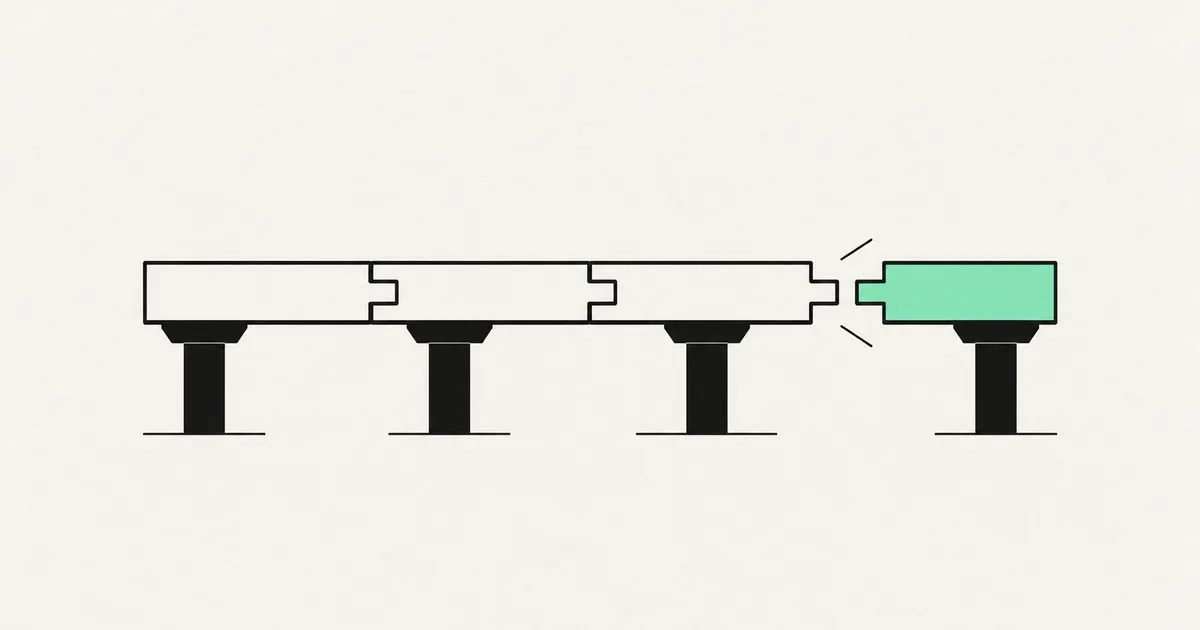
You have a roadmap that needs six engineers and a team that has three. Hiring the other three the traditional way means months of sourcing, interviewing, offers, notice periods, and onboarding — by which point the window you were building for has closed. That gap between "we need capacity now" and "we can hire it in Q4" is exactly the problem staff augmentation services solve.
Done well, it's the fastest legitimate way to add senior engineering capacity without the overhead of full-time hires. Done badly, it's a rotating cast of contractors who never learn your codebase. This guide covers what staff augmentation actually is, when it beats the alternatives, what it costs in 2026, and how to tell a real augmentation partner from a body shop.
What staff augmentation services actually are
Staff augmentation means adding external developers to your team, under your direction. They join your standups, work in your repository, follow your process, and report to your lead — but they're on the provider's payroll, not yours. You get the capacity and the control of an employee without the recruitment lag, the long-term commitment, or the HR overhead.
That's the crucial distinction from project outsourcing. With an outsourced project, you hand over a scope and receive a deliverable; the vendor manages the work. With staff augmentation, you manage the work — the augmented engineers are simply extra hands on your team, ramping on your product and integrating with your people. If you'd rather someone else own delivery end to end, that's a project engagement or hiring a custom software development company, not augmentation.
Staff augmentation vs the alternatives
Each model solves a different problem. Picking the wrong one is where money gets wasted.
| Model | You manage the work? | Best when | Ramp time |
|---|---|---|---|
| Staff augmentation | Yes | You have a plan, need more hands | Days to ~2 weeks |
| Project outsourcing | No (vendor does) | You need an outcome, not capacity | Weeks |
| Full-time hire | Yes | Permanent, core-team need | 2–4 months |
| Freelancer (solo) | Yes | Small, well-bounded task | Days |
Staff augmentation is the right call when you already know what to build and how — you just don't have enough people to do it on time. It's the wrong call when you don't have a clear plan or an engineering lead to direct the work; in that case you want a team that owns delivery, not extra hands waiting for direction.

When staff augmentation is the right move
A few situations where it consistently wins:
- A deadline your current team can't hit alone. A launch, a migration, a contractual delivery date — augmentation adds throughput without a permanent headcount decision.
- A specific skill gap. You need a React Native specialist for one mobile push, or someone who's shipped Stripe billing before, and it's not worth a full-time hire. Augmentation lets you rent the exact skill for the exact window.
- Uncertain or spiky demand. You're not sure the extra capacity is permanent. Augmentation lets you scale up now and scale down later without layoffs.
- Protecting your core team's focus. Offload well-defined workstreams to augmented engineers so your senior people stay on the architecture-critical work only they can do.
If instead you want a stable, long-running extension of your team rather than short bursts, look at hiring dedicated developers — same idea, but structured for continuity rather than surge capacity.
What it costs in 2026
Staff augmentation is priced per developer, usually monthly or as a blended hourly rate, and the number swings hard on seniority and region.
- Blended hourly rates land roughly $40–$150 as of mid-2026, depending on experience and where the engineer is based. Nearshore and offshore senior talent typically comes in well below US in-house all-in cost — often in the 40–60% lower range once you account for salary, benefits, recruitment, and overhead.
- The real comparison isn't rate, it's throughput. A faster, more senior engineer at a higher rate often costs less per shipped feature than a cheaper one who needs constant supervision. Judge total cost-to-ship, not the hourly number in isolation.
- No hidden employer costs. You don't pay benefits, equipment, office space, severance, or recruitment fees. That's a meaningful chunk of what a full-time hire actually costs, and it disappears with augmentation.
A useful reference point: our nearshore staff augmentation guide breaks down the time-zone and cost math in more detail if you're comparing regions, and at SprintX we scope augmentation this way as a matter of course.
How to vet a staff augmentation partner
The market is full of body shops that will send you whoever is on the bench. Here's how to find a real partner instead.
- Interview the actual engineer, not a sales rep. You're adding this person to your team. Screen them the way you'd screen a hire — a technical conversation, ideally a small paired exercise.
- Ask about ramp and continuity. How fast can they start, and will you keep the same person? A partner that swaps people mid-project resets your onboarding investment every time.
- Confirm time-zone overlap. Real-time collaboration is most of the value. A few hours of daily overlap turns a contractor into a teammate; twelve hours of gap turns every question into a next-day delay.
- Check how they handle code ownership and security. Your code stays in your repository, on your infrastructure, under your access controls. A serious partner is comfortable with NDAs and your security requirements from day one.
- Start with one engineer, not five. Prove the fit on a small commitment before you scale the engagement. A good partner welcomes this; a body shop pushes for the big contract up front.
What this looks like in practice
A pattern we see often: a founder or small team has a product half-built — sometimes started by a developer who has since gone quiet — and a roadmap they can't move alone. They don't need us to take over; they need a senior engineer or two who can drop into the existing codebase, get productive within a sprint, and work under the founder's direction to hit the next milestone. In modern engagements that developer is also fluent with current AI coding tooling, which meaningfully speeds ramp-up on an unfamiliar codebase — reading and mapping existing code is one of the things it genuinely accelerates. The engineer works your hours, in your repo, on your board, and the founder stays in control of priorities the whole way.
Frequently asked questions
What's the difference between staff augmentation and outsourcing? With staff augmentation, external developers join your team and you direct their work day to day — you own delivery. With outsourcing, you hand a scope to a vendor who manages the work and delivers an outcome. Choose augmentation when you have a plan and need capacity; choose outsourcing when you need someone else to own the whole result.
How fast can I add developers with staff augmentation? Much faster than hiring — often days to about two weeks, versus two to four months for a full-time hire. The provider already has vetted engineers available, so the timeline is mostly your interview and onboarding, not months of sourcing. That speed is the core reason teams choose augmentation for deadline-driven work.
Is staff augmentation cheaper than hiring full-time? Usually, once you count everything. You skip benefits, recruitment fees, equipment, office space, and severance, and nearshore or offshore senior talent often costs 40–60% less all-in than a US in-house hire. But the bigger saving is flexibility — you scale capacity up and down without long-term commitment.
Do augmented developers work in my codebase or their own? Yours. Augmented engineers work in your repository, on your infrastructure, under your access controls and your process — that's the whole point. A reputable partner is comfortable with your NDA and security requirements, and your code and cloud accounts stay entirely under your ownership.
Need senior developers on your team in days, not months? SprintX provides staff augmentation with vetted engineers who work in your repo, on your board, under your direction — NDA-friendly, time-zone aligned, and easy to scale up or down. You keep full control and ownership. Tell us the skill gap and the deadline, and we'll match you with the right engineer to start on a milestone you define.
Cost, hiring and outsourcing
Start with a project, keep us on, or let us look after it.
Three ways to work with us, and how the first weeks run.
Keep reading.
More on cost, hiring and outsourcing
Cost, hiring and outsourcing · 18 Jul 2026 · 8 min read
How to Choose a Custom Software Development Company (2026)
A founder-focused guide to choosing a custom software development company that ships production software you actually own — what to ask, what to avoid, and how the good ones work.
Cost, hiring and outsourcing · 18 Jul 2026 · 8 min read
Hire Dedicated Developers: Your Team, Our Payroll
A transactional guide to hiring dedicated developers on the your-team-our-payroll model: how it works, real costs, and how to get engineers started in weeks.
Cost, hiring and outsourcing · 18 Jul 2026 · 8 min read
Hire an LLM Engineer: What to Look For in 2026
A hiring guide for founders who need an LLM engineer who ships production AI — the real skills, honest rates, and how to spot people who only demo.