Taking a v0 App to Production
v0 gives you a genuinely good interface and almost no application behind it. Here is exactly what has to exist before that interface can meet real users.
 SprintX Team6 min read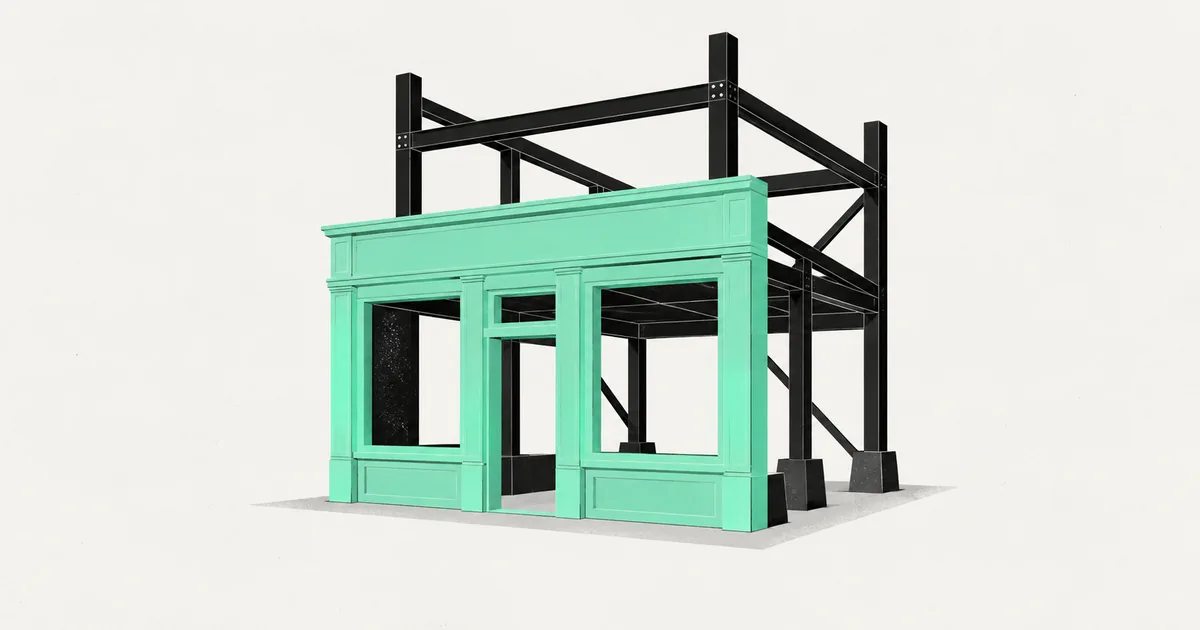
A v0 project looks further along than it is. That is not a criticism — it is the tool working exactly as designed. v0 is very good at producing an interface that looks like a shipped product, and interfaces are the thing founders and investors evaluate first.
The gap opens the moment someone tries to use it. The dashboard renders beautifully because the numbers are in an array at the top of the file. The table filters instantly because there are eleven rows. The settings form validates and shows a success toast, and nothing is saved anywhere.
So the work of taking a v0 app to production is unusually well-defined. You are not fixing bad code. You are building the application that the interface has been pretending to have.
What v0 actually gets right
Start with the good news, because it changes the plan.
The output is real React and Next.js, in TypeScript, using Tailwind and shadcn/ui components built on Radix primitives. That means keyboard handling, focus management, and ARIA roles in dialogs and menus are usually correct — which is more than most hand-rolled startup frontends can claim. The component structure is conventional, the naming is sane, and any React developer can read it on day one.
It is also plain code in a plain repository. There is no proprietary runtime to escape and no export process to survive, which puts v0 in a much better position than most builders. Bolt versus v0 is still a useful comparison if you are choosing a builder.
Treat the frontend as an asset to keep. The project is not a rescue. It is a half-built product where the finished half happens to be the visible one.
The seam is the data layer
Everything that makes an app an app sits behind the seam v0 does not cross.
| Looks finished | What is actually there | What has to be built |
|---|---|---|
| Dashboard with metrics | Hardcoded numbers in the component | Schema, queries, aggregation, caching |
| Data table with search and sort | An array of sample rows, filtered in the browser | Server-side pagination, filtering, indexes |
| Login and signup screens | Forms that navigate on submit | Real auth provider, sessions, protected routes |
| Settings form with a success toast | Local state and an optimistic message | Persistence, validation, error states |
| File upload with a progress bar | Simulated progress | Storage bucket, signed URLs, size and type limits |
| Billing page with plan cards | Static pricing markup | Stripe products, checkout, webhooks, subscription state |
The mistake to avoid is doing this in the order the screens appear. Build the schema first, then the access rules, then wire screens to it one at a time. Fixing the shape of your data after eight screens depend on it is the expensive version.
Where to put the data
Pick a database and an auth provider and commit. For most v0 projects that means Postgres — Supabase, Neon, or a managed instance — with a typed query layer such as Drizzle or Prisma between the app and the database. Auth goes to a real provider rather than being assembled from parts.
Once real rows exist, write the access rules before you write a single query. If you land on Supabase, row-level security roles and policies is the piece to read before you enable anything, because a table with RLS on and no policy behaves identically to a table nobody can read, and a table with RLS off behaves identically to a public API.
Server actions and route handlers are where auth quietly goes missing
This is the single most common serious defect we find in v0-derived apps, and it is specific to how Next.js works.
A server action is a public endpoint. It does not matter that the only button calling it is rendered inside a page you gated with a redirect — anyone can invoke it directly with the right request. Generated actions almost always assume the caller is legitimate, because the generator only ever saw the button.
Every server action and route handler needs three lines before it does anything else: who is the caller, are they allowed to touch this specific record, and is the input actually shaped the way you assumed. Parse the payload with a schema validator rather than trusting the types — TypeScript types are erased at runtime and provide exactly zero protection against a hand-crafted request. If that pattern is unfamiliar, why AI-generated apps keep shipping auth bypasses walks through what the exploit looks like in practice.
The things that only appear under real conditions
Loading and error states. Generated screens have one state: loaded, with data. Add pending states for every mutation, empty states for every list, and an error boundary that shows something honest instead of a white screen. A blank page in production is almost always an unhandled render error, and the blank white screen problem covers the diagnosis.
Real data volumes. Client-side filtering over a sample array becomes a full table scan over ten thousand rows shipped to the browser. Move filtering and pagination to the database and add indexes for the columns you sort on. Why an app gets slow the moment it has real data is the pattern in full.
Environment and deploy. Server-only secrets must not carry a public prefix, and the deploy needs preview environments so changes are seen before they are live. Deploying an app to Vercel covers the configuration, and if any generated route does heavy work inline, watch for function timeouts — long tasks belong in a background job, not a request handler.
Payments. Never treat a successful redirect as a paid subscription. Entitlement comes from a verified webhook writing to your database, which is the core of adding Stripe to a SaaS.
A realistic sequence
For a v0 app of roughly ten to fifteen screens, this is a two to four week path with one experienced engineer.
Week one. Schema and migrations, auth provider wired in, access rules written, three or four core screens reading and writing real data. No new features.
Week two. Every remaining screen connected. Validation on all inputs, at both the form and the server boundary. Loading, empty, and error states everywhere. Constraints on the database so duplicates and half-finished records cannot exist.
Week three. Payments if you need them, transactional email, rate limiting on anything expensive or public, structured logging, error tracking, and a staging environment with a deploy pipeline in front of it.
Week four. Load the app with realistic data, fix what gets slow, and run through the production readiness checklist before you let anyone in.
Design changes belong at the end, if at all. The interface is the part that already works.
Frequently asked questions
Is v0 code good enough to build on? Yes, for the frontend, which is unusual among AI builders. The components are idiomatic, accessible, and readable, and you own the repository outright. What you are missing is not quality, it is scope — there is no data layer, no authorization, and no application logic behind the screens.
Can I keep using v0 after I add a backend? For new isolated components, yes, and it stays useful for that. Once real data flows through the app, stop asking it to regenerate existing screens — it does not know about your schema, your auth helpers, or your query layer, and it will confidently replace working wiring with sample arrays again. The same boundary matters when comparing v0 with full application builders such as Lovable.
Do I need to rewrite the generated components? Rarely. The usual work is additive: extract inline sample data into typed queries, add the states that were never designed, and tighten anything that will be reused. A wholesale rewrite throws away the one part of the project that was genuinely finished.
You have an interface that looks shipped and an application that does not exist yet. SprintX builds the data layer, authorization, and infrastructure behind v0 frontends without touching the design you liked. Send us your v0 project and we will scope the gap precisely.
Building software
Systems your business runs on.
Custom platforms, internal tools and integrations that move work off spreadsheets.
Keep reading.
More on building software
Building software · 8 Aug 2026 · 6 min read
CORS Errors in an AI-Generated App, Explained Properly
CORS explained without hand-waving, the specific mistakes AI-generated backends make, and why disabling it is the wrong fix even though it works.

Building software · 8 Aug 2026 · 6 min read
My App Shows a Blank White Screen in Production
The blank white screen is not a bug in itself — it is what a single-page app looks like when the first render fails. Here is how to find the real cause fast.

Building software · 6 Aug 2026 · 6 min read
My AI-Built App Is Broken on Mobile
Why AI builders produce apps that look right on a laptop and fall apart on a phone, and the specific fixes for layout, viewport, touch, and performance failures.