Email Marketing Automation Beyond Templates: Custom Flows That Convert
Why template drip sequences plateau, and how custom email marketing automation built on real behavior and data drives more revenue.
 SprintX Team8 min read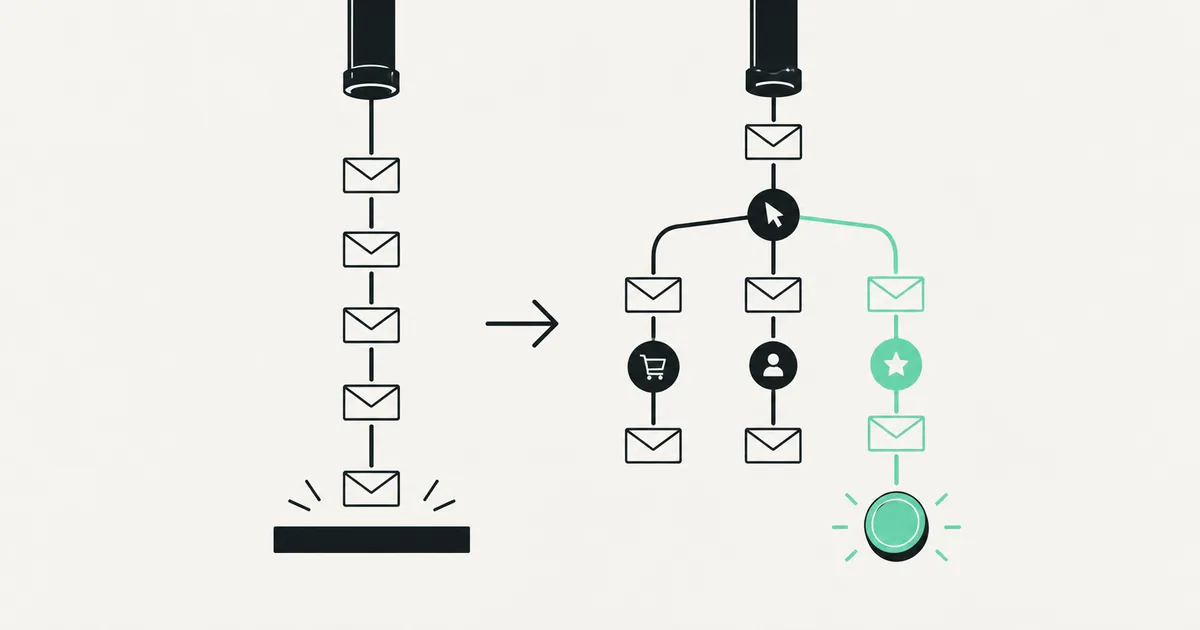
Every email platform ships with the same starter templates: a welcome series, an abandoned-cart nudge, a "we miss you" win-back. You switch them on, they work a little, and then they plateau. That's not a failure of email — it's the ceiling of generic. Templates treat every subscriber the same, and sameness is exactly what people tune out.
The businesses getting real revenue from email in 2026 have moved past templates into custom flows: sequences driven by what a specific person actually did, personalized from your real product and customer data, and branched so no two journeys are identical. This guide is about that jump — why it matters, what custom flows look like, and how to decide when it's worth building.
Why template flows hit a ceiling
Built-in automations are generic by design — they have to work for a yoga studio and a B2B SaaS out of the same box. That means:
- They ignore context. A template welcome email doesn't know if you signed up from a pricing page or a blog post — but those two people want very different things.
- They branch shallowly, if at all. Real customer journeys fork constantly; most template flows send everyone down the same track.
- They can't reach your real data. The interesting personalization — what someone browsed, their plan tier, their last order, their usage — lives in your product and CRM, not your email tool's default fields.
- They stop at send. Templates don't update your CRM, notify sales when a lead heats up, or trigger a different flow based on a purchase.
None of that means email tools are bad. It means the template is a starting point, and the money is in what you build on top.
What "custom flows" actually means
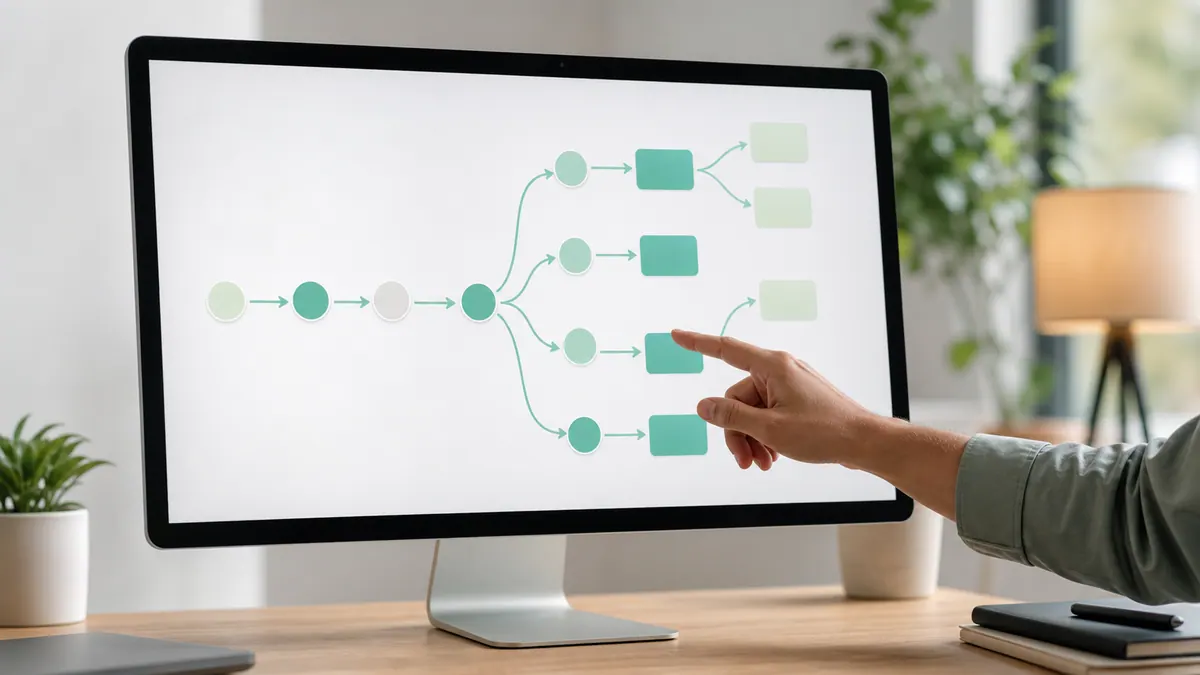
A custom email flow is a sequence that reacts to real behavior and real data, branching as it goes. Instead of "everyone gets email 1, 2, 3 on a timer," you get logic like:
- Someone views a product three times but doesn't buy → send a targeted email about that product, with a genuine reason to act.
- A trial user hits an activation milestone → switch them to an upgrade track; if they don't, send a help-and-education track instead.
- A customer buys → suppress the promo sequence, start onboarding for what they bought, and cross-sell the natural next item weeks later.
- A lead opens three emails and clicks pricing → tag them hot and notify sales in real time.
The flow reads signals, makes decisions, and pulls in details from your actual systems. That's the difference between "an automated email" and "the right email, because the system knew something."
Template flows vs. custom flows
| Template flows | Custom flows | |
|---|---|---|
| Trigger | Signup, cart, date | Any behavior or data change |
| Branching | Minimal | Deep, condition-based |
| Personalization | Name, basic fields | Real product / CRM / usage data |
| Data reach | Inside the email tool | Across your whole stack |
| Side effects | Send only | Update CRM, alert sales, trigger flows |
| Ceiling | Plateaus fast | Compounds as data grows |
| Best for | Getting started | Scaling revenue from email |
Where AI fits (and where it doesn't)
The genuinely useful AI applications in email are narrower than the hype suggests, and that's fine — narrow and reliable beats magical and wrong.
- Content generation at scale — drafting subject-line and body variants for review, or assembling a personalized product block per recipient from your catalog.
- Send-time and segment optimization — many platforms already predict the best time to reach each contact.
- Smart segmentation — a current model can classify replies, sentiment, or intent to route contacts into the right track.
What AI shouldn't do is invent your offers, quietly send unreviewed copy to your whole list, or replace the strategy behind the flow. The winning pattern in 2026 is AI-assisted, human-approved: the model drafts and personalizes, a person owns the message. If you want the broader framing on that balance, our guide to AI automation for small business is a good companion.
The tools involved
- Your email platform / ESP — Klaviyo, Customer.io, ActiveCampaign, Mailchimp, or similar. These send the mail and hold some automation logic. The right choice depends on how deep your branching and data needs go.
- Automation glue — n8n, Make, or Zapier to connect your product, store, CRM, and ESP so flows can react to real events. n8n 2.0 is a common self-hosted pick when you want the orchestration logic under your own roof.
- Your data sources — the store, app, and CRM where the signals that make personalization worth anything actually live.
The recovery classic is worth building well: a genuinely personalized abandoned cart recovery automation that reflects the exact items and browsing behavior, rather than a generic "you left something behind." That, connected to your real store data, is where custom flows earn their keep.
What this looks like in practice
A recent client project moved a business off the plateaued template flows their email tool shipped with. We wired their store and CRM into their ESP so sequences could react to real behavior: product-specific follow-ups when someone browsed but didn't buy, a post-purchase track that suppressed promos and cross-sold the natural next item, and a lead-scoring flow that tagged engaged contacts and alerted sales the moment they went hot. The email copy was AI-drafted for scale and human-approved before it shipped. The flows compounded as more behavioral data flowed in. Work like this usually lands in the low-thousands-per-phase range and pays back against the revenue that generic sequences were leaving on the table.
When to build vs. stay on templates
Stay on templates if you're early, low-volume, or still validating the basics — they're the right starting point and you shouldn't over-engineer. Invest in custom flows when: your list is big enough that a few points of conversion is real money, your template flows have clearly plateaued, or the personalization you need requires data your email tool simply can't reach. The trigger is usually the third one — the moment you say "I wish the email knew what they'd browsed," you've outgrown templates.
Frequently asked questions
Isn't my email platform's built-in automation enough? For getting started, yes. It plateaus when you need deep branching or personalization from data that lives outside the email tool — your store, app, or CRM. Custom flows connect those systems so the emails can react to what a specific person actually did.
Do I need a developer for custom email flows? Simple branching you can often build yourself in the platform. You need help when flows must pull live data from your product or CRM, coordinate across several tools, or handle errors reliably at volume — that integration work is where a fragile DIY setup breaks.
Will AI write my marketing emails for me? AI can draft and personalize at scale, but the reliable pattern is AI-assisted, human-approved: the model produces variants and per-recipient content, a person owns the message and hits send. Letting a model email your whole list unreviewed is how brands get burned.
How is this different from a bigger newsletter list? List size is volume; custom flows are relevance. A smaller list receiving the right message based on real behavior almost always outperforms a bigger list getting the same generic blast. The gains come from reacting to what people do, not from sending more.
Your email flows plateaued at the templates? SprintX builds custom email marketing automation on a fixed-scope quote — behavior-driven, branched flows wired into your real store and CRM data, with AI-assisted copy you approve before it sends. Tell us where your sequences stall and we'll map the flows worth building.
AI agents and automation
AI agents that do the work.
We build agents and automations for the repetitive work your team does by hand, and measure what they save.
Keep reading.
More on ai agents and automation
AI agents and automation · 18 Jul 2026 · 9 min read
RPA vs AI Agents: Which Should Automate Your Back Office?
A decision guide to robotic process automation vs AI agents: what each is good at, where each breaks, costs, and how to pick the right tool for back-office work.
AI agents and automation · 18 Jul 2026 · 8 min read
Playwright MCP Server: AI Browser Automation That Actually Works
A plain-English guide to the Playwright MCP server: how AI agents control a real browser, why it beats pixel-guessing bots, and where it fits your business.
AI agents and automation · 18 Jul 2026 · 9 min read
The Best MCP Servers for Business in 2026 (Curated + Tested)
A curated shortlist of the most useful MCP servers for real businesses in 2026 — what each connects your AI agent to, where it shines, and what to watch out for.