SaaS MVP Cost in 2026: What a Real First Version Should Run

Written By
SprintX Team
AI & Product Engineering
July 18, 2026
8 min read

A founder-focused breakdown of what a SaaS MVP really costs in 2026 — by build approach, what drives the number, and how to spend the least to learn the most.
Ask ten founders what a SaaS MVP costs and you will get answers from "a few thousand dollars" to "six figures" — and both can be right. The number is not really about SaaS. It is about how much product you insist on building before you have a single paying user. A SaaS MVP that stays genuinely minimal is surprisingly affordable in 2026. One that smuggles in the whole roadmap under the word "MVP" is not.
This guide gives you real ranges by build approach, the things that quietly inflate the bill, and a way to think about scope so your first version proves the idea without draining the runway.
What a SaaS MVP is — and where the "SaaS" part adds cost
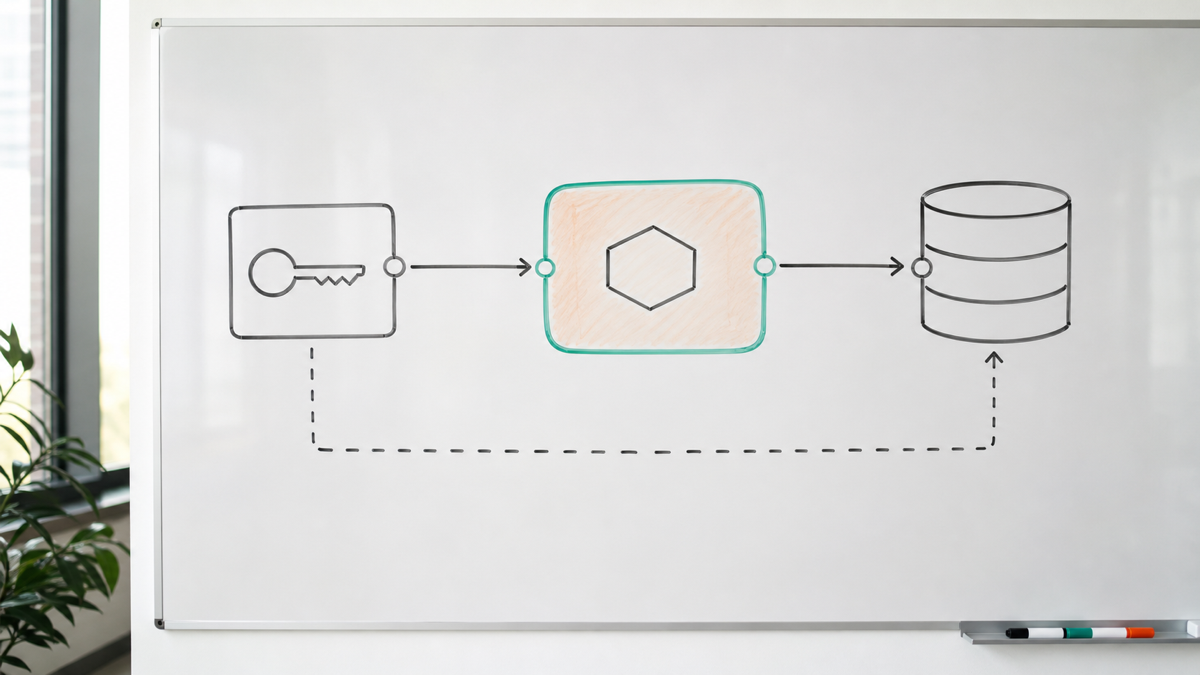
An MVP is the smallest thing you can put in front of real users to learn whether your core bet is true. The "SaaS" label adds a specific tax that a one-off app does not carry: accounts, authentication, some form of billing, and usually multi-tenancy — keeping each customer's data separate and secure. Those are not optional flourishes; they are the baseline of anything you charge a subscription for. If you are still nailing down what belongs in v1, what is an MVP is the right primer before you read prices.
The trap is treating that baseline as license to build everything. You need accounts and a way to take money. You do not need tiered plans, usage metering, an admin analytics suite, and three user roles to learn whether anyone wants the core workflow.
SaaS MVP cost by build approach
Here is what a SaaS MVP realistically runs in 2026, depending on how you build it. Treat these as hedged ranges, not quotes — the actual number tracks scope more than anything.
| Approach | Typical range | Timeline | Best for |
|---|---|---|---|
| No-code / vibe-coding | ~$2,000 – $12,000 | 2 – 5 weeks | Validating a simple idea fast |
| Agency-built code MVP | ~$15,000 – $45,000 | 5 – 12 weeks | A real product you intend to scale |
| In-house team | ~$40,000 – $90,000+ | 3 – 5 months | Funded startups building a durable team |
No-code and vibe-coding tools (Lovable, Bolt.new, and similar) are the cheapest, fastest path for a simple idea. The catch is a ceiling: custom logic, real scale, and multi-tenant security get awkward, and you will likely rebuild in real code once it works. A cheap validation you deliberately plan to throw away can still be the smart move.
Agency-built code costs more but gives you an owned, scalable codebase from the start. This is the sweet spot for founders confident enough in the idea to want to grow the same product they launch.
In-house only makes sense once you are funded, because you are paying salaries before you have traction.
What drives a SaaS MVP bill up
Every quote is a function of scope. These are the usual culprits that inflate a "minimum" product:
- Billing complexity. A single subscription checkout with Stripe is quick. Tiered plans, usage-based metering, proration, and dunning are a real subsystem you rarely need on day one.
- Multiple user roles. Admin, manager, member, viewer — each role multiplies the screens, permissions, and tests. Start with one or two.
- Multi-tenancy done heavy. You need tenant isolation, but you do not need enterprise SSO and org-level admin on day one. Get isolation right (Postgres row-level security is a clean way to do it) and defer the rest.
- Integrations. Every external tool you connect is a mini-project. Wire up only the one or two essential to prove the idea.
- Bespoke design. A clean, template-based UI ships fast; custom, animated design is a v2 luxury for most MVPs.
- "Nice to have" features. Notifications, referrals, dashboards, dark mode — each is reasonable, and each pushes launch further out. Cut them.
The pattern is consistent: cost tracks scope, and scope is the one lever fully in your control. A disciplined founder can often halve a quote just by moving features from "v1" to "later." We go deeper on this in MVP development cost and SaaS development cost.
The stack that keeps a SaaS MVP lean
Modern tooling has quietly slashed what a solid SaaS MVP costs. Instead of building infrastructure from scratch, a good team assembles proven parts:
- Next.js for the app, deployed on Vercel — fast to build, cheap to host early.
- Supabase for Postgres, authentication, and file storage, with row-level security handling tenant isolation — so you are not hand-rolling login and multi-tenancy.
- Stripe for subscriptions when you genuinely need to charge.
- n8n or similar for the glue between tools, instead of coding every integration.
Leaning on this stack means more of your budget goes into the one thing that differentiates you — your core workflow — and less into reinventing plumbing. It also keeps early running costs in the tens of dollars a month, not hundreds, while you find traction. The full build walkthrough lives in build a SaaS MVP.
Don't forget the running costs
The build price is one number; keeping the thing alive is another. For an early SaaS MVP, hosting and services typically land in roughly the tens of dollars per month while usage is low — Vercel, a Supabase tier, and Stripe's per-transaction fees. Costs that scale with usage (AI API calls especially) can climb fast if you are not watching them, which is a design decision more than a fixed fee. Budget a small monthly line and revisit it once real users show up.
What this looks like in practice
Many of our SaaS builds run as phased, fixed-scope milestones rather than one giant quote — commonly in the low-thousands-per-phase range — precisely so a founder can validate before committing the whole budget. A recent pattern: a multi-tenant platform where phase one was just the core workflow plus accounts and tenant isolation, billing deliberately deferred to phase two once the workflow proved out. The founder spent to learn, not to finish, and the phased structure meant a disappointing signal would have cost one milestone, not the entire product. That is the discipline we push on every SaaS MVP: define the one bet, ship the smallest thing that tests it, and let the results decide what gets built next.
Frequently asked questions
How much does it cost to build a SaaS MVP in 2026? Roughly $2,000–$12,000 with no-code for a simple idea, or about $15,000–$45,000 for an agency-built code MVP you intend to scale. The real driver is scope, not the SaaS label — a genuinely minimal first version stays at the low end.
Why is a SaaS MVP more expensive than a regular app MVP? Because SaaS carries a baseline of accounts, authentication, billing, and multi-tenant data isolation before you build a single feature. Keeping those minimal — one plan, one or two roles, clean tenant isolation — keeps the premium small.
Should I build my SaaS MVP in no-code or real code? No-code to validate a simple idea cheaply and fast; real code if you are confident and want to scale the same product you launch. Many founders do the first, then commission the second once the idea proves out.
What makes a SaaS MVP quote come back so high? Almost always a feature list that is not actually minimal — tiered billing, multiple roles, heavy multi-tenancy, integrations, and custom design. Cut to the one core bet and the number drops sharply.
Ready to launch a SaaS first version without overbuilding? SprintX scopes and ships lean SaaS MVPs on fixed-price, phased milestones — you own the code, no lock-in, and "done" means production-ready. Tell us your core bet and we'll build the smallest version that proves it.