
Case study · Manufacturing
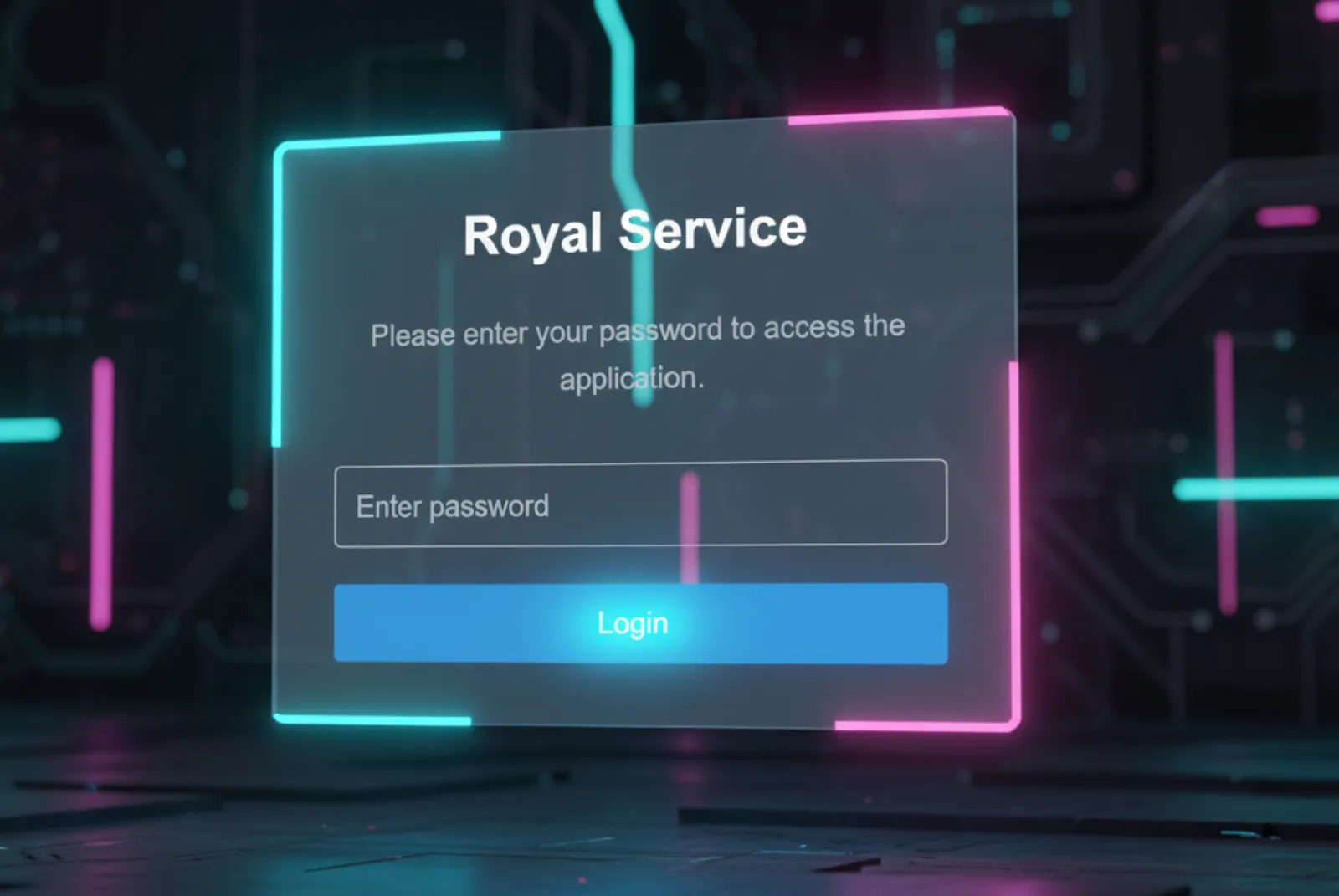
Royal Service.
Conversion of handwritten production reports to structured Excel files for a manufacturing facility.
- What we built
- AI document-processing tool
- Stack
- Node.js, Express, @google/generative-ai (Gemini)
- Services
- AI agentsOCRExcel automation
About the project
What is Royal Service?
The client operated a manufacturing facility where product information was manually recorded on handwritten report sheets. These reports were critical for tracking production details but were prone to human error, difficult to process, and time-consuming to digitize. The project aimed to streamline this workflow by converting handwritten records into structured digital data.
The problem
What was slowing them down.
- 01
Handwritten reports
Reports were handwritten, leading to inconsistencies in readability.
- 02
Error-prone mapping
Mapping data from the handwritten forms to structured Excel columns was error-prone.
- 03
No quick way to digitize
The client had no reliable way to digitize these reports quickly without manual entry.
- 04
Transcription errors
Errors in transcription could lead to inaccurate records and operational inefficiencies.
The solution
What we built.
Agent 1 (OCR & Mapping)
Used Optical Character Recognition (OCR) to extract text from handwritten reports and automatically map it into predefined Excel columns.
Agent 2 (Validation)
A secondary AI agent verified the extracted data, cross-checking it with the generated Excel sheet to ensure accuracy and consistency.
Automation Flow
The system transformed scanned report sheets into fully structured Excel files with minimal human intervention.
Results
What changed.
Client operations
Efficiency
Reduced manual data entry time significantly by automating the transcription process.
Accuracy
Improved data reliability by validating OCR outputs against mapping rules.
Scalability
The system can process multiple Excel reports daily without additional workforce.
Cost Savings
Lowered operational costs by eliminating repetitive manual data entry.
Digitization
Enabled the client to maintain structured, searchable digital records.
Key challenges
The hard parts, and how we solved them.
Varying handwriting styles
Used AI-driven OCR trained to handle varying handwriting styles.
Mapping errors between form fields and Excel columns
Created strict schema rules for column mapping.
Accuracy validation
Introduced a second verification agent to double-check and reduce mismatches.
Integration into workflow
Ensured the final Excel files were compatible with the client's existing processes.
Tech stack
What it runs on.
- Runtime & Framework
- Node.jsExpress
- AI Client
- @google/generative-ai (Gemini)
- File Uploads & Environment
- Multerdotenv
- PDF/Image Processing
- pdf2picpdf-libsharp
- Excel Generation
- exceljs
- Frontend
- Vanilla JSHTMLCSS
- Dev Tooling
- nodemon
- Containerization
- DockerDocker Compose
- Optional System Dependencies
- GraphicsMagick (gm)Poppler (pdftoppm)Tesseract OCR
Process
How we got there.
01Input
Handwritten report sheet scanned and uploaded.
02Processing (Agent 1)
OCR extracts handwriting and maps it into an Excel sheet.
03Verification (Agent 2)
Cross-checks the Excel output with the source document.
04Output
Clean, structured Excel file ready for operational use.
More work.
All projects
KI Agent
AI agent platform that automates research, builds structured outlines, and generates long-form professional reports with minimal manual effort.
Heft IQ
AI-powered SaaS chatbot that unifies warehouse and 3PL data, delivering real-time inventory insights and predictive analytics through conversation.
Building something like Royal Service?